Beyond the Tune-Up: Rethinking the HVAC Maintenance Agreement
Why It Matters
- Technology-enabled maintenance agreements can strengthen customer retention by giving homeowners visible value throughout the year rather than only during one or two scheduled maintenance visits.
- Remote monitoring can help contractors build recurring revenue and increase revenue per customer, with higher retention and increases in average revenue per home among participating contractors.
- Connected maintenance programs can help contractors differentiate themselves and build longer-term customer relationships as homeowners increasingly expect greater transparency, convenience, and technology from the services they purchase.
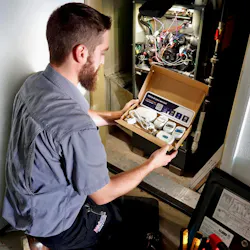
For too many HVAC contractors, the customer relationship begins—and ends—with a breakdown. A homeowner calls when the system stops working, a technician makes the repair, the invoice gets paid, and everyone moves on until the next problem.
Maintenance agreements offer a different model: one that keeps contractors connected to customers between breakdowns, creates a more predictable stream of revenue, and gives homeowners a reason to invest in the long-term health of their equipment. But building a successful membership program takes more than listing a maintenance plan on a price sheet.
According to Josh Teekell, founder and CEO of SmartAC, HVAC contractors have relied on maintenance agreements as their primary way to maintain ongoing relationships with customers since the 1980s. But the traditional model has a major limitation: only about 20% to 25% of homeowners sign up. “They’re using an offering for homeowners to prepay annually to have a contractor come out to their house and take a look at their equipment, but the majority of homeowners don’t want that offer,” Teekell says.
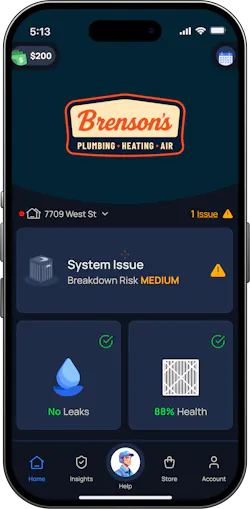
SmartAC’s approach is to use connected technology, sensors, and software to give contractors additional ways to stay engaged with customers. By incorporating technology into traditional maintenance agreements, contractors can make memberships more appealing by offering homeowners greater visibility into their equipment and the convenience of an ongoing digital relationship.
The technology gives contractors a way to reach homeowners who may not want a traditional annual maintenance visit. A lower-cost monitoring-only option can maintain the customer relationship through features such as an app, online booking, and filter ordering without requiring the contractor to make an annual service visit. “The biggest benefit is using the technology for a lower-cost offering for the homeowners that don’t want the contractor to come out every single year,” Teekell says.
That approach can have a significant impact on retention and revenue. Teekell says annual maintenance-plan retention has increased from roughly 65% to 75% to approximately 95% among participating contractors. Over two- to three-year studies, contractors using SmartAC have also seen average revenue per home increase by about 19% to 20%. “Effectively, it’s making the memberships more valuable for them on the revenue side by keeping more homes and then monetizing them better,” he says.
The Tech
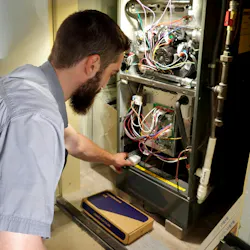
SmartAC uses a three-sensor system to give contractors a continuous view of how a customer’s HVAC equipment is performing. One sensor monitors the supply air, another monitors return air, and a third is installed in the evaporator drain pan to detect potential issues, such as clogged condensate lines. Together, the sensors provide contractors with detailed information about system performance, including temperature differential, humidity, and runtime.
“We have 30-second granularity of the health of the equipment all year long,” says Teekell. “More importantly, [it shows] how well the system is actually removing heat, humidity, and then heating or cooling the air.”
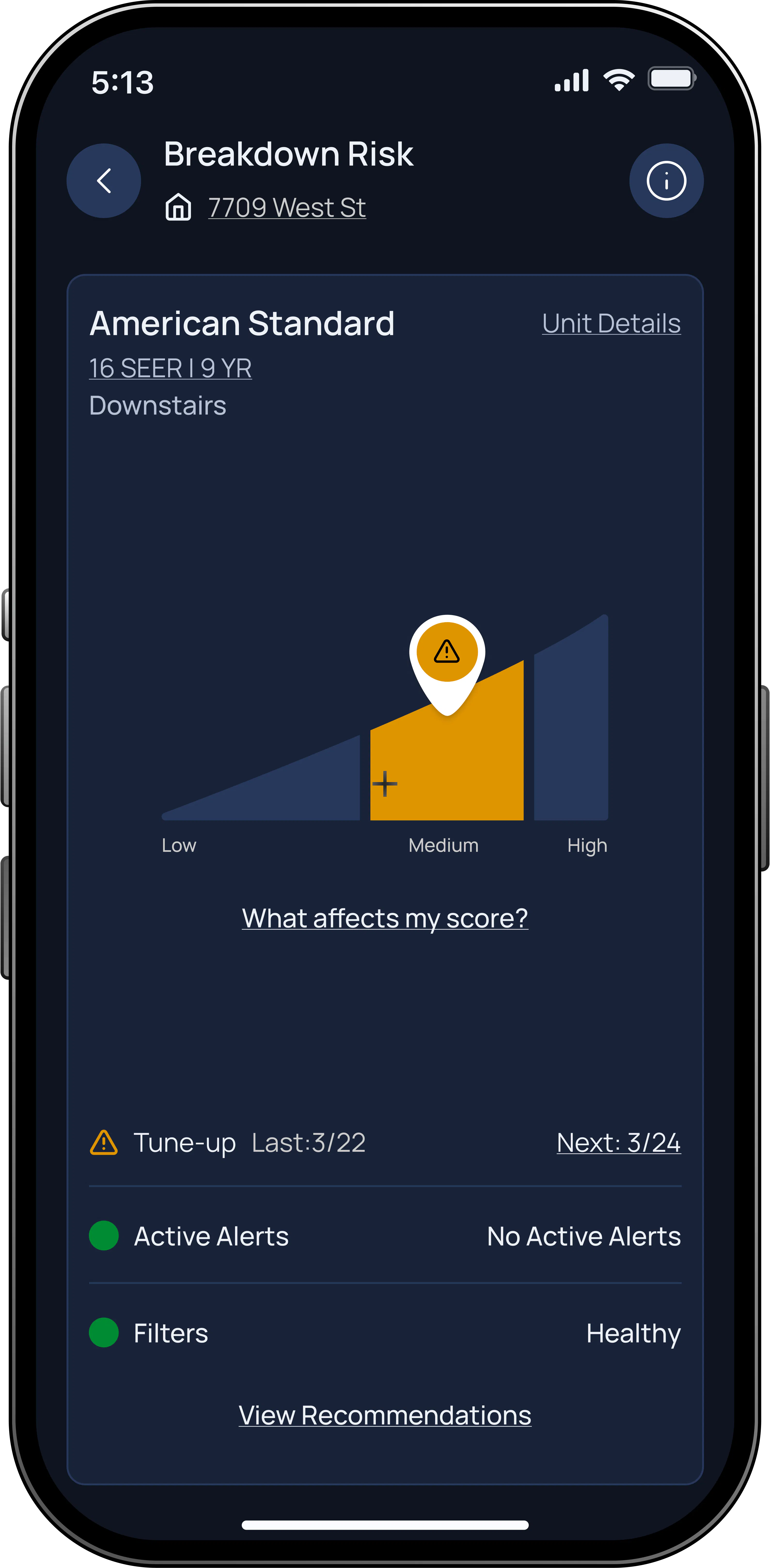
At the heart of SmartAC is a proprietary data set built from the installed sensors. The company combines that data with artificial intelligence and machine learning to create a customized model of HVAC system performance for each home. That allows the system to identify changes in performance and predict when a homeowner could begin to experience a loss of comfort. The technology can even incorporate weather forecasts to refine those predictions.
“It’s very obvious when you look at how a system is operating over weeks, months, and years when something is trending down,” Teekell says. SmartAC can then alert the contractor to the change, allowing the contractor to contact the homeowner and discuss next steps before the issue potentially turns into a breakdown. “The goal is to give homeowners the opportunity to address problems proactively rather than waiting for a breakdown,” he says.
Real World Results
Clute, Texas-based Colley Refrigeration has provided full-service heating and air conditioning services across new construction, commercial, and residential markets for over 47 years. For Owner David Hargrove, the appeal of HVAC monitoring started with a familiar contractor frustration: breakdown calls arriving at the worst possible time. “The calls coming in always seemed to land at the worst time — 4, 5, 6 p.m., right when people were getting home from work,” Hargrove says. “I kept thinking, wouldn't it have been nice to know that unit was broken at noon instead of 7 p.m.?”
Hargrove experimented with two other monitoring services before choosing SmartAC. The difference, he says, was simplicity. “Everything else that I'd tried before was super technical,” he says. “We ended up running ourselves ragged over nuisance calls.” With SmartAC, however, adoption has remained strong nearly three years later. “Our techs are still pushing it, customers are still buying it, and cancellations are low.”
The sensors have also given Colley’s office staff a more compelling way to sell memberships. Rather than pitching customers solely on twice-a-year maintenance visits, staff can explain that the company is keeping an active eye on the system between visits. The technology also helps technicians demonstrate the value of their work. If a system’s performance improves after a maintenance visit, the homeowner can see the difference in the data.
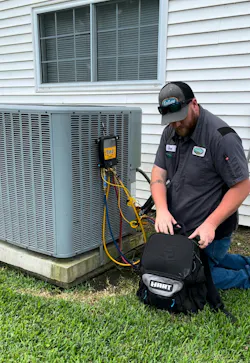
“Now we can actually show that the system wasn't working like it was supposed to. We came out, cleaned it, and you can see the improved performance,” Hargrove says. “They like being able to have that visual.”
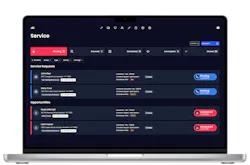
Hargrove says the ongoing monitoring has also strengthened membership retention by keeping Colley Refrigeration connected to homeowners throughout the year. That connection is particularly valuable when the system generates a water or performance alert. Colley’s dispatcher and service manager can review the alert, contact the homeowner and gather information before sending a technician. Historical performance data can also show whether a system has been gradually degrading or experienced a sudden failure, giving the technician a clearer picture before arriving at the home.
That ongoing connection also supports the company’s broader focus on retention. “I'd rather keep my customers than have to go after new ones. New ones are expensive,” Hargrove says.
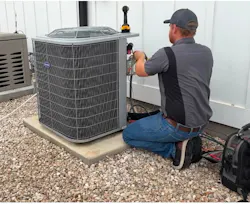
Mukwonago, Wisconsin-based Midwest Heating & Cooling was founded in 2018 by Brad Spaugh. The decision to adopt SmartAC two years ago was rooted in a simple goal: stop waiting for homeowners to discover HVAC problems and start identifying issues before they become emergencies. “Our job is to help keep them safe and comfortable,” Spaugh says. “So we made the choice to be proactive for them and help monitor their systems.”
The approach was particularly appealing because SmartAC could work alongside the thermostats homeowners already preferred. After experimenting with different thermostat brands and approaches, Spaugh wanted a monitoring solution that would not require customers to change their existing equipment. “It really came down to what could we use that allowed the customer to still have the thermostat of their choice, but allowing us to still blend with what they like,” he says.
For Midwest Heating & Cooling, memberships are central to the business model. Spaugh calls them “the lifeblood of who we are as a company,” making customer retention a critical priority. SmartAC has helped strengthen that relationship by giving the company an ongoing reason to interact with homeowners between maintenance visits.
One early experience demonstrated the value of the technology. A homeowner noticed water on her basement floor but did not know where it came from. A SmartAC water-leak alert reached the company shortly afterward, prompting Midwest to dispatch a technician. The technician discovered that the homeowner’s dogs had knocked the air conditioner’s drain line loose. The issue was caught within about two hours, allowing the company to contain the leak before it caused significant damage.
“She was very appreciative of that,” Spaugh says. “And that's when I knew — OK, we need these on everything we can get them on.”
That type of real-world success also helped win over technicians who were initially skeptical about adding another piece of technology to their workflow. As technicians began seeing sensors identify problems homeowners were unaware of, their confidence in the platform grew—and so did their willingness to promote SmartAC-equipped maintenance plans.
Spaugh says that has translated into stronger membership retention. Before adopting SmartAC, Midwest’s retention rate was roughly 60%; today, he says, it is approximately 80%. “Retention rates are at an all-time high now, so I would have to attribute that to this product in a lot of ways,” he says.
The technology has also changed how Midwest positions itself with customers. Rather than simply being the company homeowners call when something breaks, Spaugh says SmartAC has helped the business take on more of a consulting role. If sensors indicate that a filter may be restricting airflow, for example, the office can contact the homeowner before the issue becomes a larger problem.
“It really gave us more of the consultant vibe than just a service,” Spaugh says. “It transitioned us into somebody that cares about the customer.”
For homeowners, the first proactive call from their HVAC contractor can be unfamiliar. But Spaugh says that initial surprise quickly turns into appreciation once customers understand why the company is reaching out. “It's a little weird at first, but then after that first visit, they're like, ‘That's actually really cool that you guys are doing that,’” he says. “I've never had it go the other way, not once.”
The Future: From Maintenance Plans to Comfort as a Service
Ultimately, Spaugh sees connected HVAC technology as part of a larger shift toward subscription and membership-based services. As homeowners become more comfortable monitoring household systems, he believes HVAC monitoring will increasingly become an expected part of homeownership rather than a novelty.
“There's always been informed homeowners, but it was rare,” Spaugh says. “Now I'd say a good percentage of people understand what's going on in the home and where the costs are being spent.”
Hargrove agrees, noting that HVAC is moving increasingly toward subscription and membership models. His company is exploring ways to make more of its services—and potentially entire system installations—subscription-based. “If there was a way to make everything we do subscription-based, I think it would make a big difference,” he says. “And SmartAC having all of that in there is going to set contractors apart from the smaller guys.”
Teekell says the traditional HVAC maintenance agreement is only the beginning of a broader shift toward subscription-based relationships between contractors and homeowners. Some contractors and manufacturers are already experimenting with “comfort as a service,” equipment leases and subscription models that bundle the system, maintenance, repairs, and monitoring into a predictable monthly payment.
“I definitely believe that is the future of the industry,” Teekell says. While he acknowledges that widespread adoption could still be several years away, the model is becoming increasingly attractive as homeowners confront $15,000 to $20,000—or higher—equipment replacement costs. Instead of making a large upfront investment, homeowners could opt for a long-term agreement costing roughly $120 to $170 per month, depending on the offering, while gaining greater predictability around maintenance and repairs.
For contractors, Teekell says the larger opportunity is to move beyond the traditional maintenance plan and find more ways to stay connected with homeowners throughout the equipment lifecycle. Consumers increasingly expect transparency, convenience and immediate access to information, and HVAC contractors are beginning to respond with pricing tools, connected equipment, and technology-enabled service models.
At the same time, Teekell sees an important opportunity in the millions of homes that already have aging equipment. “Grabbing and retaining a home that already has old equipment so you can be the one to replace it when the time comes is the highest ROI thing you can do,” Teekell says.
That may ultimately be the biggest evolution in maintenance agreements: transforming them from a once- or twice-a-year service transaction into a long-term strategy for staying connected to the home, creating recurring revenue, generating proactive service opportunities and earning the right to be there when the next major HVAC decision arrives.
Pricing for Retention: Give Homeowners a Choice
Pricing strategy can make or break an HVAC maintenance program, particularly as contractors look for ways to reduce membership cancellations. Based on data from hundreds of contractors using SmartAC, Josh Teekell, founder and CEO, says higher-end plans generally perform well in the $25-$35-per-month range, but contractors should avoid making that their only option.
“If you’re going to charge $30 a month for a plan, the key is having something lower cost as well,” Teekell says. That could mean offering a one-visit maintenance plan, a lower-priced technology-enabled plan, or a basic plan that includes an app. The goal is to give homeowners a choice rather than forcing them to make a simple yes-or-no decision on a $30 monthly commitment. “You want the homeowner to be thinking, which one do I want? Not just, do I want the $30-a-month thing?” he says.
Teekell also recommends monthly billing to reduce cancellation friction. Annual billing can create a larger financial shock for homeowners or require contractors to actively chase renewals. But pricing is only one piece of the retention equation. Homeowners are more likely to renew when they continually perceive value from their membership.
Traditionally, Teekell says, homeowners might have experienced that value only on the two days a year when a technician performed maintenance. Smart monitoring changes that equation by giving homeowners access to equipment data throughout the year. “The homeowner is getting value all year round every day as opposed to only on a few days a year when the tech is on site,” he says.
Loyalty rewards can provide another incentive to stay enrolled. Rather than tracking credits internally, contractors can use technology to show homeowners their accumulated rewards and savings. That creates a tangible benefit that grows over time—and gives customers another reason to think twice before canceling. “It’s really just about giving them a great experience when you’re in person, reminding them of the value of that peace of mind … and then building up that savings bank over time can really help them think twice about canceling a membership if that's going to mean they leave hundreds of dollars of accumulated credit on the table,” Teekell says.
About the Author
 Nicole Krawcke
Nicole Krawcke
Nicole Krawcke is the Editor-in-Chief of Contracting Business magazine. With over 10 years of B2B media experience across HVAC, plumbing, and mechanical markets, she has expertise in content creation, digital strategies, and project management. Nicole has more than 15 years of writing and editing experience and holds a bachelor’s degree in Journalism from Michigan State University.