Lessons From Outside the Comfort Zone
Key Highlights
- NCI's Adam Mufich reflects on past experiences with social anxiety, especially in social settings like parties and networking events;
- Mufich compares the comfort found in technical work with the discomfort of social interactions, questioning how social anxiety influences career success; and
- The story emphasizes that growth often requires embracing discomfort, which can lead to meaningful personal and professional relationships.

It's easy to get comfortable by continuing to align your daily tasks with what's familiar. I was a victim of this cycle for many years until I realized that I wanted a change. Since I was young, I preferred blending in rather than being in the spotlight. At parties, I would look for a safe, familiar face and hope we could spend the night in the corner of the room catching up. The last thing I wanted to do was strike up awkward conversations with new people and worry about making a good first impression. I never really read too far into it, but looking back, I believe some may consider this a form of social anxiety.
This may be hard to believe, especially because in a previous life I was a musician and regularly played on stage in front of large crowds. Performing was a way for me to disconnect from reality. It was how I could express myself without using words and stumbling through an awkward conversation. I was with my closest friends (my band mates), which gave me the courage I needed to face the crowds.
Over the years, I've learned how to fake my way through social interactions. However, I sometimes wonder whether others buy my act or can see through the mask I've come to rely on.
Technical Minds
I believe that other technical people can relate to me. They feel more comfortable surrounded by mechanical equipment in the basement or on a rooftop than interacting with customers. I have heard countless commercial HVAC technicians say that one reason they prefer commercial work is that they don't have to deal with homeowners. That statement makes me wonder whether it's easier to climb on a roof and work in extreme weather than to interact with others.
Generally speaking, commercial work lacks customer interaction. You don't have as many awkward conversations about what is wrong with the equipment and how much you're going to charge to repair it.
I wonder how much social anxiety plays a part in the success of residential companies. How many technicians would prefer fixing the immediate problem, rather than having an uncomfortable conversation about all of the other issues that exist in their customers' homes? I know I struggled with it, and I bet others take the easy way out to avoid uncomfortable interactions.
Overcoming the AHR EXPO
I have spent the past few months watching the days fly by while stressing over all my work obligations at this conference. If you have never been to AHR, it is one of the largest HVAC conferences in the world, which can be overwhelming for people operating with a limited social battery. My schedule consisted of conducting four podcasts, doing countless booth interviews, and being part of NCI's High-Performance HVAC Hangout, which is geared toward networking with contractors and other industry professionals.
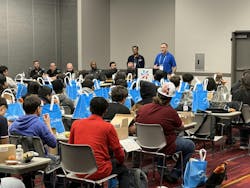
About a week before the conference, I was asked to moderate a workforce development panel featuring a handful of industry professionals. The audience consisted of high school students enrolled in technical programs and aspiring to become future tradespeople.
Being asked to moderate the panel was an honor, but it also added a great deal of stress to my week. This type of event is normally something that I would spend the entire day motivating myself to do. But my other responsibilities didn't allow for this type of mental preparation.
Pushing Through Can Benefit Others
Overall, the panel was a success. I caught myself watching the time and slowly counted the minutes until I could slide back into my comfort zone. I focused on minimizing filler words and on asking relevant questions that might help students make good future decisions.
The panel ended with me offering to stay after and answer any other questions the students might have privately. A few of them approached me and asked for my card. Others had questions about what opportunities they should consider after school.
As I was getting ready to head out, two girls walked up to me and introduced themselves. One girl nervously shook my hand and said she had a question. With a timid smile, she said, "I have really bad social anxiety, and I was wondering if you could give me advice on how I can overcome that when I interview for a job."
I immediately got choked up. It's as if this student walked up and ripped the mask off my face. I struggled to speak because I was taken off guard. I told her that I have awful social anxiety, and it's a terrible thing to have to deal with.
I said, "It took every bit of my will to stand up and speak to all of you today. The first time I stood up and spoke in front of a class, I hated it and thought I had made the worst decision of my life. I kept telling myself I couldn't do this; this wasn't right for me. But I forced myself to step out of my comfort zone because others believed I could do it. Knowing that made me start to believe in myself.
"Your first interview might be absolute torture for you, and in your mind, it might be awful. But once you get through it, it will give you the courage to do the second and maybe the third. Every time you do something uncomfortable, you will get better at it. You will eventually look back, and you will realize there was nothing to be worried about."
Throughout the conversation, she maintained eye contact and a nervous smile. She thanked me for my advice, once again shook my hand, and turned and walked away.
Making an Impact
While I hope that my advice helped point this young lady in the right direction, I think the interaction had a bigger impact on me. I unexpectedly had a connection with a random student at an event that I was dreading.
I hope she benefited from my limited advice. But more importantly, this conversation made me realize the importance of learning to be comfortable in uncomfortable situations. Doing so can have a positive impact on others. Such impacts can range from a student asking you for advice to making a recommendation that could save a customer's life.
"Comfort is not a goal that I seek, rather it is a place that I hide," — Craig D. Lounsbrough
About the Author
 Adam Mufich
Adam Mufich
content developer and instructor
Adam Mufich serves the HVAC industry as content developer and instructor for National Comfort Institute, Inc. (NCI). NCI specializes in training that focuses on improving, measuring, and verifying HVAC and Building Performance. Find them at www.nationalcomfortinstitute.com.