HVAC Fleets Turn to Fuel Cards and Smarter Operations to Manage Rising Costs
Key Highlights
- Fuel card programs improve visibility, enforce spending controls, and support savings through rebates and broad network acceptance.
- Closed-loop transaction networks enhance data accuracy, reduce misuse, and enable proactive fuel expense management.
- Automating administrative processes with fuel cards reduces paperwork, improves expense tracking, and enhances audit readiness.
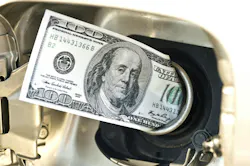
HVAC fleets are busier than ever, but profitability is under pressure.
Rising fuel prices are putting increasing pressure on HVAC contractors, particularly small and mid-sized businesses that rely on fleets to meet growing service demand. Simply put, the cost of keeping vehicles on the road is becoming harder to manage.
To offset this new challenge, many contractors are turning to a combination of fuel cards and operational improvements to regain control over one of their most unpredictable expenses. Fuel card programs are gaining traction as a practical way to improve visibility, capture per-gallon savings, and enforce spending controls, while also supporting broader efficiency strategies across the fleet.
As fuel prices remain unpredictable, HVAC businesses are under pressure to protect margins without passing costs on to customers. The shift reflects a broader realization: fuel costs cannot always be reduced at the pump, but they can be better handled across the business. In other words, without a strategy for fuel management, contractors are faced with margin erosion or the passing of too much additional cost on to their customers, reducing competitiveness in the market.
Fuel Costs Start with Visibility Gaps
Fuel-related expenses are often driven as much by operational blind spots as by price itself. Without clear insight into where, when, and how fuel is purchased, contractors can struggle to identify inefficiencies or control spending. Manual processes, such as out-of-pocket purchases and paper receipts, can obscure patterns and delay decision-making.
More structured approaches, particularly those built on a closed-loop network such as some fuel card options, help address this by centralizing transactions and creating a consistent, reliable stream of data across fuel purchases. A closed-loop network is important because it connects transactions within a controlled ecosystem, improving visibility, consistency, and security. This helps reduce the risk of misuse, encourages more disciplined purchasing behavior, and enables more predictable pricing across approved locations.
With clearer, more actionable data, HVAC businesses can better track consumption, identify anomalies, and establish benchmarks across vehicles and teams, turning fuel from a reactive expense into something that can be actively and strategically managed as they grow.
“Now I can see all the fuel purchases in my monthly reports,” said Karen Scott, vice president of Associated HVAC, a WEX fuel card customer. “And since I get the reports, there are no more lost receipts, so I can keep track of fraud and personal use.”
Bringing Predictability to Fuel Spend
Fuel price uncertainty remains a constant issue, but contractors are finding ways to mitigate its impact.
Many fuel card programs now offer built-in savings mechanisms, including per-gallon rebates that can reach double-digit cents at participating locations and smaller rebates outside those networks. Annual savings that can add up to hundreds or more per vehicle, depending on usage, demonstrating that even modest discounts can add up significantly over time.
Network coverage also plays an important role. HVAC contractors should verify their card programs are accepted at multiple U.S. fuel stations, allowing drivers to fuel conveniently without detouring to specific locations. This helps reduce unnecessary mileage, which in turn lowers overall fuel use.
Together, these features provide a degree of predictability in an otherwise volatile cost category.
Control and Security at the Transaction Level
In addition to savings, fuel cards are being used to introduce greater control over how fuel is purchased.
Fleet operators can typically set parameters around transaction and fuel volume limits, purchase amounts, and time-of-day or day-of-week restrictions.
Additional safeguards are available to protect against other types of fraud, which can cause an additional burden for fleets. Built-in controls help prevent unauthorized purchases before they happen, with features such as driver PINs or odometer readings to help ensure that fuel purchases are tied to legitimate business activity. Real-time alerts can also flag unusual transactions, allowing for faster intervention.
For smaller HVAC companies without dedicated fleet management resources, these controls offer a practical way to help reduce misuse and improve accountability.
From Fuel Data to Cost Reduction
Access to data is only valuable if it drives action. Increasingly, HVAC contractors are adopting additional tools such as GPS Tracking and AI Video solutions to uncover inefficiencies that directly impact costs. According to the U.S. Department of Energy, real-time driver feedback and behavior monitoring can lower fuel use by 10 to 25%, and reduce wear and tear.
Common insights include vehicles with higher-than-average fuel consumption, inconsistent fueling locations or behaviors, and gaps between expected and actual mileage. With detailed reporting, businesses can begin to optimize performance, whether by addressing driver habits, improving maintenance schedules, or reallocating workloads.
Over time, these incremental improvements can translate into meaningful savings across the fleet.
Pairing Fuel Management with Operational Efficiency
While fuel cards help manage purchasing and oversight, operational efficiency remains a critical lever in reducing total fuel spend.
Reducing miles driven per job is one of the most effective ways to control costs. HVAC contractors are increasingly focusing on:
- Route optimization to minimize drive time and fuel use;
- Smarter scheduling to reduce gaps between jobs; and
- Improving first-time fix rates to avoid repeat visits.
Digital fleet tools and telematics support these efforts by providing real-time visibility into technician activity, job status, and moving businesses away from emergency-only calls to predictable monthly income that makes fuel spend easier to manage. When combined with fuel card data, they offer a more complete picture of both fuel consumption and the operational behaviors behind it.
One strategy for route optimization is servicing maintenance agreements in specific zip codes or towns. For companies with hundreds or thousands of maintenance agreements, per-trip savings can make a meaningful difference for the business.
Administrative Efficiency and Cost Control
Fuel management is not just about monitoring gallons used, it also affects back-office operations.
Traditional fuel purchasing often involves time-consuming administrative work, including receipt collection, expense reconciliation, and tax preparation. Fuel card programs streamline this process by consolidating transactions into a single invoice with categorized, exportable data.
For small business owners, this can reduce administrative burden while improving accuracy and audit readiness. It also provides clearer documentation of deductible expenses, contributing to overall cost management.
“The reports are great,” said Scott. “They list purchases by driver, so I can see when and how often they get fuel and the price they paid. This helps me budget for the expenses.”
Looking Ahead
Fuel management is becoming an increasingly strategic focus for HVAC businesses. Contractors who invest in visibility, controls, and efficiency are better positioned to navigate price unpredictability and maintain profitability.
In today’s environment, the most efficient HVAC fleets aren’t just reducing fuel costs, they’re redesigning how fuel is managed altogether.
About the Author
 Dylan Jones
Dylan Jones
Dylan Jones is senior vice president and general manager of Mobility Growth at WEX. For more information about WEX, visit www.wexcard.com.