How HVAC Contractors Are Turning Indoor Air Quality Into a Steady Revenue Stream
Key Highlights
- COVID-19 heightened awareness of indoor air quality, leading to sustained demand for IAQ solutions in residential settings.
- Contractors are advised to keep messaging simple, focusing on symptoms and practical benefits rather than technical jargon.
- Whole-home IAQ solutions, including filtration, humidity control, and ventilation, are more effective and appealing to homeowners than standalone products.
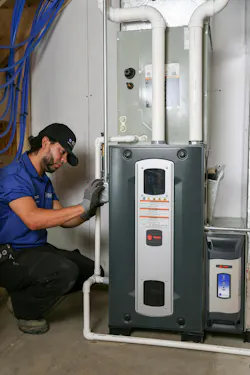
Indoor air quality (IAQ) has been an increasing source of revenue for HVAC contractors for some time.
Marco Radocaj, owner of Balance HVAC in Vero Beach, Florida, says IAQ sales really started to surge during the COVID-19 pandemic around March 2020.
“People were all of a sudden very aware of what is actually in the air they were breathing. Additionally, people were spending significantly more time inside their homes during the day and were noticing humidity and/or comfort issues in areas of their home they didn't notice before,” Radocaj tells Contracting Business.
“Without question, COVID was a massive wake-up call for a lot of homeowners,” says Patrick Garner, director of operations at Cardinal Plumbing, Heating & Air Conditioning in Sterling, Virginia. “People were suddenly home all the time and started paying attention to the air they were breathing. Demand spiked fast. The problem was that it also opened the door to a lot of bad information and products that made big claims but didn’t actually do much. As a contractor, that put us in a spot where we had to be extremely careful. If we put something in someone’s home, our name is attached to it, whether it works or not. We focused on solutions that had real data, real testing, and a history of use in environments where performance actually matters.”
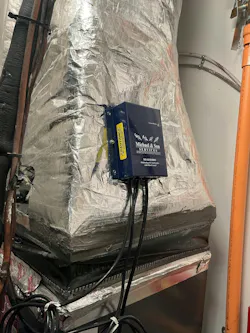
Fear played a role in IAQ sales growth during the COVID-19 pandemic, says Kyle Hagen, president of Pasco, Washington-based A-One Refrigeration & Heating Inc. “Folks were scared and stayed home a lot, which drove a rapid spike in demand. But the interesting thing is that the demand never dropped back to old levels. It settled into a steady curve because most families realized that clean air affects sleep, allergies, smells, comfort, and, honestly, even peace of mind. That shift stayed with them.”
Yes, residential demand for IAQ systems didn’t fall off after the COVID-19 pandemic, says Kyle Harrington, an HVAC technician at HVAC Alliance Expert that serves Los Angeles, San Diego, the San Francisco Bay Area, San Jose, and New York City. Harrington has completed more than 5,000 projects in his six years of hands-on experience in heating and air conditioning services.
Customers are knowledgeable, Harrington believes. “During the pandemic, customers asked: ‘Will this kill germs?’ In 2026, they ask: ‘Will my home feel better to live in every day, and can you prove it?’” He adds that homeowners buy IAQ systems to solve real-life issues: allergy flare-ups, kids coughing at night, lingering odors, smoke headaches, and mold worry.
Harrington says technicians at HVAC Alliance Expert use three to four quick diagnostic questions and map to a clear solution. “This improved our IAQ close rate by about 9 points year-over-year,” Harrington estimates.
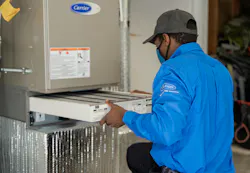
Pollutants in the atmosphere also worked to boost interest around IAQ, says Tim Alagushov, co-founder and CEO of IRBIS Air Plumbing & Electrical in San Jose, California. “People suddenly started paying attention to what they’re breathing at home. And in Northern California it lined up with heavy wildfire seasons, so homeowners were looking for better filtration and purification anyway. The timing just accelerated everything.”
Successfully Selling IAQ Solutions
In 2026, contractors can snag IAQ business when they use a clear strategy, says Hagen. “Today, the contractors who sell IAQ well are the ones who keep the message simple. Homeowners do not want confusing tech talk. They want to know what problem each product solves, and how quickly they will feel a change.”
Coaching is key, Hagen explains: “When we train our team, we teach them to start with the symptoms. For example, dry throats, dust settling too fast, lingering cooking odors, or allergy flare-ups. Then we pair those with a focused solution. It sounds small, but this approach works in 2026 because people connect the dots quickly.”
How can HVAC contractors boost residential IAQ sales? Hagen advises: “Do not treat IAQ like an upgrade. Treat it like a core part of comfort. We bundle IAQ checks into every maintenance visit. We also show customers a quick before-and-after reading with a handheld meter. This is not fancy. It gives them something real to look at, and it builds trust. Sometimes I joke that the meter closes more sales than any brochure.”
On the subject of messaging, Radocaj of Balance HVAC offers this view: “We really like to try to stay away from acronyms as much as possible. While ‘IAQ’ is an everyday term used with HVAC people, most homeowners are not familiar. The phrase we like to use is ‘respiratory health.’ This helps start the same conversation that emphasizes the home as a system, humidity control, better filtration, etc. It also helps the homeowner feel comfortable at the beginning of the conversation.”
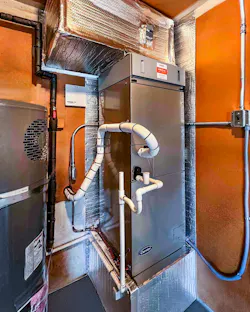
Contractors should keep it practical when talking about IAQ solutions with homeowners, advises Alagushov. “We explain how filters should really be checked monthly in this region, how smoke from wildfires impacts the system, and why a purifier or better filtration can actually make a difference. Showing before/after readings with an IAQ monitor is probably the most convincing thing we do.”
The IRBIS executive offers this piece of advice to contractors and technicians: “Don’t jump straight to products. Look at the ducts, ventilation, and equipment first. Most IAQ issues aren’t caused by just one thing. And be specific to your region. For us in California, talking about smoke and smog resonates way more than generic ‘clean air’ messaging.”
Contractors should take a system-wide approach when suggesting an IAQ fix, says Sean Goddard, Coils & IAQ Product Manager for Trane. “The most effective IAQ strategies highlight how these products work in tandem with a homeowner’s HVAC system to freshen and clean indoor air while optimizing humidity levels.”
Why offer a whole-house solution? Goddard explains: “By positioning IAQ as an integrated, whole-home solution rather than a standalone add-on, contractors can help homeowners better understand the impact these products have on overall home comfort. Whole home IAQ solutions help reduce allergens, minimize the effects of pet dander, control dust, and create a more breathable living environment.”
IAQ Products Driving Contractor Revenue
Several IAQ products and services are drawing interest, notes Hagen. “The best sellers for us right now are whole-home purification systems, high-quality filtration, UV- or UV-LED treatments, balanced ventilation, and real-time IAQ monitors. I will admit, subscription-style IAQ service plans have taken off more quietly than expected, but they help us stay in touch with customers, so we keep offering them. The rise of AI-driven IAQ tools is welcome, too, though homeowners mostly see them as add-ons rather than the main solution.”
“Every homeowner’s indoor air quality problem is unique, but the strategies to address them are often the same,” says Radocaj. His advice to contractors: “Start with the enclosure and make sure there aren't any significant breaches or gaps or voids that would result in excessive communication between unconditioned spaces and the living space.”
Radocaj spotlights the following IAQ solution his team relies on: “Dehumidifiers are my favorite! They are suited for in-line or to condition an attic and/or crawlspace. While they aren't inexpensive, they solve a myriad of problems and are very reliable when applied correctly.”
Goddard urges contractors to educate prospective customers. “Homeowners may not be aware that pesky household irritants can be easily addressed through HVAC solutions. Discussing local air quality and common ailments in your area can help introduce homeowners to IAQ options they may not have considered.”
The Trane executive offers this example: “Contractors might consider offering whole-home humidifying products in drier climates. This could lead to a better experience for the homeowner while increasing the ticket price for the HVAC contractor, ensuring that IAQ products are on every quote!”
Customers have adopted a new mindset since the COVID pandemic, says Garner. “Homeowners are smarter and more skeptical, and that is a good thing. They want to know why something works, not just hear marketing claims. Indoor air quality is no longer viewed as a luxury add-on. It is becoming a standard part of how people think about comfort, health, and the long-term livability of their home.”
About the Author
Michael Keating
Michael Keating is a freelance writer specializing in industrial and technology-related topics and trends.