Rethinking Ductwork: Turn Poor HVAC Installs Into Higher Profits and Healthier Homes
Key Highlights
- Proper air duct design includes fewer than three turns, smooth surfaces, and airtight joints sealed with specialized sealants to prevent heat loss and contamination.
- Effective communication with clients about system deficiencies and long-term benefits encourages proactive maintenance and trust.
- Diligent inspection and maintenance turn HVAC systems into health-promoting environments, setting providers apart in a competitive market.
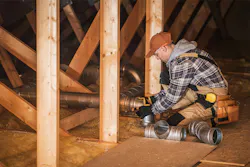
HVAC services are inherently among the more costly ones, and rightly so given their complexity. But is it possible to maximize your earnings even further by ensuring your clients are genuinely satisfied with their investments and fully understand exactly what they are paying for, and why?
Throughout my career, I have worked in energy efficiency, with much of my experience centered on luxury buildings, where a creative approach is key to solving complex challenges related to improving indoor climate, air quality, and more.
Since starting in the HVAC industry in New York five years ago, I have observed a systemic issue with the quality of air duct installations. This issue has a profound impact on the life of New York residents, since air ducts play a critical role in controlling indoor air quality and, when installed improperly, can be the source and cause of respiratory illnesses.
My extensive engineering experience helped me figure out the effective solution, which helped not only significantly improve the quality of life of the clients of MainDuct but also raise the average bill for our services by providing comprehensive system maintenance.
The Importance of Air Duct Inspection
Inspection of the entire system to identify any vulnerabilities is easily performed together with the air duct cleaning.
The most common issues in the air duct configuration include:
1. Too many turns in the air duct.
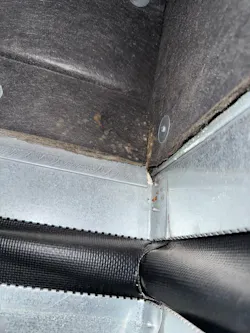
An efficient air duct should have fewer than three turns, operate quietly, and have a smooth inner surface compliant with the NFPA standards 90A (primarily for commercial buildings) and 90B (primarily for residential buildings). The duct system must not cause significant air pressure loss and should adequately meet the airflow requirements of the serviced space.
The air duct must also be insulated externally and be airtight, meaning all joints should be treated with specialized sealants. This reduces heat loss and air leakage through the insulation, which in turn prevents condensation, infiltration of contaminated air into the premises, and other related issues.
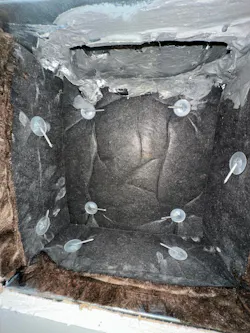
2. Fiberglass inside the air ducts.
An important factor threatening a healthy living environment is the presence of fiberglass inside heating and cooling systems. If improperly installed or inadequately maintained, fiberglass can contaminate the indoor air with fiberglass particles and create an environment conducive to active mildew growth.
3. Wrong filter is installed.
Most residential and commercial buildings lack adequate filtration systems that effectively clean the air. In most of the houses we have inspected, there are electrostatic filters that charge dust and dirt particles with static electricity as air passes through them. When these charged particles return to the room, they clump together with uncharged particles, become heavier, and settle on the floor. Simply put, a good filter is one that captures small pollutant particles and prevents them from circulating inside the living space.
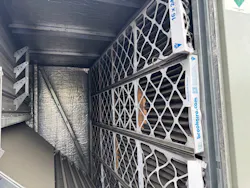
A proper filtration system means having a high-quality filter installed at the intake on the wall surface, arranged in such a way that the entire volume of air returning to the system passes exclusively through the filter. The filter’s efficiency rating should be no lower than MERV 11. Such a filter removes organic contaminants, dust, skin particles, pet dander, dust mites, and other similar pollutants from the air.
Therefore, if the air duct system is designed and installed correctly, the heating or cooling unit of any building can be transformed into an air quality improvement system, creating a healthy and comfortable indoor climate.
What Constitutes a Proper Air Duct
This is an air duct with fewer than three turns, ensuring quiet operation and a smooth interior surface compliant with relevant standards. It does not cause significant airflow loss and adequately meets the needs of each serviced space. The duct is externally insulated and airtight, with all joints sealed using specialized sealants. This reduces heat and air losses through the insulation, preventing condensation and the infiltration of contaminated air into the premises.
The system includes a filter at the intake that meets all filtration system requirements. The filter does not create significant airflow resistance while maintaining high filtration quality, with minimal air bypassing the filter. It is installed at the air intake point on the wall surface and allows for easy and quick filter replacement.
Additional Services: UV Lamps, Access Panel Installation
Also, offer the client ultraviolet air purification lamps, access panel installation, and other appropriate services that will enhance their system. The most important thing is to communicate with the client—explain to them what they currently have and why it is inadequate, how to fix it, and what the long-term consequences and costs of ignoring the issue are. Tell them how to improve air quality and ask if they are experiencing any problems. Don’t just perform routine cleaning. Do more, and you will be rewarded.
Most homes in the U.S. have this potential for additional, actually necessary maintenance, yet it is rarely realized.
Instead of improving air quality, air duct systems often become sources of pollution, worsening the home’s ecosystem. Typical duct systems frequently contain fiberglass insulation that is not properly sealed, combined with low-quality filters or no filters at all.
By being a diligent service provider, you have a good chance of being chosen to bring clients’ systems up to standards, improve indoor air quality, and maximize your earnings simultaneously.
About the Author
 Aleksandr Berestovoi
Aleksandr Berestovoi
Aleksandr Berestovoi is an expert in energy systems and the founder and CEO of MainDuct Inc., a licensed HVAC contracting company specializing in diagnostics, cleaning, and modernization of ventilation and climate control systems in both residential and commercial buildings. He actively promotes higher service standards among HVAC contractors by encouraging a deeper understanding of building codes and the standardization of key service processes. He also advocates for a shift from routine maintenance to comprehensive system evaluations and modernization of outdated technologies. His mission is to reduce energy waste, lower utility bills, and improve air quality for a healthier indoor environment. Berestovoi holds advanced degrees in energy engineering and infrastructure project management, and brings over 20 years of hands-on experience, including work on large-scale industrial sites.