Why Climate Should Be a Design Variable in Every Filtration System
Key Highlights
- Using standards like ASHRAE 169 and IECC helps identify environmental variables that influence filtration needs.
- Ignoring climate factors can lead to increased energy costs, frequent filter replacements, and compromised indoor air quality.
- Modern monitoring tools enable real-time tracking of filter performance, facilitating proactive maintenance and system longevity.
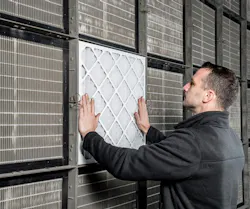
When HVAC professionals think about climate, they usually think in terms of comfort, heating, and cooling loads, not filter performance. Yet climate is just as critical to how filtration systems behave over time. Humidity, dust, temperature swings, and outdoor air quality all vary dramatically across the country, and those variations can make or break a system’s reliability and efficiency.
The same filter that performs flawlessly in Denver might sag, clog, or even grow mold in Houston. Climate isn’t an afterthought—it’s an engineering variable that should inform every stage of system design, installation, and maintenance.
Climate Zones: A Map That Shouldn’t Be Ignored
Most engineers and facility managers are familiar with ASHRAE Standard 169-2021 and the IECC Climate Map, the two major standards that drive how we define and work within these zones.
ASHRAE 169 divides North America into eight primary zones based on temperature, humidity, and precipitation data, providing guidance for designing systems that balance comfort, energy efficiency, and indoor air quality. The IECC Climate Map is widely used in state and local building codes, providing zoning guidance that influences requirements for mechanical systems, insulation, and ventilation based on geographic region.
Understanding which zone a facility is in can help engineers anticipate key variables, including how much outdoor air the building must take in, how much moisture it must manage, and what levels of particulate filtration are realistic. Yet many designs still treat filters as interchangeable components, which, over time, can lead to unnecessary maintenance costs, higher energy bills, and inconsistent indoor air quality.
How Climate Drives Filter Behavior
In humid regions along the Gulf Coast or Mid-Atlantic, moisture can undermine filter integrity. Paper-based filters tend to sag or collapse, allowing bypass leakage or even microbial growth. Facilities in these areas perform better with rigid-frame filters made from hydrophobic synthetic media that can withstand persistent humidity.
Move to the arid Southwest or Mountain West, and you’ll find the opposite challenge. Dry, dusty air loads filters faster, increasing pressure drop and fan energy consumption. In these environments, staged filtration, using a prefilter to capture coarse dust before it reaches the final filter, can significantly extend filter life and maintain airflow.
Urban and coastal regions face their own mix of pollution, fine particulates, and salt exposure. Filters in these locations need higher MERV ratings and corrosion-resistant housings to protect coils and preserve indoor air quality.
These aren’t anomalies. They’re predictable outcomes of geography, and they point to why climate-aware filtration should be standard practice, not a niche consideration.
What It Costs to Get It Wrong
When filtration systems ignore climate, the effects show up quietly but expensively. Filters clog sooner than expected, forcing fans to work harder and driving up energy use. Maintenance teams replace filters more often, spending more on materials and labor. Over time, dust and debris accumulate on coils and sensors, shortening equipment life.
In regulated environments, like hospitals, labs, and data centers, poor filtration can even jeopardize compliance. A mis-specified filter might seem like a minor oversight, but it can trigger a cascade of performance and reliability issues across the entire HVAC system.
A filtration failure rarely looks dramatic; it looks like rising energy bills and one more service call no one planned for.
Designing for Where You Actually Are
A climate-smart approach starts with something deceptively simple: knowing your zone. Engineers and contractors should reference ASHRAE and IECC maps early in the design process, then evaluate humidity, particulate loads, and outdoor air intake rates specific to their project site. From there, it’s about selecting filters and housings built to handle those realities—not the averages from another region.
Maintenance planning also changes when climate is part of the equation. Pressure drop and filter loading rates can vary dramatically by season and region, so monitoring and replacement schedules should be based on data, not habit. Documenting IAQ readings and maintenance intervals helps teams refine their strategy and catch performance drift before it becomes costly downtime.
Beyond Compliance: Designing for Longevity
Codes and standards establish the baseline, but climate-informed design is what extends system life and optimizes energy efficiency. Modern monitoring tools now make it possible to track filter performance in real time, combining differential-pressure sensors, humidity data, and building-management analytics. The next generation of IAQ management will depend on connecting those measurements to the environmental conditions that drive them.
As climate patterns shift—more humidity in the Southeast, more dust in the Southwest—the industry’s definition of “normal operating conditions” will continue to change. Filtration systems that ignore those shifts risk falling behind, in both performance and compliance.
Steps Toward a Climate-Smart Filtration Plan
HVAC professionals already track climate for thermal loads; filtration should follow the same logic.
- Identify your ASHRAE/IECC climate zone.
Cross-reference local codes or use national maps to determine your building’s classification. - Assess environmental stressors.
Review humidity levels, particulate loads, and outdoor air intake percentages. - Select filters suited to the environment.
Choose materials, rigidity, and efficiency levels (MERV) based on zone conditions. - Adjust maintenance schedules.
Pressure drop and loading rates differ by climate—monitor and replace filters accordingly. - Document and review.
Keep records of IAQ readings, filter performance, and maintenance intervals to refine the strategy over time.
A Smarter Way Forward
The smartest facility managers and engineers should no longer ask what filter fits the unit, but what filter fits the environment. When contractors and engineers design with climate in mind, they move from reactive maintenance to proactive performance.
Climate-smart filtration doesn’t always require more expensive equipment; it simply requires better alignment between the system and the setting. That alignment pays off in lower total cost of ownership, longer equipment life, and cleaner, healthier air.
Designing for climate isn’t optional anymore. It’s the difference between a system that works and a system that endures.
About the Author
 Michael Corbat
Michael Corbat
Michael Corbat is vice president of engineering at Rensa Filtration, where he draws on more than two decades of experience designing and improving air filtration systems for commercial and industrial facilities. A former NAFA president and longtime ASHRAE committee leader, he focuses on developing climate-responsive filtration solutions that strengthen HVAC performance and indoor air quality across every environment.