Best Practices for Humidity Control in Senior Living Facilities
Why It Matters
- Understanding the relationship between humidity, ventilation, and respiratory health helps contractors offer solutions that address facility operators’ priorities beyond heating and cooling.
- Accurate system sizing, effective controls, and balanced ventilation are essential to maintaining consistent humidity levels and avoiding condensation, excess moisture and potential mold problems.
- Educating facility administrators and operations teams about the benefits of humidity management can help contractors demonstrate the value of system upgrades and position themselves as long-term partners in maintaining healthy indoor environments.
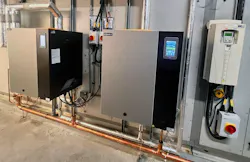
Senior living communities are designed to protect a vulnerable population, and indoor air conditions play a central role in how effectively that protection is delivered. In that environment, relative humidity levels can either support or undermine respiratory health, infection control, and long-term building performance.
A relative humidity range of 40% to 60% is widely accepted as the point where indoor air conditions remain balanced, avoiding issues with either dry air or excess moisture. Within that range, indoor conditions are better suited to support occupant health and allow other HVAC systems to operate most efficiently. In senior living environments, that consistency matters, since many residents manage respiratory or immune challenges, and even small shifts in air conditions can have a noticeable impact.
Understanding the Risk of Low Humidity
Dry indoor air creates a cascade of issues, especially problematic in senior living facilities. When relative humidity drops too low, the body's first line of defense against infection weakens. The respiratory system depends on moisture to capture and remove airborne particles. Without enough moisture, that process becomes less effective, and residents with asthma, COPD, or similar conditions often feel the effects quickly.
Low humidity levels also change how airborne particles behave. In dry conditions, respiratory droplets shrink more quickly, allowing them to remain suspended longer and travel farther. It is not difficult to see how that increases the risk of airborne transmission. On top of that, low humidity creates conditions that help many viruses remain viable longer, making it easier for illnesses to spread and persist indoors.
Beyond health impacts, dry air also affects the building itself. Materials such as wood, finishes, and seals can dry out over time, leading to cracking, shrinkage, and increased maintenance. For building owners and operators, these issues result in higher operating costs and more frequent repairs.
Reframing Humidity as an Operational Priority
There has been a noticeable shift in how senior living providers think about indoor air. Humidity is part of that shift. What used to be treated as a building issue is now tied more closely to care quality.
For contractors, that changes the conversation. Instead of leading with equipment, it helps to start with outcomes. Stable humidity supports resident comfort. It can reduce some of the seasonal spikes in illness that facilities deal with every year. It also helps keep indoor conditions more consistent from one part of the building to another, which residents and staff tend to notice quickly.
There is also a practical side to this. Decisions in senior living facilities rarely come from one person. Administrators, nursing leadership, and operations teams all have a say. When humidity is connected to resident well-being and infection control, it becomes easier for those groups to align and move forward with system changes.
Best Practices for Achieving Stable Humidity
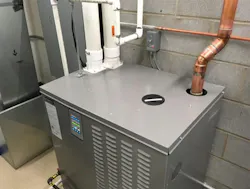
Getting humidity right is rarely about a single component. It comes down to design, controls, and how the system is maintained over time.
Start with system design. Maintaining a target range is important, but stability matters just as much. Systems that drift or swing between dry and humid conditions can create as many issues as those that miss the target entirely. That is why accurate load calculations and proper sizing are so important. In colder regions, winter air brings its own challenges. Outdoor air is often very dry, so systems need to account for that from the beginning.
Ventilation also plays a larger role than it sometimes gets credit for. Outdoor air requirements directly affect indoor moisture levels. During the heating season especially, bringing in large amounts of dry air can make it difficult to maintain proper conditions unless the system is designed to handle it.
There are a few guardrails worth keeping in mind:
- Watch for conditions that could lead to condensation in ducts or on surfaces;
- Make sure airflow supports even distribution of moisture throughout the space;
- Stay within reasonable moisture limits to avoid over-humidifying
Finally, none of this works without upkeep. Humidity systems need routine inspection and maintenance. Access matters. If components are hard to reach, they are often skipped. Over time, that shows up in performance.
Common Contractor Challenges and How to Address Them
Humidity control in senior living environments poses practical challenges, especially in existing buildings. Many facilities operate in older buildings with limited space, and their infrastructure may not support large system upgrades, making humidity control more complicated. Space can be tight, and ductwork may not be ideal. In those cases, finding a workable solution often means adapting to what is already there.
Budget is another factor that comes up early. Some owners and operators initially see humidity control in senior living facilities as optional. That view usually changes once the conversation shifts to outcomes. Reduced maintenance issues, more consistent indoor conditions, and support for infection control tend to resonate more than equipment specs.
There are also some lingering misconceptions. Moisture is sometimes associated with mold or building problems. In reality, those issues are typically due to improper humidity management. When a system is designed and operated correctly, staying within an appropriate range helps prevent those problems rather than causing them.
Make Humidity Part of Your Service Strategy
For contractors, humidity opens the door to a different kind of conversation with customers. It moves beyond heating and cooling and into overall environmental control.
A practical place to start is with assessment. Measuring existing conditions often reveals gaps that are not obvious day to day. From there, it becomes easier to recommend targeted improvements. Some contractors build this into ongoing service agreements, which can help maintain performance over time and strengthen the relationship with the customer.
Training matters as well. Technicians who understand why humidity matters, not just how equipment works, tend to connect better with customers. They can explain what is happening in plain terms and point to real impacts inside the building.
Looking Ahead
Senior living continues to put more emphasis on health and quality of life. Indoor conditions are part of that conversation now in a way they were not a decade ago. Humidity sits right in the middle of it.
For contractors, this is not about adding another layer of complexity. It is about connecting pieces that already exist. When humidity is managed alongside temperature, ventilation, and filtration, the result is a more stable environment overall.
In these facilities, air is not just background. It is part of how residents experience the space every day. Getting humidity right is one of the more direct ways to improve that experience while supporting long-term building performance.