Indoor Air Quality & Monitoring: The Foundation of Healthy, Sustainable Buildings
Key Highlights
- IAQ management has evolved with better understanding, technology, and updated standards, enabling building operators to provide healthier indoor environments.
- Recent standards like ASHRAE 241 focus on reducing outside air intake through advanced filtration, leading to energy savings and better indoor air quality.
- Industry certifications such as WELL, Fitwell, and LEED emphasize continuous monitoring and transparency, making IAQ a visible and measurable building attribute.

Indoor Air Quality is best known as IAQ. These three small letters can strike fear into the hearts of building operators.
Why?
Often, when IAQ is mentioned, it’s because of a real or assumed problem that now demands attention. In many cases, it turns out to be something that could have been avoided or addressed much sooner with far less disruption.
Managing and monitoring IAQ has grown significantly in recent years through better understanding, advanced technology, and updated industry standards, which help to clear the fog around what to do about IAQ. With a better understanding, building operators are learning they can provide optimal IAQ for their occupants, and, at the same time, run the building more efficiently to promote a more sustainable property.
For many years, the U.S. Environmental Protection Agency (EPA) has stated three important factors to improving IAQ are source control, ventilation, and air cleaning. We can see in the modern built environment that these three factors are considered much more than in years past.
We have learned to control sources of pollutants—using fewer chemicals and materials that off-gas fewer Volatile Organic Compounds (VOC). We also pay more attention to people and activities which would produce indoor pollutants. It wasn’t that long ago when smoking was still allowed in offices!
Lessons learned from the COVID pandemic made ventilation and air cleaning critical considerations. Buildings increased their air exchange rates, improved filtration, and incorporated advanced air purification technologies like bi-polar air ionization and UV technologies to address bacteria, viruses, and molds, and provide a healthier indoor environment.
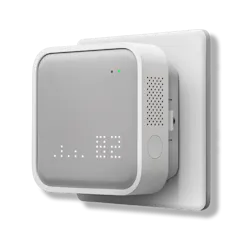
To this end, most buildings do provide particularly good indoor air quality. Many building operators are understanding this, and are monitoring and displaying their indoor air quality.
More advanced platforms can show a comparison of indoor to outdoor air quality and communicate that the air is better in the building than outside. This is a strong message in our age of transparency, where knowledge of IAQ for any building occupant is just a click away.
Following this movement, standards and guidelines have been adopted so buildings have the guidance they need to operate healthier and more efficiently.
In 2023, ASHRAE (American Society of Heating, Refrigerating and Air-Conditioning Engineers) published Standard 241: Control of Infectious Aerosols, which was developed to help protect building occupants from the airborne transmission of illness.
A significant breakthrough of this standard was the development of ECA (Equivalent Clean Airflow). For many years, most IAQ standards were based on the concept of dilution or using volumes of outdoor air to lessen the concentration of indoor pollutants. While this may be effective, it doesn’t address all forms of contamination equally, and is a very costly approach to IAQ management, as outdoor air needs to be heated, cooled, and dehumidified for comfort.
Conditioning untreated outdoor air is the largest consumer of HVAC energy, and HVAC in a commercial building is the largest consumer of total energy. Standard 241 teaches us that using advanced air cleaning, like some of the technologies mentioned previously, and reducing outside air can result in an improved IAQ and lower energy usage. Also, as we have seen in many cases where wildfire issues and others exist, outside air can be undesirable to introduce into the indoor space.
There are many other groups that publish performance-based standards, like the International Well Building Institute's WELL Standard, the Center for Active Design's Fitwell Standard, and the United States Green Building Council's LEED Standard. These groups all use a points-based rating system to certify the building. A common thread between them is that IAQ is a critical factor where many points can be achieved, and all use continuous air monitoring to ensure compliance with IAQ standards and provide some transparency to the building occupant.
IAQ is no longer a thing to be feared. It is something a building owner can use to ensure a healthy and efficient indoor environment and communicate this to occupants and visitors. Many studies and surveys have shown IAQ is especially important and well understood by building occupants. The modern built environment has all the tools and guidance needed, not only to address those concerns but to exceed expectations and make IAQ a shining attribute of any building.
About the Author
Tony Abate
Vice President and Chief Technology Officer
Tony Abate is Vice President & Chief Technology Officer at AtmosAir Solutions www.atmosair.com and indoor air purification and monitoring technology company in Fairfield. CT.