AHR Expo 2026 Trends Report Reveals What’s Shaping HVACR Next
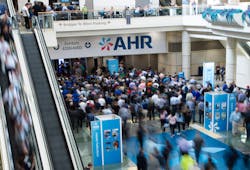
As the HVACR community prepares to gather in Las Vegas for the 2026 AHR Expo, the latest AHR Expo Industry Trends Report offers a forward-looking snapshot of the technologies, market forces, and workforce shifts shaping the year ahead. Reflecting input from endorsing associations provide insights that set the stage for meaningful conversations at the show, helping contractors, engineers, manufacturers, and service leaders align on the challenges and opportunities driving the next era of HVACR.
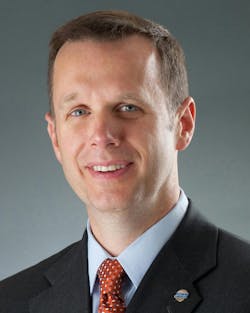
Air Conditioning Heating & Refrigeration Institute (AHRI)
Stephen Yurek, president & CEO
“The HVACR and water heating industry has the solutions and experience to help countries and regions to achieve their sustainability goals. This year’s watchword is affordability, as policy makers around the world strive to ensure progress toward their energy and environmental goals while ensuring continued consumer access to economical, efficient, reliable equipment.”
On next-generation refrigerants, Yurek says: “Completing the global transition toward next-generation refrigerants remains high on our industry’s priority list.”
Tax credits are also a trending topic for the industry: “As the tax credits and rebates for highly efficient equipment wind down in the United States as a result of the recent tax bill, as tariff activities increase, manufacturers will be seeking additional ways to continue to provide essential affordable, reliable, efficient products to their customers.”

ASHRAE
Bill McQuade, 2025-2026 president
“The HVAC&R industry is experiencing a period of rapid transformation. The focus is no longer solely on efficiency or cost savings, it is equally about creating indoor spaces that actively support health, comfort, and productivity. The technologies and solutions driving our sector forward are reshaping expectations for how buildings should perform for both people and the planet.”
“In the short term, the HVACR industry is adapting to rising expectations for energy efficiency, carbon reduction, and improved resilience of building systems. This includes addressing refrigerant transitions, electrification, and smarter controls. In the long term, the industry is moving toward integrated building performance, where heating, cooling, water, and power systems work seamlessly together. This change requires collaboration across disciplines and reinforces the role of HVACR professionals as central to the future of building design and operation.”
On efficiency, McQuade notes that, “Emerging discussions are centering on energy storage, building-to-grid integration, and hybrid systems that combine renewable energy with efficient mechanical solutions. Water efficiency and reuse in HVACR applications are also gaining traction, particularly in regions facing resource constraints. Professionals are also increasingly exploring circular economy approaches, from recycling refrigerants to designing equipment for easier maintenance and longer life cycles.”
Another major shift to note is IEQ is gaining importance: “While energy performance has been a cornerstone of the industry for decades, the conversation now emphasizes the important role of indoor environments in health, productivity, and safety, as well as achieving community-scale decarbonization. This shift has reinforced the importance of updated standards, interdisciplinary collaboration, and continued education for professionals across the supply chain.

Association for Smarter Homes & Buildings (ASHB)
Greg Walker, CEO
“The HVACR industry is at a pivotal point, caught between urgent climate commitments and a wave of technological innovation. From AI and automation to electrification and IAQ, the pressure is on to deliver smarter, cleaner, and more resilient systems.”
According to Walker, “There’s been a noticeable acceleration in how the industry approaches digital transformation and decarbonization. More companies are moving beyond pilot projects and scaling smart building strategies across entire portfolios. AI integration has also matured, shifting from hype to practical applications like predictive maintenance, energy optimization, and system diagnostics. Additionally, customer demand for open, interoperable systems has grown significantly, putting pressure on vendors to prioritize flexibility and integration.
“Opportunities lie in enabling smarter retrofits, particularly in existing commercial buildings. Leveraging cloud-based platforms, edge devices, and integrated analytics can help legacy systems catch up without a full rip-and-replace. Additionally, federal and state-level incentive programs continue to fuel investment in energy efficiency and indoor air quality improvements.”

ESCO Group
Clifton Beck, manager of digital media
“The HVACR industry is undergoing a dramatic transformation. Fueled by technological innovation, regulatory shifts, and surging demand for energy-efficient solutions, this evolution is pushing HVACR professionals to rethink their role in the marketplace or risk being left behind. One of the most striking indicators of this change is the shift in consumer preference from gas furnaces to heat pumps. According to AHRI, heat pump shipments have outpaced gas furnace shipments by 32%. That’s not a minor trend; it’s a clear market signal, making it no longer optional to understand heat pumps. It’s essential! The key element holding back its growth is the lack of qualified HVACR professionals who understand higher-performance heat pumps. Today’s heat pumps are complex and sophisticated. Incorrect installation and/or poor service lead to inefficiency, reduced lifespan, and disenfranchised consumers. That’s why training and certification are no longer optional; they’re mission-critical!
“Gone are the days when heat pumps were seen as a novelty or a climate-limited option. Modern cold-climate models with inverter-driven compressors and vapor injection technology can operate effectively in minus zero temperatures without relying on inefficient backup resistance heat. The old myth that ‘heat pumps don’t work when it’s cold outside’ has been thoroughly debunked.”
Beck notes that the refrigerant transition was a key discussion during the 2025 AHR Expo. “Today, the transition is underway, and professionals have concerns about the availability of products and refrigerants to fill their customers’ needs.”

Heating, Air-conditioning, Refrigeration Distributors International (HARDI)
Talbot Gee, CEO
“2026 will test the industry’s ability to adapt as much as it will reward those who’ve learned from the past two years. The refrigerant shortages of 2025 exposed the cost of weak forecasting and breakdowns in communication across the supply chain, but they also sharpened the industry’s awareness of what coordinated planning requires. The way distributors manage pricing impacts from tariffs will reveal — and strengthen — their value as partners to their customers. It will also be essential that we continue to stay the course set by the AIM Act, even as uncertainty surrounding the Technology Transition Rule creates some unease.”
Gee notes that recent trends from HARDI’s Unitary Market Program indicate that the transition to A2L products is nearing completion. “As of July 2025, A2L refrigerants accounted for 86% of unitary sell-through volume, with R-410A representing just 14%. This marks a significant milestone for the industry, reflecting both the adaptability of distributors and manufacturers and the growing alignment with the goals of the AIM Act.
“One of the most immediate challenges we’re watching is the sharp decline in air conditioning demand during the latter half of 2025. Weak sell-through has led to elevated inventory levels, putting added pressure on margins. As a result, maintaining profitability in the near term will depend heavily on disciplined cost management and careful inventory control. The coming year will test the industry’s ability to balance operational efficiency with readiness for eventual demand recovery.”

Plumbing-Heating-Cooling Contractors — National Association (PHCC)
Cindy Sheridan, CEO
“Last year’s concerns for acceptance of new products brought forth by the refrigerant transition were proven to have been overstated. Prompt market acceptance of A2L products has created other supply side concerns for equipment and refrigerant availability, prompting more repair of existing systems than is typical for most contractors.”
Sheridan notes that PHCC continues to support the AIM Act and believes EPA should ensure competent personnel are doing this work. “PHCC supports stronger enforcement of licensing and certification requirements to ensure safe and optimal performance of advanced heating and cooling systems.
“As the industry continues to transition to the next generation of refrigerants, it is important to ensure technicians have the training and resources necessary for successful installation of new products, and for customers to understand how the transition impacts product availability and performance. Overall, PHCC cannot overstate how critical it is for the industry to stay the course as implementation of the AIM Act continues. We must understand that turning back or otherwise interfering with timelines will only add to economic burdens for both contractors and customers, while putting the U.S. at a global disadvantage in the HVAC market.”
On major industry shifts, Sheridan says, “The acquisition and consolidation of plumbing and HVAC contracting businesses by private equity groups continues to be a notable trend.”