EPA Revises Refrigerant Rules, Ends R-410A Installation Deadline
WASHINGTON — The U.S. Environmental Protection Agency (EPA) announced final revisions to the 2023 Technology Transitions Rule and proposed changes to the 2024 Emissions Reduction and Reclamation Rule that the agency says could save businesses and consumers more than $2.4 billion.
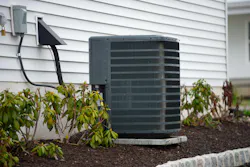
The revisions to the 2023 Technology Transitions Rule extend compliance deadlines for certain hydrofluorocarbon (HFC) refrigerant requirements, removing the Jan. 1, 2026, installation deadline for residential and light commercial air conditioning and heat pump systems using refrigerants with a Global Warming Potential above 700, such as R-410A, as long as the equipment was manufactured or imported before Jan. 1, 2025.
Under the updated rule, contractors may continue installing eligible pre-2025 equipment until existing inventory is depleted, eliminating concerns about a hard cutoff that could have disrupted ongoing projects.
"America's HVACR contractors thank EPA for eliminating the installation deadline for residential and light commercial R-410A equipment, but we’re concerned that other changes in the rule could raise refrigerant prices," said ACCA Vice President of Government Relations Sean Robertson. "The final rule echoes ACCA's comments that the prior rule created unreasonable inventory-management burdens, forced contractors to forecast construction timing with unrealistic precision, and risked unnecessary equipment obsolescence."
He added that, unfortunately, New York State's Part 494 regulation ensures that New York contractors won't share in this relief. "We remain concerned that other states will follow suit. We urge Congress to enact federal preemption to avoid a patchwork of state refrigerant rules.”
EPA's changes also include updated provisions for certain commercial refrigeration applications, including temporary increases in allowable GWP limits for retail food refrigeration starting in 2027, along with limited capacity expansion allowances through 2032. For HVACR contractors, the revisions reduce regulatory pressure during the transition period, helping avoid mid-project equipment changes, stranded inventory, and installation delays. At the same time, the rule maintains the broader AIM Act framework aimed at gradually reducing high-GWP refrigerant use, meaning contractors will still need to plan for continued adoption of lower-GWP refrigerants in new system installations moving forward.
EPA said the added flexibility will affect supermarkets, residential air conditioning systems, semiconductor manufacturing, and refrigerated transportation.
EPA Administrator Lee Zeldin announced the actions May 21, 2026, alongside President Trump at the White House.
"Our actions allow businesses to choose the refrigeration systems that work best for them, saving them billions of dollars," Zeldin said. "This will be felt directly by American families in lower grocery prices."
The agency estimates the revised rule will generate more than $900 million in savings, including more than $800 million tied to supermarket refrigeration applications.
EPA also proposed exempting road refrigerant transport appliances from hydrofluorocarbon leak repair requirements established under the 2024 Emissions Reduction and Reclamation Rule. According to the agency, the transportation sector was included in the original rule despite presenting what EPA described as a low risk to human health.
If finalized, EPA estimates the proposed exemption could save refrigerated transport operators up to $1.5 billion.
EPA stated that the revised Technology Transitions Rule continues to meet statutory obligations under the AIM Act while expanding refrigerant choices for businesses and equipment operators.
The agency also said it plans to reconsider additional portions of the 2024 Emissions Reduction and Reclamation Rule in the future.
Overall, the revised rules could provide additional time to manage refrigerant transitions, reduce stranded inventory concerns, and ease compliance pressures tied to equipment installations and servicing. The changes may also affect long-term planning around refrigerant availability, retrofit decisions, technician training, and equipment procurement across residential and commercial HVACR markets.
AHRI, HARDI Oppose Changes
Heating, Air-conditioning & Refrigeration Distributors International (HARDI) strongly opposed the EPA’s changes to the Technology Transitions Rule as it applies to commercial refrigeration, particularly systems used in supermarkets, retail food service, and cold storage. HARDI warns that the revisions would increase demand for HFC refrigerants at a time when supply is already being reduced under the American Innovation and Manufacturing (AIM) Act, creating market imbalance and undermining long-term transition planning.
HARDI also argues that the rule changes weaken the market certainty needed to manage the phasedown of HFCs and could push refrigerant demand beyond the legally available supply. According to HARDI estimates, the resulting imbalance could add nearly $8 billion in refrigerant costs, with broader economic impacts reaching up to $13 billion across the HVACR supply chain, including contractors, distributors, manufacturers, and end users.
“HARDI, along with manufacturers and other industry partners, submitted data-driven comments demonstrating the real-world supply and cost consequences of allowing extended high-GWP refrigerant use in commercial refrigeration,” said CEO Talbot Gee. “And yet the final rule appears to reflect the preferences of a narrow segment of the food retail sector… That is not how sound rulemaking should work.”
Despite its opposition to the refrigeration-related provisions, HARDI acknowledged one favorable change in the final rule: the repeal of the installation deadline for residential and light commercial air conditioners and heat pumps. The organization said that provision would have negatively affected HVACR wholesale distributors and contractros. HARDI also indicated it will continue engaging with EPA and Congress as implementation of the rule proceeds.
Robertson echoed HARDI's broader industry worries. "We are concerned that changes commercial refrigeration deadlines will likely increase refrigerant prices and accelerate a transition to highly-flammable A3 refrigerants. The final rule was also a missed opportunity to provide relief from the Jan. 1, 2027, installation deadline for VRF/VRV equipment. These changes risk supply chain disruptions and increased prices at a moment when America’s contractors and their customers can least afford them."
The Air-Conditioning, Heating, and Refrigeration Institute (AHRI) and the Alliance for Responsible Atmospheric Policy (Alliance) also criticized supermarket chains that supported the changes to the Technology Transitions Rule.
“This rule works against basic supply and demand,” said Stephen Yurek, AHRI president and CEO. “By extending the compliance deadline, the EPA is maintaining and even increasing demand in the market for existing refrigerants while supply continues to fall under the AIM Act. So, instead of falling, refrigerant prices are likely to rise, resulting in higher service costs, and higher costs for consumers.”
AHRI and the Alliance also emphasized that the EPA’s rule changes do not affect existing equipment, noting that supermarkets and other end users are not being required to replace installed systems. Instead, they stressed that the rule applies only to new equipment manufactured or imported after the transition deadlines.
The two organizations also raised concerns about the impact on U.S. manufacturers that had already invested heavily to comply with the original transition timeline. Over the past several years, manufacturers retooled production lines, redesigned equipment, certified new systems, and expanded domestic capacity to support next-generation refrigerants. As John Hurst, executive director of the Alliance, said, “American manufacturers did what Congress and the first Trump Administration asked them to do… They invested in new equipment, new refrigerants, new production lines, and American workers. The Administration has now changed course in a way that weakens those investments.”
AHRI and the Alliance also rejected assertions that the industry is unprepared for the transition, noting that next-generation refrigerants are already widely available and that more than 90% of new residential and light commercial equipment uses them today. They said they will continue engaging policymakers on issues related to refrigerant costs, affordability, and the long-term competitiveness of U.S. manufacturing.
About the Author
 Nicole Krawcke
Nicole Krawcke
Nicole Krawcke is the Editor-in-Chief of Contracting Business magazine. With over 10 years of B2B media experience across HVAC, plumbing, and mechanical markets, she has expertise in content creation, digital strategies, and project management. Nicole has more than 15 years of writing and editing experience and holds a bachelor’s degree in Journalism from Michigan State University.