Supreme Court Vacates Ruling on 95% Furnace Efficiency Standard
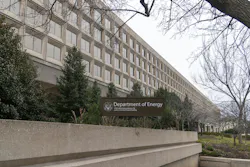
WASHINGTON, D.C. — The U.S. Supreme Court has vacated a lower court ruling in AGA v. DOE that upheld the Department of Energy’s (DOE) residential furnace efficiency standard, sending the case back to the U.S. Court of Appeals for the District of Columbia Circuit for further review. However, the 95% Annual Fuel Utilization Efficiency (AFUE) furnace rule remains in effect while the case is reconsidered.
The DOE finalized the standard in 2023, requiring residential gas furnaces manufactured after Dec. 18, 2028, to achieve at least 95% AFUE. Industry groups challenged the rule, arguing it would effectively eliminate non-condensing gas furnaces from the market.
In an order issued June 8, the Supreme Court directed the D.C. Circuit to reconsider its previous decision in light of the current administration’s position on the rule. The appellate court had upheld the furnace standard in November 2025.
According to the Heating, Air-conditioning & Refrigeration Distributors International (HARDI), the Supreme Court's action represents an important step in the ongoing legal challenge. HARDI and other industry organizations have argued that a condensing-only furnace standard could increase installation costs and create challenges for homeowners whose existing venting systems are not compatible with condensing equipment.
"We are pleased to see the Court and the federal government recognize that the original decision was flawed," said Alex Ayers, HARDI vice president of government affairs. "Sending the case back to the lower court is a strong step toward ensuring this rule receives the scrutiny it warrants. We have heard significant feedback from our members that moving to condensing-only systems will hurt consumers, and the rule needs to be overturned."
The Plumbing-Heating-Cooling Contractors Association (PHCC) also supported the decision, stating that the remand gives the lower court another opportunity to review concerns surrounding the rule and its potential impact on consumers.
"PHCC has long maintained that mandating condensing-only products will present financial burdens for some consumers and is pleased that the U.S. Supreme Court agrees that the decision of the D.C. Circuit was flawed in its process," said Chuck White, PHCC vice president of regulatory affairs. "Vacating and remanding in this instance allows the court to finally get this right."
Despite the Supreme Court’s action, the furnace standard remains in force. The DOE is also considering whether to delay implementation of the rule until Jan. 1, 2030, while litigation and regulatory reviews continue. No final decision has been announced.
For HVAC contractors, distributors, and manufacturers, the ruling creates additional uncertainty around future furnace efficiency requirements. Until further action is taken by either the courts or the DOE, companies should continue planning around the current compliance timeline while monitoring developments in the case.
The D.C. Circuit has not announced a timeline for its reconsideration of the case.