New ASHRAE Guidance Helps Buildings Manage Smoke and Legionella
Why It Matters
- Filtration and ventilation strategies are becoming more important: Contractors can use ASHRAE’s resources to help building owners evaluate how HVAC system operation affects occupant exposure during wildfire smoke events.
- Proactive maintenance can strengthen building resilience: The guidance emphasizes planning and ongoing maintenance, giving contractors an opportunity to help customers address indoor environmental risks before they become emergencies.
- ASHRAE resources can support contractor recommendations: The standards and guidelines provide science-based references contractors can use when discussing Indoor Air Quality, filtration, ventilation and water-management strategies with building owners and facility managers.
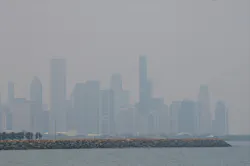
ATLANTA — ASHRAE is highlighting technical resources designed to help building professionals address wildfire smoke, Legionella risk, extreme heat, and other environmental challenges.
The resources focus on maintaining healthy indoor environments through building system design, operation, and maintenance. They address both indoor air quality and water safety.
For Legionella risk, ANSI/ASHRAE Standard 188, Legionellosis: Risk Management for Building Water Systems, establishes minimum requirements for managing risks throughout the lifecycle of building water systems.
ASHRAE Guideline 12, Managing the Risk of Legionellosis Associated with Building Water Systems, provides recommendations for developing water management programs. The guidance covers cooling towers, potable water systems, decorative water features, and other building water systems.
ASHRAE is also highlighting Guideline 44-2024, Protecting Building Occupants From Smoke During Wildfire and Prescribed Burn Events. The guideline addresses commercial, institutional, healthcare and multi-residential buildings.
Its recommendations cover building preparedness, filtration, ventilation, air cleaning and operational strategies before, during and after smoke events.
ASHRAE also provides additional technical guidance on filtration and indoor air quality, along with planning resources, webinars, podcasts and research related to wildfire smoke mitigation.
The resources come as building owners and operators face multiple environmental and public health challenges. ASHRAE said comprehensive planning for indoor air quality, water safety and resilient building operations can help reduce health risks while supporting building performance.
“Healthy, resilient buildings depend on thoughtful planning, ongoing maintenance and the application of proven engineering practices,” said Sarah Maston, P.E., BCxP, LEED AP BD+C, ASHRAE’s 2026-27 president.