ABC: Construction Hiring Exceptionally Slow in March
Key Highlights
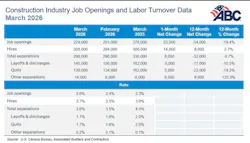
- The construction industry had 224,000 job openings at the end of March, up 23,000 from the previous month.
- Job openings are down 54,000 compared to the same period last year, indicating a slowdown in hiring activity.
- Layoff and discharge rates are at their lowest since early 2024, showing reluctance to fire workers.
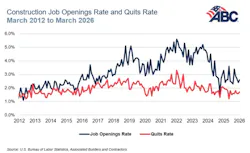
- Workers are also hesitant to quit, reflecting a cautious labor market environment.
- Industry confidence remains optimistic, but labor market dynamics suggest a holding pattern until economic uncertainty diminishes.

WASHINGTON — The construction industry had 224,000 job openings on the last day of March, according to an Associated Builders and Contractors analysis of data from the U.S. Bureau of Labor Statistics’ Job Openings and Labor Turnover Survey. JOLTS defines a job opening as any unfilled position for which an employer is actively recruiting. Industry job openings increased by 23,000 last month but are down by 54,000 from the same time last year.
“The industry’s labor market continues to be defined by an utter lack of churn,” said ABC Chief Economist Anirban Basu. “Construction industry hiring rebounded from February’s historically low level but remains extremely subdued. Contractors also remain reluctant to fire workers; the layoff/discharge rate fell to the slowest pace since early 2024 and is lower than at any point prior to 2022. At the same time, workers are also reluctant to quit compared to the prevailing trend of the late 2010s and early 2020s. While contractors remain confident that their staffing levels will improve this year, according to ABC’s Construction Confidence Index, these stagnant labor market dynamics suggest that the industry remains in a holding pattern, one it will not exit until economic uncertainty lessens.”