Adapting to A2L Refrigerants: How Flexible Evaporator Coils Enhance HVAC Efficiency and Service
Key Highlights
- Dual-refrigerant coils are designed to work with both R-32 and R-454B, simplifying inventory and installation processes for HVAC contractors.
- These coils are factory- or field-convertible, allowing flexibility and reducing the need for multiple specialized coils.
- This innovation empowers technicians with more adaptable, efficient, and environmentally friendly options, ultimately improving customer satisfaction and operational efficiency.
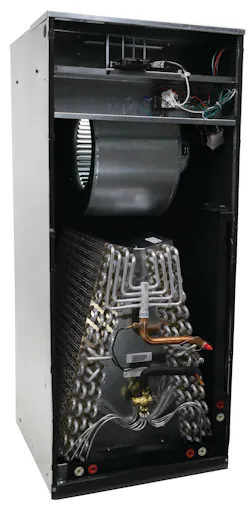
As the HVAC industry continues to innovate in response to global sustainability goals, the shift towards A2L refrigerants with lower global warming potential (GWP) has become undeniable. One area where this transition is making a significant impact is in the design and performance of evaporator coils. Among the preferred A2L refrigerants gaining traction in these systems are R-32 and R-454B, both of which present exciting opportunities for greater efficiency, reduced environmental impact, and more cost-effective operations.
However, refrigerant innovations can sometimes create headaches for HVAC technicians.
HVAC OEM engineers and contractors are now faced with the challenge of navigating evolving compatibility requirements, as each refrigerant presents its own unique set of pressures, thermodynamic properties, and handling considerations. Selecting the proper coil materials, expansion devices, and safety measures becomes paramount to ensuring not only regulatory compliance but also optimal evaporator coil performance.
Gone are the days when a one-size-fits-all approach dominated the market; the modern era requires adaptability and a deeper understanding of refrigerant chemistry and system integration.
Worse yet, it can lead to unhappy customers tarnishing your reputation. Imagine a technician leaving a customer’s location because they didn’t have the correct coil. Not only does that lead to a waste of time, but it might also infuriate a customer with a non-functioning HVAC system, especially on very hot days.
Currently, all major OEM HVAC manufacturers have selected their A2L refrigerant of choice, either R-32 or R-454B. As a result, their evaporator coils are designed to perform using their preferred refrigerant. That also means that HVAC contractors might be locked into the OEM evaporator coil.
Two Refrigerants, One Evaporator Coil
Already on the market from select independent evaporator coil manufacturers is a versatile coil that can be installed in either an R-32 or R-454B system. This evaporator coil can be factory- or field-converted to either refrigerant. The metering device must be matched, and a refrigerant detection system is needed, too. With either A2L refrigerant, the evaporator coil has an AHRI match and is ETL certified. Therefore, regardless of the HVAC system's brand or refrigerant, only one evaporator coil is required for virtually any installation. This allows HVAC contractors to avoid unnecessary inventory of multiple evaporator coils that are designed for a specific A2L refrigerant
Instead of complicating life for contractors and distributors, select independent coil manufacturers are rethinking the design of evaporator coils altogether. The goal: a flexible, factory- or field-adaptable solution that eliminates the guesswork and inefficiency of stocking separate coils for each refrigerant.
These next-generation coils are engineered with adaptability in mind, reducing the risk of mismatched components and costly callbacks. Thanks to this evolution in coil design, contractors can approach new installations, service, or retrofit installations with far greater confidence.
The adaptability of a dual-refrigerant coil means one streamlined solution can be configured on the spot to match the needs of any compatible A2L system— without the worry of incompatible parts or frustrated callbacks. This reduces downtime and keeps service trucks stocked with universal coils, rather than an excess inventory of single-refrigerant options. These dual-refrigerant coils allow dealers to stock a single coil and be prepared for any A2L service and installation challenge they face in the field.
The universal evaporator coil stands as a testament to the power of engineering collaboration, merging the needs of technicians, distributors, and end-users into a single, adaptable solution. Instead of navigating the maze of OEM-specific requirements or worrying about future refrigerant transitions, contractors can now focus on delivering reliability and value to their customers. For distributors, the operational advantages are just as compelling. The risk and overhead associated with forecasting demand for specific refrigerant coils are minimized. Instead, the focus shifts toward providing faster turnaround and more reliable support to contractors, ultimately enhancing customer satisfaction throughout the entire supply chain.
While government regulations and HVAC OEMs may cause potential headaches regarding the ability to change out an evaporator coil regardless of the brand, select independent coil manufacturers have met the challenge and provided immediate relief.
In the end, the era of dedicated-refrigerant evaporator coils is giving way to a more innovative, more sustainable approach — one that embraces adaptability, empowers technicians.
About the Author
 Riley Archer
Riley Archer
Riley Archer is vice president of sales and marketing at Aspen Manufacturing.