Stop Venting Money: The Business Case for Refrigerant Recovery
Key Highlights
- Illegal refrigerant venting is common and often dismissed as humorous, but it has serious environmental and economic consequences.
- Economic incentives and understanding the true value of reclaimed refrigerants can motivate contractors to improve recovery practices.
- Proper recovery equipment, organization, and routine inspections are essential for maximizing recovery efficiency and refrigerant purity.
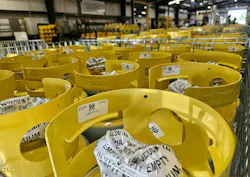
A few short months back, a video of an HVACR contractor illegally venting refrigerant circulated around TikTok and Instagram. The EPA 608-certified technician said, “I have no other choice,” and pointed to his supervisor, who was also on site. The person recording stated it had been going on for at least five minutes, without a recovery tank in sight.
Sadly, it’s an occurrence that happens all too often.
According to Adam Dykstra, founder and COO of FM Hero, it’s a culture problem.
“We accept venting as funny or normal,” he says. “Technicians joke about the bucket recovery method. Contractors push to get the job done and skip the recovery equipment and cylinders because they think it takes too much time or costs too much in labor.”
However, not recovering costs far more. He adds, “The cost is environmental, but it's also economic: revenue we forfeit on gas we should have sent to reclaim, and impending supply shortages that will cost us customers and service opportunities.”
Dykstra argues that illegal refrigerant venting is not primarily an awareness problem, since every EPA Section 608-certified technician has been trained on the rules and understands that venting is prohibited. While enforcement and training play a role, he believes economics is the real driver behind recovery behavior. “If we understood the economics, we would recover every time, regardless of the regulations,” he says.
He notes that contractors often cite time constraints or skepticism about climate change as reasons for skipping recovery, but he dismisses those arguments. “Recovery done right is quick,” he said. “You do it while other work is happening on the job.” More importantly, he emphasizes that reclaimed refrigerant has real value and helps reduce dependence on increasingly expensive virgin refrigerants.
How We Got Here
The AIM Act has significantly elevated the importance of refrigerant reclamation by increasing the value of recovered refrigerants and making reclamation a critical component of long-term supply management, according to Anthony Nash, network training manager at A-Gas.
“The AIM Act has changed the refrigerants industry by placing a higher understanding and priority around reclamation,” Nash says. “Before the AIM Act, reclaimed refrigerants weren’t a priority. But with the phasedown, it's become necessary.”
Nash emphasizes that only a small fraction of refrigerant is recovered, meaning a small fraction of refrigerant is able to reclaimed. “Looking at the EPA’s data from 2024, only 11 million pounds of HFCs were received by reclaimers, but there are about 270 million pounds of HFCs that went into the US market. That’s only 4% of HFCs that were turned into reclaimers. A reclaimer can’t do their job to reprocess refrigerant and get it back into the market if they aren’t receiving it.”
He notes that the next major phasedown step in 2029 will further increase the value of recovered refrigerants and the need for effective recovery programs.
The Benefits of Recovery & Reclamation
Dykstra contends that refrigerant recovery and reclamation should be viewed as profit opportunities rather than compliance burdens. Although smaller contractors may struggle because they “wear every hat just to keep the lights on,” he believes they are also better positioned to capitalize on new revenue streams. “Recovered refrigerants have value. New refrigerants cost too much to waste or lose track of,” he says.
He adds that contractors can package refrigerant compliance as a managed service for customers, creating recurring revenue while strengthening customer relationships. “When you become the compliance arm of your customer’s operation, they stop shopping for new providers,” he says.
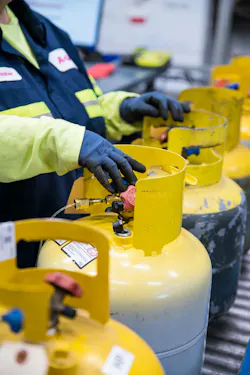
Nash says many HVACR contractors are already benefiting from refrigerant buyback and reclamation programs, but others are still missing opportunities to generate revenue from recovered refrigerant. Contractors can turn in full or partially full recovery cylinders through reclaimers or participating distributors and receive compensation while helping support the industry’s refrigerant supply. “There are several HVAC contractors that are leaving money on the table by not pushing refrigerant recovery or holding their techs accountable to properly recover the refrigerant,” he says.
Nash emphasizes that every pound recovered can be reclaimed, reprocessed, and returned to the marketplace, helping offset future supply constraints.
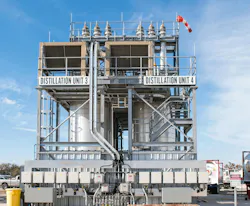
While reclamation capacity continues to expand, Nash believes the industry's biggest challenge is ensuring a consistent flow of recovered refrigerant into the reclamation stream. Reclaimers have invested heavily in separation and purification technologies, but their success depends on contractors and equipment owners returning used refrigerants at end-of-life.
Beyond Financial Incentives
Nash stresses that financial incentives alone are unlikely to solve the recovery challenge. Contractors are already legally required under EPA Section 608 regulations to recover refrigerants, and failure to do so can result in fines, license risks, and other penalties. He believes the industry needs a broader cultural shift that recognizes refrigerant recovery as an essential part of lifecycle refrigerant management.
“Financial incentives are a nice benefit for contractors doing what is legally required,” he says. “Eventually, enforcement by the EPA will become the standard incentive to change recovery behavior.”
The HVACR industry is already facing increased regulatory scrutiny. Dykstra points to the EPA’s growing enforcement activity, including the recent Kroger consent decree, which he described as the largest Section 608 and AIM Act service enforcement action to date, carrying an estimated $102.5 million impact through fines, equipment upgrades, and retrofits.
“The investigation spanned multiple administrations, which tells you enforcement isn’t a partisan question,” he explains. At the same time, new regulations are increasing accountability. As of Jan. 1, 2026, the refrigerant management threshold for commercial and industrial systems dropped to 15 pounds, expanding documentation and tracking requirements across a much larger portion of the installed base.
To help contractors stay compliant and profitable, Dykstra advocates for comprehensive refrigerant tracking programs. While he cautions that “tools don’t fix anything,” he says digital platforms can create accountability by documenting every pound purchased, installed, recovered, reclaimed, or credited. “When every ounce is tracked and every movement cataloged, traceability becomes the norm, and accountability inevitably creates profitability,” he says.
Field Best Practices
According to Nash, one of the most persistent misconceptions in the field is that certain refrigerants—particularly lower-GWP or natural refrigerants—can be vented without consequence.
“No matter the refrigerant type, you should always keep it in the tank,” Nash says. He also challenged another common belief that mixed refrigerants must automatically be destroyed. While keeping refrigerants separated is preferred, mixed refrigerants can still be reclaimed and processed back into usable product streams.
Improving refrigerant recovery quality often comes down to preparation and organization, he adds. Contractors should ensure they have enough recovery cylinders available for each job and, whenever possible, dedicate cylinders to specific refrigerant types. Keeping recovered R-410A, R-22, and other refrigerants separate not only increases the value contractors receive from reclaim programs but also accelerates the reclamation process by making it easier to return refrigerant to AHRI 700 purity standards. He notes that creating incentives for technicians to recover refrigerant consistently could further improve industry-wide recovery rates.
“Simply put, making safe recovery a requirement on every job and ensuring they have the tools to do so separates the contractors who consistently win,” Nash says. “For example, before going on a job, they should check to make sure they have a recovery cylinder ready to recover, and they have their recovery equipment that is rated for the refrigerant they are recovering. That’s especially important for A2L refrigerants, as not all recovery equipment is rated for any level of flammability. By doing those things, they then can turn their recovered refrigerant in for financial incentives.”
Nash also believes contractors can significantly reduce refrigerant losses by focusing on simple operational habits. Routine inspections of recovery equipment, ensuring empty cylinders are readily available, and taking a more deliberate approach to service work can help prevent accidental releases. “If we as an industry slow down a bit and think about what we're doing and do it efficiently, we can actually improve our processes,” he says. Even simple steps such as checking fittings carefully and listening for leaks before proceeding can prevent refrigerant losses and improve overall recovery performance.
Looking ahead, Nash says contractors can improve both compliance and profitability by making refrigerant recovery a standard practice on every job, keeping refrigerant types separated during recovery, and ensuring technicians have the proper equipment—particularly as A2L refrigerants become more common. He also challenges a common misconception about reclaimed refrigerants, noting that properly reclaimed refrigerant meeting AHRI 700 standards performs the same as virgin product. “Reclaimed refrigerant is equivalent to virgin refrigerant in terms of performance, quality, and purity,” he says, underscoring reclamation’s growing role in maintaining the industry's future refrigerant supply.
With the transition to A2L refrigerants and increasingly complex federal and state regulations, Dykstra believes refrigerant management is becoming a critical business issue. Contractors who provide compliance services can generate recurring revenue, reduce customer liability, and differentiate themselves in a competitive market.
His message to contractors who still vent refrigerant is simple: “Stop. And stop the people around you. You’re losing money today and venting away your supply for tomorrow.”
About the Author
 Nicole Krawcke
Nicole Krawcke
Nicole Krawcke is the Editor-in-Chief of Contracting Business magazine. With over 10 years of B2B media experience across HVAC, plumbing, and mechanical markets, she has expertise in content creation, digital strategies, and project management. Nicole has more than 15 years of writing and editing experience and holds a bachelor’s degree in Journalism from Michigan State University.