A2L Refrigerants Explained: What HVAC Contractors Need to Know About R-32 and R-454B
Why It Matters
- Proper A2L installation requires contractors to stay current on evolving codes and standards, including ASHRAE 15.2 and applicable International Building Code and International Fire Code requirements.
- Contractors need to understand the safety requirements associated with mildly flammable A2L refrigerants, including refrigerant detection systems, charge limitations, equipment location, and proper installation practices.
- Understanding A2L technology now can help contractors prepare for the industry's broader refrigerant transition, position themselves as knowledgeable advisers to customers, and avoid costly compliance or installation mistakes.
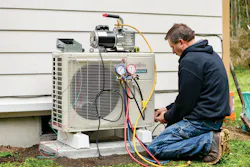
The HVACR industry is going through an evolutionary phase with the introduction of A2L refrigerants. The rest of the globe began adopting A2Ls as early as a decade ago, but here in North America, we’re seeing and adapting to it now.
These refrigerants represent the next step in creating more efficient, environmentally friendly heating and cooling systems. To demystify A2L refrigerants, we’ll rewind 37 years, all the way back to when your older customers learned the word “freon.”
The Montreal Protocol, adopted in 1987, set the stage for reducing ozone-depleting substances, including hydrofluorocarbons (HFCs). This authorized the Environmental Protection Agency (EPA) to set alternative guidelines, leading to the transition from R-12 to R-22, R-410A, and now to A2L refrigerants.
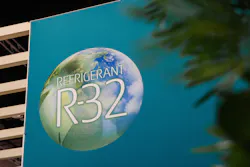
A2Ls are defined by their lower Global Warming Potential (GWP), with a benchmark of 750 or less. For instance, R-32, a common A2L refrigerant, has a GWP of 625 compared to R-410A’s 2,088 – that’s a significant reduction.
A2L refrigerants align with global efforts to reduce greenhouse gas emissions. The American Innovation and Manufacturing (AIM) Act mandates the reduction of HFCs, and A2L refrigerants like R-32 and R-454B meet these requirements with zero Ozone Depletion Potential (ODP) and low GWP. This makes A2Ls a far more sustainable option for our industry moving forward.
So, What’s an A2L?
Many of us toss around the term “A2L” without really knowing what it means or stands for.
Refrigerants are categorized by two key safety metrics: flammability and toxicity. “A” denotes lower toxicity gases, while “B” indicates higher toxicity gases. Flammability is rated on a scale from 1 to 4, with higher numbers representing greater flammability. A2L refrigerants, therefore, are low-toxicity refrigerants with mild flammability.
I’m more familiar with R-32 than other A2L refrigerants simply because I work for GENERAL HVAC Solutions America. Our company has standardized on R-32 for our new product lines in the United States and Canada.
We’re no stranger to R-32, having used it in systems across Europe, Asia, and other global markets for about a decade now. This familiarity allowed us to expedite the R-32 product launch in North America without major re-engineering. In the trenches, it also allows us to better support installers.
I digress. We were talking about toxicity and flammability.
Safety Considerations
Unfortunately, the industry has been victim to fearmongering. The initial emotional response coming from the field was that A2L refrigerants were “highly flammable” and could “explode.” This simply is not the case. Let me restate that. A2Ls are not explosive.
Yes, A2L refrigerants are mildly flammable at high temperatures. The ignition temperature of R-32 is roughly 1,198°F. For ignition to occur, that temperature must be applied constantly.
In the event of ignition, R-32’s burn rate is slow. One way I’ve heard it explained is as follows: if a space were filled with R-32 and ignition somehow occurred at 1,198°F, a building occupant on their hands and knees could crawl faster across the floor than the ignition of the gas could move.
As a result of these concerns, the International Building Code (IBC) and International Fire Code (IFC) are and will continue to be updated to reflect the installation requirements for A2L refrigerants. It’s very important for our industry to stay up to date on code adoption and enforcement.
Equipment charged with A2Ls must include a Refrigerant Detection System, commonly known as RDS. Any equipment that requires the connection of duct to distribute air throughout the occupied space must have an RDS integrated into the system to shut down/ventilate the space upon detection of a refrigerant leak. Systems containing four pounds or less of refrigerant do not require an RDS.
Another protocol heavily impacted by A2L refrigerants is ASHRAE 15.2. In a nutshell, there are design parameters that must be considered when designing a system. These range from residential or commercial applications, total refrigerant charge in the system, isolation valves, fresh exhaust, etc. Essentially, if certain conditions are present, the standard requires additional equipment to satisfy the requirement. We’ve created the Charge Compliance Calculator tool to assist designers and ensure they are compliant.
Compare and Contrast
Before we dive too far down the R-32 rabbit hole, it’s worth mentioning that R-32 isn’t the only A2L gaining traction in North America.
R-32 and R-454B are the two most common A2L refrigerants being introduced. The adoption rate split is roughly 50/50 among manufacturers. Factors like cost, market readiness, and application suitability influence the choice between them. The characteristics and advantages of these two refrigerants are very similar. Again, my focus has been R-32, so let’s compare it with R-410A.
When it comes to GWP, R-32 scores 70% better than R-410A. This refers to the efficiency of the refrigerant itself. The Coefficient of Performance (COP), or the ratio of energy produced in a heat pump system, was found to be roughly 10% higher in R-32 systems than R-410A systems.
R-32 is a single-component refrigerant. Unlike blended refrigerants like R-410A and R-454B, R-32’s consistent composition simplifies handling, recycling, and recharging.
Being a single-component gas, R-32 has no glide. “Glide” refers to the temperature range over which a blended refrigerant changes state during the refrigeration cycle. Its composition remains consistent during phase changes. This makes it easier to diagnose issues and easier to maintain, especially for less experienced technicians.
Installation and Maintenance
The installation process for R-32 equipment is similar to that of R-410A, with just a few key differences.
As previously mentioned, an RDS is required for systems with duct connections exceeding four pounds of refrigerant charge.
When it comes to tools, especially gauges, hoses, sniffing devices, and recovery cylinders, there’s no need for techs to adapt to anything new. It is, however, important to have a dedicated set of equipment to prevent mixing A2Ls and R-410A. The threads on R-32 refrigerant cylinders are reversed to eliminate the possibility of connecting gauges and hoses to the wrong system.
Routine maintenance for A2L systems aligns closely with R-410A systems, so long as the system was evacuated and held vacuum. Regular professional servicing ensures optimal performance and safety. Nothing new there!
From a system design, load calculation, and equipment sizing perspective, nothing really changes. Designers still do the math the way they’ve always done it. The biggest change is compliance with ASHRAE 15.2
As far as that’s concerned, one thought to consider is the type and location of an air handler as it pertains to where any catastrophic release of refrigerant would occur. Location could dictate whether the system is compliant with ASHRAE 15.2.
At the end of the day, handling R-32 is no different than R-410A. All refrigerants should be respected and safety precautions taken.
Future Outlook
The shift to A2L refrigerants is driven by environmental regulations and the need for sustainable alternatives. While A2Ls like R-32 and R-454B are a significant step forward, the industry is already eyeing the next generation of refrigerants, such as A3Ls, which include options like propane (R-290), R-142A, and carbon dioxide (CO2).
Transitioning to A2L refrigerants might seem daunting, but with proper training and adherence to updated codes, it’s a simple process. R-32 is a proven, efficient refrigerant with a solid supply chain, making it a reliable choice for future-ready HVAC systems.
Our industry is accustomed to change. We’ve evolved with and adapted to EPA mandates before, and now we’re merely adapting again.