How Interchangeable Mini-Split Systems Simplify Inventory and Expand Options
Key Highlights
- Interchangeable mini-split systems eliminate fixed pairings, reducing stranded inventory and project delays.
- Versatility enables contractors to design customized solutions with fewer inventory constraints, improving customer satisfaction.
- Streamlined inventory management helps distributors cut costs and stabilize pricing amid supply chain disruptions.
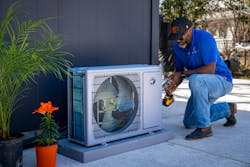
For years, distributors and contractors working with ductless mini-split systems have faced the same challenge: indoor and outdoor units have been tied together in fixed pairs.
In this traditional model, every indoor unit is designed to work with only one specific outdoor partner, and any mismatch in availability can delay an entire project. If that match isn’t available, the equipment becomes essentially useless, creating “stranded inventory.”
This issue has become even more pressing in today’s climate for HVAC contractors. Rising tariffs, higher equipment costs, and ongoing supply chain pressures force distributors to be more selective about how stock is managed.
There is a solution. Manufacturers are now offering interchangeable indoor and outdoor HVAC units that minimize the number of fixed pairings that distributors must stock, simplifying inventory management while allowing contractors to tailor systems to each project. This way, contractors and distributors can mix and match configurations without being limited to fixed pairs.
This shift away from rigid pairing allows distributors to optimize their inventory, contractors to approach projects with greater confidence, and end-users to receive tailored systems that actually meet their comfort and efficiency needs. Every link in the HVAC chain benefits.
Why Versatility Matters
The problems with traditional pairing extend far beyond stranded inventory. When a unit sits in a warehouse without a match, the consequences ripple throughout the supply chain.
Distributors must either hold onto that inventory and absorb carrying costs, or sell it at a discount, which might mess up margins. Contractors may find themselves waiting weeks for a compatible unit to arrive, delaying installations and frustrating customers. Homeowners ultimately face higher costs or longer waits for the systems they want. (Or worse, both.)
Versatility addresses these issues by giving each party more flexibility. Instead of holding dozens of fixed equipment pairings, indoor and outdoor units can be mixed and matched.
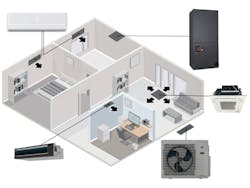
For contractors, that means fewer delays waiting for a specific pairing and more confidence that the right equipment will be available when a project is ready to start. It also gives them the ability to design the best system available for each job. Say a homeowner needs a wall-mounted unit in one room, a ceiling cassette in another, and a ducted air handler for the main floor, all connected to the same outdoor unit. Versatility makes it possible.
On the other hand, versatility can help stabilize pricing. Instead of distributors carrying dozens of niche inventory items, they can streamline to fewer, more versatile models. Distributors get a better stock management strategy.
Best of all, consumers get tailored comfort without compromise.
In a world of constant supply chain disruptions, availability and flexibility are everything, especially with the HVAC industry under more pressure than ever to balance efficiency with personalization. Versatility provides a solution that allows distributors, contractors, and homeowners to all benefit simultaneously.
Signs of a Distributor That Prioritizes Interchangeable Mini-Splits
When evaluating which distributors to work with on ductless mini-split solutions, there are a few things for contractors to consider to deliver on the promise of flexibility and performance:
Mix-and-match compatibility. Work with distributors that choose systems where multiple indoor unit types can be paired with a single outdoor unit across both single and multi-zone applications. This flexibility ensures contractors can tailor each installation to the home without being constrained by availability.
Range of capacities. A strong inventory portfolio should cover everything from compact, single-room systems to whole-home solutions. Confirming capacity coverage upfront with a manufacturer avoids situations where a system can’t scale to meet the project’s needs.
Installation efficiency. The U.S. Department of Energy found that simplified installation practices reduce labor hours, improve reliability, and lower callbacks. Many ductless systems already include features like quick-access service panels or modular blower designs, which make servicing and installation faster. Contractors should confirm these features are part of the portfolio they choose. Even small time savings on each job compound into significant efficiency gains across a busy season.
Energy performance. With energy costs rising, consumers expect high-efficiency systems and ENERGY STAR certifications. Contractors who deliver energy-efficient solutions meet homeowner expectations and strengthen their own reputations as trusted advisors. Working with a distributor that offers minisplits can help avoid the energy losses associated with ductwork in central forced air systems, which can account for more than 30% of energy consumption for air conditioning.
Warranty coverage and after-sales service. Strong warranties and responsive after-sales support signal a distributor’s confidence in their interchangeable systems. Contractors benefit from reduced risk and a trusted path to escalate any issues that might arise.
As supply chain pressures increase, the industry will need smarter strategies for managing complexity. By prioritizing distributors who simplify choice without limiting performance, contractors can reduce installation headaches, win homeowner trust, and protect their margins in a shifting industry. Contractors who work with these manufacturers now will be better positioned to thrive in a market defined by constant change.
About the Author
 Brad Niehaus
Brad Niehaus
Brad Niehaus is the national manager, ductless and universal heat pump sales at Friedrich Air Conditioning.