The Rise of Dual Fuel HVAC Solutions
Key Highlights
- Dual fuel HVAC systems blend electric heat pumps with fossil-fuel furnaces, offering year-round comfort and energy savings without requiring full electrification upfront.
- Advancements in cold climate heat pumps have expanded the effective operating range, making hybrid systems viable in colder regions and increasing their long-term relevance.
- Market trends show exponential growth in dual fuel adoption, driven by homeowner preferences, utility incentives, and the need for reliable, efficient heating solutions.
- Contractors can differentiate themselves by gaining expertise in system design, controls, and customer education, maximizing performance and customer satisfaction.

At the 2026 AHR Expo this past February, an increasing number of manufacturers used the industry’s largest stage to showcase their latest dual fuel HVAC systems — signaling a clear shift in product development toward solutions that blend electric heat pumps with traditional fossil-fuel furnaces. For HVAC contractors, this emerging technology matters because it offers a practical, performance-driven pathway to energy electrification without forcing customers into all-electric systems before they’re ready. With dual fuel configurations, contractors can deliver year-round comfort and efficiency while helping homeowners navigate rising energy costs and evolving electrification goals — making these systems a compelling option in today’s competitive market.
Increased Interest in Hybrid Systems
Though dual fuel or hybrid HVAC systems are not new in the U.S., there has been recent exponential growth, according to Troy Roberson, director of sales operations, Mitsubishi Electric Trane HVAC US (METUS).
“A combination of factors is driving the increased demand, including advancements in heat pump technology and homeowners’ desire to reduce fossil fuel use and manage their energy costs,” Roberson says. “Hybrid systems give consumers options on how they want to heat their homes.”
Additionally, the market has seen a significant increase in heat pump adoption in colder climates, thanks to advancements in technology, Roberson points out. “With a solid design and proper installation, today’s technology can maintain full-rated heating capacity even in sub-zero temperatures without a furnace ever needing to run. Northern markets, where fossil fuels have been the primary heating source for decades, are seeing the largest adoption rate. Other markets such as the Midwest and Pacific Northwest are also adopting all-climate heat pumps at a tremendous rate.”
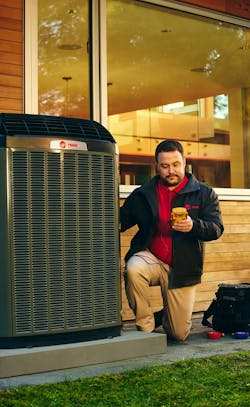
Trane is absolutely seeing a growing interest in dual fuel systems across the residential market, notes Jeff Tyminski, vice president, product management, residential HVAC, Trane Technologies.
“Homeowners are looking for solutions that balance comfort, efficiency, and reliability, and hybrid systems can be uniquely positioned to deliver on all three,” he explains. “Utility costs continue to push consumers to look for smarter ways to manage their energy usage, and the ability to optimize between electric and gas heating provides savings over the life of the system.”
Tyminski adds that adoption of dual fuel systems varies by region, climate, and customer. “We’re seeing the strongest momentum in areas where the technology delivers clear, year-round advantages. Regions such as the North and across transitional climates are leading the way. In these areas, homeowners may appreciate the ability to rely on efficient heat pump performance during milder conditions while having the assurance of gas heating during colder periods.”
Nasim Arbab Rahman, PhD, senior product manager at Lennox Commercial, notes that 2025 had the highest heat pump/dual fuel mixes the industry has seen, pointing to AHRI data.
“Traditionally, customers in milder climates see heat pump units as a practical year-round solution,” she says. “Additionally, strong utility incentives and rebates (including incentives from gas utilities) are accelerating adoption as part of broader electrification strategies across North America. Lastly, as electrification targets tighten, dual-fuel systems offer a pragmatic way to reduce carbon emissions today while maintaining performance and resilience.”
And while residential adoption of dual fuel systems is further along than commercial, interest in commercial application is rapidly increasing, according to Rahman.
“One of the key barriers in commercial applications has been electrical infrastructure upgrades, which are typically easier and less costly in residential settings,” she says. “That said, the commercial market is closing this gap through innovative product designs and system architectures.”
Traditionally, there was a trend toward full-electric solutions, but that has cooled off somewhat in terms of adoption of full heat pump systems in homes, notes David Budzinski, deputy CEO and regional president, Americas, Bosch Home Comfort Group.
“We are seeing consumers opting to do more dual fuel systems,” Budzinski says. “And it's not just consumers, it's also commercial building owners as well. Because if you look at the real need for it, the largely federal government subsidies have been removed for full electrification. But there are some local utilities and subsidies that are still available to consumers. Then, in terms of overall contractors, we do believe it is an easier install because you are still installing a traditional gas furnace, except for your outdoor coil — then obviously your condenser is a heat pump. It allows you to have that flexibility. There's still a great payback.”
Transitional Technology or Long-Term Solution?
As electrification policies accelerate and heat pump adoption continues to climb, dual fuel HVAC systems are often framed as a “bridge” between traditional gas heating and an all-electric future. But many contractors are beginning to wonder: is dual fuel simply a temporary stepping stone, or could it remain a long-term strategy for delivering reliable comfort in cold climates, managing utility costs, and meeting evolving efficiency goals?
All of the manufacturers we spoke with agree that dual fuel is here to stay.
“Hybrid systems are positioned to be a long-term solution rather than just a transitional technology,” Tyminski says. “They play an important role in today’s evolving energy landscape by pairing high-efficiency heat pumps with traditional fuel systems to deliver optimized performance across a wide range of weather conditions.
“As electrification continues to expand and heat pump technology capabilities advance — particularly in cold-climate performance — hybrid systems will remain relevant because they provide reliability, flexibility, and efficiency,” he continues. “A major driver of this momentum is the rapid improvement of Cold Climate Heat Pumps. CCHPs are extending the regions where heat pumps can be applied effectively and dramatically increasing the amount of time homeowners can rely on efficient electric heating instead of fossil fuels. That expanded operating envelope strengthens the value proposition of hybrid systems, allowing the heat pump to carry more of the load while still ensuring reliable backup heat during the coldest periods. This balance of efficiency and reliability will continue to be a strong option for homeowners for many years to come.”
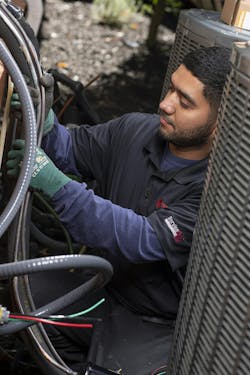
Roberson notes that dual fuel systems have been used in the U.S. for decades and will remain a long-term solution. “As technology continues to advance, homeowners will no longer need to rely on a furnace as their primary source of heat. It’s not just about technology — natural gas is still relatively inexpensive compared to electricity. However, that dynamic is changing, and as it continues, adoption of heat pumps will only increase further.”
Budzinski also agrees that dual fuel systems are here to stay. “You’re always going to have end users that want to be fully electric and end users that want to be more on the combustion side because they're just more comfortable with it. Or there's a cost advantage to just replace what is there with the same traditional system. Some customers will want a new type of solution — a hybrid system with dual fuel allows them more flexibility.”
Dual fuel is a good starting point, according to Heidi Gehring, managing director, light commercial, Carrier.
“Kind of like looking at electric cars — there’s still a lot of hybrid vehicles out there, right?” she says. “So yes, I do see electrification continuing to move toward the future, but I think dual fuel is going to be around in markets for quite a period of time. That being said, we’re part of the DOE Cold Climate Heat Pump Challenge for rooftops, and those rooftops are now in field trials. But that’s also why I think dual fuel will be part of the equation for a long time. The coefficient of performance is still better than your strip heat. We can get it to the point that your capacity is still 100% down at 0°; however, furnaces and gas heat are more efficient when you get into the coldest temperatures, like much of the country experienced in late January. There’s still more work we’ve got to do to really advance it so it becomes a fully electric system.”
According to Rahman, time will ultimately tell. “But hybrid systems are likely to remain a long-term part of the HVAC landscape, not just a transitional stopgap. They represent a practical bridge between today’s mixed-fuel infrastructure and a future that is increasingly all-electric.”

Why Dual Fuel Could Be a Competitive Advantage
Dual fuel systems are creating new opportunities for HVAC contractors. Manufacturers say contractors who invest now in training, proper system design, and customer education will be best positioned to stay competitive as demand for hybrid HVAC options continues to grow.
“As hybrid adoption continues to grow, contractors can stay highly competitive by leaning into training and technology adoption,” Tyminski says. “Continued learning, whether through manufacturer training, industry certifications, or hands‑on workshops, can help contractors stay current on the latest hybrid system designs, installation best practices, and control strategies. This confidence and expertise translate directly into better system performance for homeowners.”
Tyminski emphasized that one of the biggest value drivers in dual fuel installations is that contractors can maximize system performance by fully utilizing advanced controls, configuring hybrid logic around outdoor temperatures, utility rates, and homeowner preferences to automatically optimize the balance between electric and gas heat while delivering meaningful energy savings. Selecting well-matched components is another way contractors can maximize performance. Pairing equipment designed to work seamlessly together helps the system operate at its highest potential and improves long-term reliability.
“Finally, investing a few extra minutes to walk homeowners through how hybrid systems work can go a long way,” Tyminski says. “When customers understand how the system switches energy sources and what to expect in different conditions, satisfaction may increase, and callbacks may decrease. These small steps create a big impact and help contractors differentiate themselves as trusted, knowledgeable partners in home comfort and sustainability.”
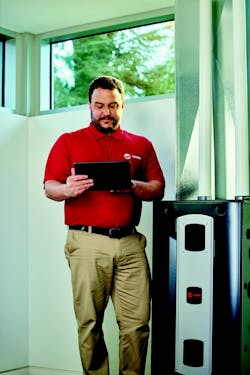
Roberson adds that the more contractors stay familiar with hybrid equipment and the available offerings, the more they will continue to be at the forefront of this industry.
“One of the most common challenges I hear from contractors is hesitancy around installation, commissioning, and servicing, particularly related to controls on dual-fuel heat pump systems,” Rahman says. “That hesitation often stems from limited exposure rather than system complexity. Targeted training and hands-on experience can go a long way in building confidence and ensuring systems are configured to deliver their intended performance.”
Rahman advises contractors to invest in training around installation, commissioning, and controls for dual fuel systems, and build real-world experience with these configurations.
“Contractors should educate customers by clearly articulating the benefits, such as total cost of ownership, efficiency gains, operational flexibility, and carbon reduction,” she says.
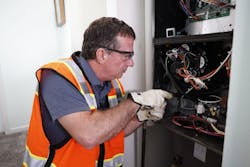
As the industry evolves, dual fuel gives contractors a practical tool to stay ahead — bridging today’s realities with tomorrow’s energy goals.
About the Author
 Nicole Krawcke
Nicole Krawcke
Nicole Krawcke is the Editor-in-Chief of Contracting Business magazine. With over 10 years of B2B media experience across HVAC, plumbing, and mechanical markets, she has expertise in content creation, digital strategies, and project management. Nicole has more than 15 years of writing and editing experience and holds a bachelor’s degree in Journalism from Michigan State University.