Variable-Capacity Systems Gain Momentum in Residential HVAC
Key Highlights
- Variable-capacity systems modulate compressor output to match real-time heating and cooling loads, enhancing efficiency and comfort.
- Technologies like two-stage, vapor injection, and variable-speed compressors provide flexible options for different climate conditions and budget considerations.
- Dual-fuel configurations can help balance efficiency and comfort in colder regions by combining heat pumps with gas furnaces.
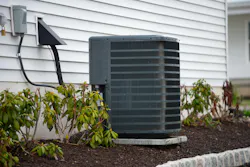
As residential HVAC performance and efficiency standards evolve, heat pump and air conditioning manufacturers are shifting from traditional single-stage compressors to variable-capacity compressors. Common technologies include two-stage, vapor injection, and variable-speed, which all provide varying degrees of capacity modulation.
Driven by tightening efficiency standards, electrification trends, and consumer demands for increased comfort, manufacturers seek compression technologies that can adjust their output to match real-time cooling and heating loads.
With system options expanding, contractors need to be prepared to advise homeowners on how to meet their individual comfort and budgetary preferences. Variable-capacity systems allow them to suggest solutions that offer multiple advantages over traditional HVAC technology, such as more precise and consistent temperature control; improved humidity management; higher energy efficiency and lower utility bills; and quieter, more discreet operation.
When evaluating variable-capacity heat pump systems, contractors need to understand that there’s no one-size-fits-all solution. To maintain comfort within a homeowner’s budget, they should consider multiple factors in the selection process, including regional climatic considerations (i.e., cold or warm climate), local gas and electricity costs, and availability of local and/or regional incentives (often offered at the state level).
Heat pumps offer homeowners an all-in-one cooling and heating solution that can reduce their HVAC equipment footprints. However, in colder regions, dual-fuel configurations — those that still use an existing gas furnace to supply heat only when needed — may help balance the cost-comfort equation.
Regardless, contractors will need to familiarize themselves with the variable-capacity systems and compression platforms powering the next generation of HVAC equipment.
Drivers of Variable-Capacity System Adoption
Efforts to improve heat pump performance and efficiency are driving the continued emergence of variable-capacity system technology. Manufacturers are focused on making system improvements that meet a range of efficiency, capacity and comfort expectations.
Heat Pump Electrification Trend
Heat pumps have outsold gas furnaces in the United States since 2021, highlighting a growing shift toward efficient electric heating technologies. In 2025, Americans bought about 12% more heat pumps than gas furnaces, according to shipment data from the Air-Conditioning, Heating, and Refrigeration Institute (AHRI).
Although heat pumps provide year-round heating and cooling, traditional fixed-speed (or single-stage) heat pumps can face performance challenges in cold climates. Heat pumps transfer heat, rather than generating it. Thus, in extreme cold, it becomes more difficult to extract enough heat from outdoor air to achieve sufficient heating capacity. Dual-fuel heat pumps are often used to bridge the comfort gap in these conditions.
Balancing cooling and heating loads can pose system sizing challenges for contractors and result in seasonal capacity mismatches. Because fixed-speed heat pumps are often sized for summer cooling, they can fall short of meeting peak winter heating demands and require a supplemental heating source (i.e., dual-fuel or electric strip heat). However, relying on inefficient strip heat can increase winter heating bills significantly and spike peak utility demand. Dual-fuel systems help balance this heating equation in systems sized for summer cooling, especially in regions where natural gas is cheaper than electricity.
In contrast, variable-capacity heat pump systems can be sized to meet heating loads while operating at part-load during the cooling season. Typically, the greater the capacity range variability, the more effectively and efficiently a system can meet seasonal HVAC load requirements. Compression technologies with enhanced vapor injection provide an additional heating capacity boost, extending the operations of heat pump systems into colder climates.
Higher Efficiency Standards
Modern HVAC performance metrics are driving manufacturers to develop systems with higher part-load cooling and heating efficiencies. The seasonal energy efficiency ratio (SEER2) measures how efficiently a system operates under cooling loads, including part-load performance. Heating seasonal performance factor (HSPF2) reflects a heat pump’s efficiency during the heating season.
Systems capable of modulating capacity to match seasonal demands are better equipped to achieve high part- and full-load efficiency year-round.
Comfort Expectations
Maintaining reliable, consistent comfort remains the most important factor for homeowners selecting HVAC equipment. Because variable-capacity systems deliver more precise temperature and humidity control, they give contractors a reliable, proven option to stand behind — instilling confidence in homeowners and reducing callbacks.
Variable-Capacity Compression Technologies for Residential HVAC
Residential heat pump manufacturers are integrating compression technologies that deliver variable-capacity benefits across a wide range of system architectures. Copeland’s compression platforms, such as two-stage scroll, inverter swing rotary and variable-speed scroll, support the development of variable-capacity systems offering various performance objectives and price points.
Two-Stage Scroll Compressors
Two-stage scroll compressors are widely used in mid-tier residential HVAC equipment to improve performance and efficiency. The two stages enable a compressor to operate at two capacity levels: 1) full capacity during peak demand, 2) reduced capacity (67%) during part-load conditions.
Compared to traditional fixed-speed systems, two-stage systems improve comfort and efficiency while maintaining a relatively straightforward design, without the need for a VFD or inverter. For systems designed to prioritize cooling — or in dual-fuel configurations —two-stage compression offers a balance between full-load energy efficiency ratio (EER) and sufficient part-load heating to match winter load demands.
Inverter Swing Rotary Compressors
Inverter-driven swing rotary compressors are commonly used in mid- to premium-tier heat pump systems. By adjusting motor speed through an inverter drive, these compressors can continuously modulate output across a wide operating range. Their compact design and efficient part-load performance make them well-suited for residential HVAC applications.
Variable-Speed Scroll Compressors
Variable-speed scroll compressors are typically specified in premium-tier heat pumps where superior efficiency is required, or in cold-climate scenarios where overspeeding is needed to increase heating capacities. Variable-speed scroll technology is considered one of the most advanced and effective approaches to variable-capacity modulation in residential HVAC.
By continuously adjusting compressor speed in response to real-time load conditions, variable-speed scroll systems can precisely match heating or cooling output and optimize system efficiency year-round — while providing precise temperature control to enhance homeowner comfort.
Enhanced Vapor Injection (EVI) Technology
EVI capabilities expand the capacity and efficiency ranges of residential heating and cooling applications. EVI-compatible compressors include two-stage and variable-speed scroll platforms. Copeland optimizes these compressors to accommodate a vapor-injection loop, enabling original equipment manufacturers (OEMs) to inject vapor during the compression cycle while sub-cooling the refrigerant. The result: up to 20% increases in heating capacity and up to 10% gains in heating efficiency.
All of these technologies can be paired with a gas furnace in a dual-fuel configuration, providing another option to balance efficiency, comfort, and costs for specific homeowner requirements or local climates.
A New Standard for Residential Comfort
Variable-capacity compression technology represents a significant advancement in residential HVAC systems. By optimizing system output under real-world operating conditions, these systems deliver enhanced comfort, higher efficiency, and reliability with reduced environmental impacts.
Because heat pump manufacturers are developing systems for all climates, capacities, efficiency ranges, and budgetary considerations, there’s no one-size-fits-all formula for compressor selection.
As compression technologies and control solutions continue to evolve, variable-capacity systems are poised to become an increasingly common — and potentially often preferred — solution for modern residential HVAC applications.
From two-stage scroll to variable-speed platforms, contractors have greater flexibility to match system performance with homeowner expectations and project budgets. Understanding how these technologies operate can help contractors guide homeowners through equipment selection and deliver systems that meet evolving performance expectations.
Why Variable-Capacity Modulation Matters: Rethinking the On/Off Paradigm
Traditional residential HVAC systems are designed for peak conditions. However, they often run at part-load for most of the year, leveraging their full capacity only when required. As heating and cooling demands fluctuate, traditional fixed-speed HVAC systems operate on a simple on/off cycle.
Variable-capacity HVAC systems address the on/off challenge by modulating compressor output to more closely match real-time load conditions. This allows systems to:
- Run longer at lower capacity over extended durations;
- Improve seasonal, part-load efficiency;
- Avoid repeated start-stop cycles, alternating between “blast” and “rest” modes; and
- Maintain steadier indoor comfort levels with better control over temperature and humidity.
Studies by the National Renewable Energy Laboratory (NREL) show that variable-capacity heat pump systems can deliver more stable indoor temperatures and greater efficiency than single-stage systems.
Variable-capacity systems reduce temperature swings by operating continuously at lower output levels. In addition, their longer run times can potentially help systems to consistently remove moisture from the air during cooling cycles, thereby increasing comfort levels and indoor air quality. System design variables, such as coil sizing, airflow, and design temperatures, can all impact performance.
Repeated compressor startups in fixed-speed systems also consume more energy. In NREL’s research, a residential heat pump with variable capacity resulted in 22% annual energy savings compared to traditional HVAC equipment.
Variable-speed compressors maintain steady operation, rather than repeatedly ramping up to full capacity. This allows them to operate at slower speeds during part-load demands, reducing energy consumption and lowering energy bills. Two-stage compressors provide two distinct capacity stages: one for part-load conditions and one for full capacity.
Variable-frequency drive (VFD)- and/or inverter-based systems reduce the in-rush current (amperage draw) that occurs whenever a fixed-speed system kicks on. Fewer starts and stops can also minimize system wear, reducing mechanical stress throughout the system lifecycle.
In addition, when compressors operate at lower speeds, mechanical and airflow noise levels decrease, resulting in quieter system operation.
About the Author
 Eric Strausbaugh
Eric Strausbaugh
Eric Strausbaugh is the director of residential product marketing at Copeland.