Why Heat Pumps Are Becoming a Major Revenue Opportunity for HVAC Contractors
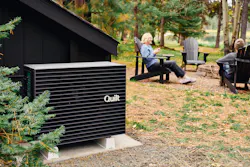
As heat pump adoption accelerates across North America, HVAC contractors are rethinking everything from product selection and system design to customer experience and long-term business strategy. In this Q&A, CRO Mark Schmidt discusses how Quilt is bringing a Silicon Valley mindset to the HVAC industry with intelligent, high-efficiency ductless heat pumps designed for the modern homeowner. Founded by former leaders from Nest, Google, Apple, and Tesla, Quilt is focused on redefining what HVAC equipment can look and feel like while helping contractors capitalize on growing consumer demand for electrification, energy efficiency, and premium comfort solutions.

CB: What are the biggest shifts you're seeing right now in heat pump adoption across the U.S., and how should contractors be positioning their businesses to capture that growth?
MS: Heat pumps have outpaced traditional kinds of HVAC systems — condensers and furnaces — for the last several years. It's a category that continues to grow. Consumers are becoming more aware of heat pumps, and they aren't just asking, ‘Do you install heat pumps anymore?’ They have brand preferences and specific questions about efficiency, design, and smart features. So the bar's completely changed. Contractors have to be able to speak fluently about why their system is better and not just that it qualifies for a rebate or that it could potentially be more efficient.
There used to be the traditional heat pump markets based on geography, but that’s also sort of expanded today. Yes, we sell heat pumps in the traditional markets, but we’ve also expanded into places like the Sunbelt, which have traditionally relied more on fossil fuels. That’s probably been the biggest shift — going from a traditional heat pump market to a product that’s being demanded by consumers across the country.
CB: Do you think demand is being driven more by homeowner preference and awareness of these products or rebates and energy incentives from utilities and federal subsidies?
MS: Incentives have always been an accelerant to any sort of product adoption — heat pumps were no different. Really, the most durable demand is coming from homeowners who want the product independent of incentives. They want comfort, control, reduced operating costs, and really solid ROI. For us, most importantly, they want design — and that's converting people who would probably never describe themselves as concerned about climate change. That matters for dealers because it really changes the way they sell the products.
Rebate-led conversations are super transactional and price sensitive, and homeowners who want smarter, better-designed systems are more likely to invest in those premium configurations and whole home solutions. The rebate is kind of the icing on the cake. We teach our partners to build a pitch so that it works without the incentive, and then if the rebate closes a deal — great. But if the value proposition of selling that heat pump is dependent upon the rebate, that's not the most sustainable place to live.
Incentives have been really meaningful in the market, but that's sort of shifting. A lot of our partners are in markets that don't have rebates and they’re seeing really, really strong heat pump adoption.
CB: Are you seeing more demand in retrofit applications or new construction, and how do you think that impacts contractor strategy?
MS: Ductless is typically not a new construction product. We think that retrofit is obviously where the volume is, and it's really where Quilt has been designed to be successful. Retrofit homeowners are making a significant decision. It's the third most expensive purchase they'll ever make in their lives, right after their house, their car, and then sometimes, their HVAC system. They really need to believe in the installer as much as they believe in the product. Our ductless solution makes a ton of sense in retrofit because it doesn't require ductwork or a lot of the construction requirements that ducted systems do. The challenge, historically, with ductless has been that a lot of systems look like an afterthought, right? They were bulky, and homeowners tolerated them rather than really wanting them. When the product's something that homeowners are really proud to have in every room, the retrofit conversation completely changes.
CB: Where do you see the biggest revenue opportunities for HVAC contractors in this heat pump transition over the next few years?
MS: It's really just adopting and embracing it. We think whole-home ductless is really under appreciated as a revenue opportunity. It’s not just a spot solution, it's good for an ADU, a garage gym, a sunroom, or a bedroom that doesn't get hot or cold. We’ve seen that when a customer really trusts the installer, they'll want it everywhere.
Service and diagnostics are another major opportunity that systems like ours unlock. In traditional HVAC service, you're responding to a call from a customer; it's super reactive. For us, remote diagnostics means that our partners can operate proactively, and we can catch issues before they become emergency calls. It really changes their economics around reducing truck rolls and having service calls that can really impact their bottom line and their P&L. Having really smart and connected heat pumps, like Quilt, is going to give them a significant leg up over the competition as adoption continues to scale.
CB: How can contractors effectively upsell higher efficiency or premium heat pump systems without losing price-sensitive customers?
MS: There's always going to be a price point customer, and, in some cases, that's just not the right fit for a higher efficiency or a premium system. The prices of heat pumps and all HVAC equipment has increased pretty substantially. But since the beginning, HVAC contractors across the country have always been selling comfort. We like to say that a premium heat pump is more than comfort. It's really a lifestyle upgrade. Being able to be comfortable in every room of your home during a heat wave or being able to wake up in a bedroom that’s already at the right temperature is a great way to achieve that comfort. Most homeowners have never experienced that. When you're selling a story and you're selling an experience, that price conversation can change. It's really about how someone experiences their home every day.
There are many financing and leasing programs available. Quilt is working closely with Palmetto on the leasing side of things, where homeowners pay a monthly premium for a product with a beautiful design and high efficiency, and their maintenance is also rolled in. The more dealers can embrace these more forward-thinking solutions, the more tickets they will close at the kitchen table.

CB: How important is the aesthetics and system design in closing deals today?
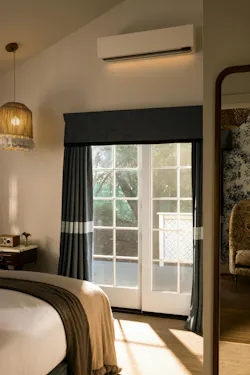
MS: If you walk the floor at AHR Expo, a lot of the ductless heat pump systems all look the same. There's a lot of white-label solutions. For us, design and aesthetics have really become a primary objection handler. It’s one of the No. 1 reasons why homeowners have historically said no to ductless. It wasn’t the price or the efficiency — they didn’t want a bulky unit on their wall.
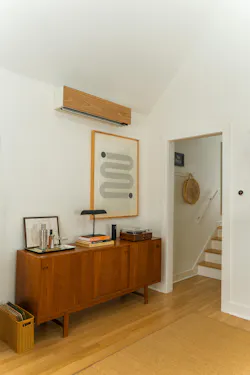
Our units are not only beautiful, but they’re also smaller. They’re 7 7/8 inches tall. Traditional ductless units are 12 inches. Ours can fit above doors and windows, in places where traditional mini-splits cannot. They come with a white cover that you can paint or wallpaper. They also come in a real white oak veneer, so you could match the aesthetic in every room. It changes the homeowner conversation by literally eliminating the first objection. It's become almost like a piece of furniture inside the home, and it's built to match the design aesthetic. It’s something that we're super proud of.
CB: How steep is the learning curve for technicians when they're transitioning from traditional HVAC systems to these advanced heat pump platforms?
MS: We like to talk about how our products install just like any other HVAC system in the market today. The fundamentals are all going to transfer — it's refrigerant, linesets, electrical — skills that technicians already have. It's also about how we build these smart systems that make installs easier, not harder. Our Toolbox app guides technicians through the commissioning process step-by-step. And rather than arriving on a service call and troubleshooting blind, technicians can review the system data ahead of time and know exactly what the issue is before walking in the door. That's fewer callbacks and more confidence
The learning curve is shorter than most expect, and the tools are really doing a ton of heavy lifting. But we need more technicians inside the trades. There's a huge technician knowledge gap. I think technical products, smart and connected products like ours will also bring more people into the industry.
CB: How can contractors differentiate themselves in an increasingly crowded heat pump market?
MS: There are a lot of commoditized products out there, so product selection is a really underused differentiator. When every dealer in a particular zip code is selling the same thing, there wasn’t a ton of differentiation contractors could provide at the kitchen table. In our opinion, with Quilt, that has changed. Partners in our network are offering something new with incredible efficiency, architectural design, smart technology, and a software platform. It’s similar to an electric car, continuing to improve over time. WE can do over-the-air updates with our system. We can increase the capacity and efficiency of the system. We can do all kinds of different things to be able to continuously make that product smarter.
The second dimension is like the customer experience, so our partners have access to a dedicated support line staffed by in-house Quilt technicians, who are licensed HVAC techs. When a dealer can promise their customer that support is a real person with real product knowledge, it’s super meaningful.
Marketing is a superpower for us. It’s where we're seeing some of the most exciting work from our partners right now. A lot of our customers are coming to us for advice on repositioning their marketing and moving away from a generic HVAC contractor identity toward something that looks more like a lifestyle brand. It's not the same generic playbook they've been given over and over. It's more social content. It's better photography. The story we like to tell all the time is that we're the only HVAC company in the country that has an Emmy award-winning documentarian producing our video content. We show beautiful installs and beautiful homes, and contractors are leaning into that approach and building strong demand.
CB: What will the heat pump market look like in the next three to five years, and what should contractors be doing today to stay ahead of it?
MS: There’s going to continue to be significant volume growth. We've seen it year-over-year for the last several years. The technology gap between smart systems and legacy equipment is going to widen. Systems with smartphone-level processing power have over-the-air improvement, data-driven optimization, and back-end diagnostics. It will become no longer nice to have, but the expectation. Partners and dealers that align with that approach will be carrying products that stay competitive over time.
CB: If you could give contractors one piece of advice to help future-proof their businesses, what would that be?
MS: The HVAC dealers who are winning are making an intentional decision to align with technology-forward systems. That better product leads to better customers, which lead to better reviews and referrals, and that leads to more business growth. It’s this compounding thing that they continue to leverage over time. The more you can lean into these technology-forward products, the more you will attract folks who want to work for your company.
Heat pumps are going to be a huge part of, you know, every HVAC business in five years, and it's going to be their decision as to whether they're going to be one of the contractors that built it or the one arriving late with everyone else. We’re super proud of the partners who are leaning in really heavily to us right now, which represents small contractors to some of the largest private equity roll-ups across the country who see the value and the benefit that Quilt systems can provide.
About the Author
 Nicole Krawcke
Nicole Krawcke
Nicole Krawcke is the Editor-in-Chief of Contracting Business magazine. With over 10 years of B2B media experience across HVAC, plumbing, and mechanical markets, she has expertise in content creation, digital strategies, and project management. Nicole has more than 15 years of writing and editing experience and holds a bachelor’s degree in Journalism from Michigan State University.