Manual J or Missed Profits? The Real Reason Systems Can't Keep Up
Key Highlights
- SEER2 ratings are laboratory numbers measured under ideal conditions and often do not reflect real-world performance in humid climates.
- Oversizing HVAC equipment reduces runtime, impairing dehumidification and leading to high indoor humidity levels and callbacks.
- Contractors who prioritize accurate load calculations and airflow commissioning experience fewer callbacks and better customer satisfaction.
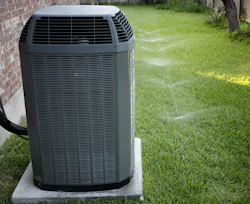
The first heat wave of the season is usually when our phone starts ringing. Not because customers want a new system. Because the one another shop put in last fall cannot hold 74° F on a 96° F afternoon in Montgomery, and the indoor humidity is sitting at 62% with the unit running nonstop. We have run that call back for 30 years.
Every veteran service tech in the Gulf states and the Lower Atlantic has been to that house. What most of us have stopped saying out loud is that the problem usually started on a tablet, in an office, the day someone skipped a real load calculation and trusted the SEER2 sticker on the box.
THE FIVE THINGS THAT MATTER
- SEER2 ratings are lab numbers measured at 82 F outdoor. They describe equipment, not the job.
- In Gulf and Lower Atlantic markets, oversizing produces more callbacks than undersizing. Latent load is the reason.
- ACCA Manual J, Manual S, and Manual D are the standard. Software defaults are not Manual J.
- 350 cfm per ton beats 400 cfm per ton in humid climates. One thermostat setting, no extra cost.
- Correctly sized variable-capacity equipment holds indoor relative humidity under 55%. Oversized single-stage does not.
What the Rating Actually Tells You, and What It Doesn't
SEER2 is a laboratory number. AHRI Standard 210/240, which the U.S. Department of Energy (DOE) adopted as the basis for the 2023 federal minimums, rates split-system cooling at an 82° F outdoor dry-bulb temperature, a 95° F dry bulb for the EER2 operating point, and a fixed indoor return of 80° F dry bulb over 67° F wet bulb. That is the entire envelope the number was measured in.
For a contractor in Montgomery, Mobile, Tampa, Baton Rouge, or Charleston, that envelope is fiction for roughly four months of the year. ASHRAE's 1% design dry-bulb temperature for Montgomery's Dannelly Field is 94° F, and the 1% mean coincident wet bulb is 77° F. A 16 SEER2 unit installed on that design day is not a 16 SEER2 unit. It is a piece of equipment operating well past the conditions against which its capacity curve was published.
Why Oversizing Is the More Expensive Mistake
For decades, the southern-market reflex was to oversize. Bigger tonnage, bigger margin of safety, fewer complaints on the hot day. In a humid climate, that reflex is backwards, and the building-science research has been unambiguous about it for 30 years. I spent the first decade of this business unlearning it.
"Oversizing of air conditioning equipment can lead to high interior humidity problems since oversized equipment will not operate as often, and therefore will dehumidify less than properly sized equipment. Systems oversized by 20% achieve latent heat removal of approximately 15% of the total cooling load under part-load conditions. Correctly sized systems achieve moisture removal of up to approximately 30%." Dr. Joseph Lstiburek, founder of Building Science Corporation, wrote in his 1993 "Humidity Control in the Humid South," BETEC conference paper, which was later reaffirmed in BSD-107 and subsequent ASHRAE Journal columns.
Residential cooling loads in the Southeast split roughly 70 to 75% sensible and 25 to 30% latent at design conditions, and the sensible heat ratio of a typical residential evaporator coil at rated airflow is around 0.75. When equipment is sized to the sensible peak — with no consideration of the latent load — three things happen on a normal (non-design) day. Run times collapse. The coil never gets cold enough, long enough, to wring meaningful moisture out of the return air. Indoor relative humidity drifts into the high 50s and low 60s, and the homeowner drops the thermostat from 74° F to 71° F trying to feel comfortable.
"Dehumidification occurs when the air passes over a cold coil, and then does it again and again and again. You need a lot of runtime to wring that moisture out of the air. And long runtimes are not something you get from systems that are oversized. When the humidity won't drop, people often lower the thermostat. That often has the result of making the house cool and clammy, not comfortable," writes Allison A. Bailes III, PhD, founder of Energy Vanguard, in her article, "6 Ways Your Oversized HVAC System Makes Things Worse."
What a Real Load Calculation Actually Requires
ACCA Manual J Residential Load Calculation, 8th Edition, is the recognized industry standard and the calculation method written into virtually every state and IECC-based residential energy code. It is not optional in any jurisdiction that has adopted the 2018 IECC or newer, and it has not been optional in Florida, Louisiana, Texas, or the Carolinas for code-compliant installs in years.
A defensible Manual J in a humid market is built on:
- The ASHRAE 1% cooling design dry bulb and 1% mean coincident wet bulb for the specific ZIP code, not the regional bin temperature a software default loads;
- Actual measured or blueprint-derived wall, ceiling, and window areas with verified U-values and SHGCs, not assumed builder-grade defaults;
- A blower-door-informed infiltration rate, or at a minimum, an honest tightness category for the vintage of construction;
- Internal gains based on the actual occupants and appliance load, not a generic 1,200 Btu/h kitchen;
- A duct gain calculation based on where the ducts actually live. Vented attics in zone 2A are routinely 130° F at 3 p.m. in July. An R-6 flex line losing 25% of capacity is not a rounding error.
We run Manual J on every replacement at Chad's AC Direct, and we run it from blueprint or measured envelope, not from defaults. Manual S then takes the Manual J output and matches it to AHRI-listed equipment at the design condition, not the rating condition. This is where most software-driven load calcs quietly fall apart. The job calls for 32,400 Btu/h total cooling with 8,700 Btu/h latent at design. The software recommends a 3-ton unit because that is what the sensible total rounds to. Manual S, done correctly, looks at the expanded performance data for the candidate condenser and air handler at 95° F outdoor over 75° F entering wet bulb, and confirms the unit actually delivers the latent piece at the airflow the duct system can move. Most do not at the airflow most southern duct systems were actually built for.
The Airflow Rule That Gets Ignored in Humid Markets
The default 400 cfm per ton of cooling is the right setting for a dry climate and the wrong setting for the Gulf and Lower Atlantic. ACCA Manual D and the equipment manufacturers' expanded performance tables converge on 350 cfm per ton for high-latent applications. Drop the airflow, the coil runs colder, and the sensible heat ratio drops from roughly 0.78 to roughly 0.72. That difference is the entire margin between a house that feels right at 76 F and a house that feels muggy at 74 F.
Air Conditioning Contractors of America (ACCA), position guidance on Manual J Residential Load Calculation, states: "Oversized cooling systems short-cycle, satisfying the thermostat setpoint quickly and shutting off before the coil has been cold long enough to condense adequate moisture from the air, resulting in spaces that are cool but muggy, with elevated relative humidity that can cause occupant discomfort, mold risk, and corrosion of building materials."
Most variable-speed air handlers will hit 350 cfm per ton with a single dipswitch change or a thermostat configuration. It is the single fastest no-cost improvement a contractor can make on a humid-climate install, and it is almost never done at commissioning.
What the Field Data Says Call Backs Actually Cost
The published latent-removal gap between oversized and right-sized equipment is the cleanest economic argument in residential HVAC. Using Lstiburek's 30% versus 15% moisture-removal figures, and the typical Gulf Coast 0.75 sensible heat ratio, a 20% oversized 3-ton install in a coastal Louisiana home gives back roughly half its rated dehumidification capacity on every part-load day. In zone 2A, that is most of the cooling season. Indoor RH climbs into the high 50s. Customer comfort calls follow. Most of those calls cannot be solved by any service technician on a truck because the equipment is doing exactly what equipment of that size does at part load.
A correctly sized system, commissioned at 350 cfm per ton, with duct gains measured rather than assumed, generates a fraction of the service traffic. The economics are not subtle. They show up on the P&L of every shop that takes Manual J seriously — and on the P&L of every shop that does not.
The Professional Move
The contractors winning in Montgomery, Houston, Tampa, Charleston, and Phoenix right now are not the ones selling the highest SEER2 number. They are the ones running a real Manual J on every replacement, matching equipment to it with Manual S, designing duct systems with Manual D, and commissioning the airflow before they leave the driveway. That is the shop we have tried to be for three decades, and it is the shop the customer remembers two summers later when their neighbor needs a system.
That work is billable. Most homeowners in 2026 will pay for a documented load calculation and a commissioning report once they understand what the alternative buys them, which is a piece of equipment that is correctly named on the invoice, and incorrectly sized for the house it sits next to. The rating on the box describes the equipment. The load calculation describes the job. A contractor who confuses the two is operating someone else's business model.
Frequently Asked Questions (FAQs)
Is SEER2 the same as SEER?
No. SEER2 replaced SEER in January 2023 under the DOE's updated test procedure. SEER2 uses a higher external static pressure during testing, which produces ratings roughly 4 to 5 percent lower than the equivalent SEER number on the same piece of equipment. A 15 SEER unit is approximately a 14.3 SEER2 unit.
Why does oversizing cause humidity problems?
Dehumidification requires the evaporator coil to stay cold for an extended period of contact with return air. Oversized equipment satisfies the thermostat in short cycles, so the coil never stays cold long enough to condense meaningful moisture. The space gets cool but stays humid.
How much oversizing is acceptable in a humid climate?
ACCA Manual S permits cooling equipment to be sized up to 15 percent above the Manual J total cooling load. Beyond that, latent performance degrades measurably. In high-humidity markets, sizing exactly to the load or selecting variable-capacity equipment is the safer call.
What indoor relative humidity should a properly sized system hold?
ASHRAE 55 and 62.2 target a comfort range of 30 to 60 percent relative humidity, with 50 percent or below as the practical setpoint in a humid climate. A correctly sized, properly commissioned system in zone 2A holds indoor RH at 50 to 55 percent on a normal cooling day.
Does variable-capacity equipment fix oversizing?
Largely yes, when sized correctly. Variable-capacity systems modulate down to 25 to 40 percent of nameplate capacity, which keeps the compressor and coil running long enough to dehumidify even on mild days. They are the most forgiving option for a humid-climate install.
Is 400 cfm per ton ever right in the South?
Only on the design day, and only briefly. For most of the cooling season in zones 2A, 3A, and 4A, 350 cfm per ton produces a colder coil and meaningfully better dehumidification with negligible loss of sensible capacity. Manufacturer expanded performance data confirms it.
Do homeowners pay for a documented load calculation?
Yes, when it is presented as a comfort guarantee rather than a compliance line item. Contractors in mature markets bill 400 to 900 dollars for a full Manual J, S, and D package, often credited back if the install is awarded.
Editorial collaboration and content development by Joseph Timpson of Timpson Marketing, an SEO and content agency that works with HVAC contractors and trade-vertical operators across the United States. Visit timpsonmarketing.com to learn more about technical content development for service-trade businesses.
About the Author
Chad Wiswall
Chad Wiswall is the president of Chad's AC Direct, a family-owned heating and cooling contractor based in Montgomery, Alabama, serving the River Region since 1995. The company is BBB-accredited and an authorized dealer of Goodman, Trane, Bryant, Mitsubishi, and Daikin equipment, with a service footprint covering residential and commercial installs across central Alabama. Chad's AC Direct specializes in high-humidity-climate system design, ductless mini-split installation, and geothermal heat pump systems.