HVAC AI Adoption: How Contractors Can Improve Profitability and Build Trust
Key Highlights
- AI adoption in HVAC shows productivity benefits, based on ServiceTitan's latest report, but translating these into profitability requires strategic reinvestment and clear business goals.
- Effective AI deployment depends on proper implementation, ongoing training, and active support from AI providers to realize measurable ROI. Building a strong software foundation with accurate data and reliable workflows is crucial before layering AI solutions for maximum efficiency.
- Trust in AI remains a challenge; contractors must prioritize data security, human oversight, and transparent controls to ensure safe and effective use.
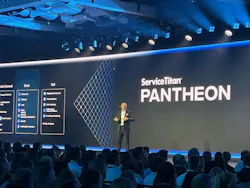
Artificial intelligence (AI) adoption is growing across the HVAC industry, but turning productivity gains into measurable profitability remains a challenge. ServiceTitan’s 2026 State of AI in the Trades report found that 66% of AI users save at least three hours per week, yet fewer than half report improved profitability.
At ServiceTitan’s Pantheon conference, the gap between experimenting with AI and translating it into business results raises a critical question for contractors: How can HVAC businesses move beyond adoption to make AI a driver of growth, efficiency, and stronger margins?
According to Vincent Payen, ServiceTitan’s senior vice president and general manager of Pro Products, productivity gains are often the first benefits contractors see from AI, but getting more work done doesn't automatically translate into higher revenue or profitability.
“That depends on how businesses reinvest the time and resources they're saving,” Payen explains. “For example, automating customer service, dispatching, or reducing administrative work can give a team back valuable hours. Some businesses may take those savings, while others may reinvest them fully or partially into activities that drive growth. We encourage contractors to start with their business goals rather than adopting AI for the sake of it. This creates a clear focus on the outcomes they want to achieve and a measurable benchmark for evaluating performance.”
Melissa Tokmak, founder and CEO of Nectic, says the gap between AI adoption and profitability often comes down to implementation. Simply providing AI tools does not guarantee contractors will know how to use them effectively or translate the technology into measurable business results. Tokmak argued that AI providers must take a more active role in deployment, helping businesses realize returns on investment and sustain those gains over time.
“The real AI companies have to think about deployment and helping you create that value and ROI immediately, and teaching you how to keep it going,” Tokmak says.
During her Pantheon breakout session, Tokmak urged contractors to look beyond basic AI automation and focus on solutions that improve the entire customer journey. “AI is easy to look good, but hard to do good,” Tokmak says, warning that impressive demonstrations do not always translate into reliable performance in day-to-day operations. She encouraged contractors to identify revenue leaks across every customer touchpoint, from marketing and initial inquiries to booking, service delivery, and repeat business.
Jenny Benbrook, CEO of Powerhouse Consulting Group, says HVAC contractors should establish a strong software foundation before layering in AI. Even AI features built into platforms such as ServiceTitan depend on accurate data, reliable workflows, and effective software adoption across the organization. Benbrook recommends first ensuring teams use their core field service and financial software correctly, with adequate training and confidence in the systems. Without that foundation, AI can reinforce existing problems rather than improve efficiency or profitability.
“AI is only going to be as good as the data it’s coming from,” Benbrook notes. “When there’s broken workflows and incorrect data, the AI is not going to help you be more efficient or profitable. The AI will just continue to feed you bad data.”
All In on AI
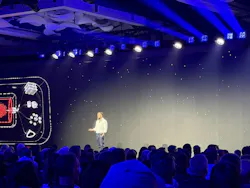
At ServiceTitan’s Pantheon 2026 conference, co-founder and CEO Ara Mahdessian outlined the company’s vision for AI-powered contracting businesses that can run and improve themselves. Building on a framework introduced at last year’s Pantheon, Mahdessian described five levels of business automation, culminating in a “self-running, self-optimizing” operation.
Mahdessian says contractors have long understood the importance of generating leads, improving booking rates, and increasing average tickets, but time and human capacity have limited their ability to optimize every process. “The only way to be great at everything is to automate it,” he says. Mahdessian emphasizes that individual AI agents are not enough; they must work together to optimize the entire business rather than competing to improve isolated metrics. For example, an advertising agent might continue generating leads when the schedule is already full, or a booking agent might schedule a high-value job without alerting dispatch to assign the right technician.
ServiceTitan developed a coordination Agentic Operating System, Max, that gives agents shared context, common decision-making capabilities, and the ability to coordinate actions while weighing competing priorities. The system also connects business outcomes to the decisions that produced them, allowing agents to refine their assumptions and improve over time. Mahdessian described this as the fifth level of automation: “A system that gets better over time, not just a business that runs, a business that counts out.”
Mahdessian says even modest improvements across key business metrics can produce substantial gains in profitability because revenue can grow faster than costs. In an illustrative example, increasing leads, booking rates, and average ticket by 10% would raise revenue from $4.8 million to approximately $6.4 million. Under his assumptions, profit would double from $480,000 to $960,000 as the profit margin increased from 10% to 15%. He also argues that contractors are well positioned to benefit from the AI transition because their businesses already operate across interconnected workflows on a single platform. “For the first time, the trades don’t have to catch up. We have the foundation.”
Trust Remains a Hurdle
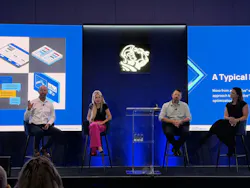
AI experts have urged caution around the technology’s rapid development, emphasizing the need to consider reliability, human oversight, and the consequences of deploying systems that can make decisions and take action. That concern is particularly relevant for contractors weighing whether AI can improve profitability without introducing new operational risks.
Per the aforementioned State of the AI Trades report, 58% of contractors reported little or no trust in AI technology.
“The current tension lies in distinguishing between the use of AI and the use of unsupervised AI, as well as in the interactions among different AI solutions,” Payen says. “Ultimately, we need to ensure our outcomes, general safety, and security remain in control.”
While AI task automation is becoming standard, contractors need strong oversight through customization, visibility, and controls. Payen emphasizes the importance of data security, warning that third-party applications with broad API permissions may access sensitive business information, including customer records, payment histories, membership data, and payroll. He says ServiceTitan has built privacy policies, security measures, and technical safeguards into Titan Intelligence and Max to protect contractor and customer data.
Payen explains that contractors should introduce AI with human oversight and increase its autonomy only after validating its performance. Before fully deploying a virtual customer service agent, for example, contractors should spend several weeks monitoring conversations to ensure the technology behaves as expected. Tasks such as marketing emails, speed-to-lead responses, and job bookings are well suited to automation, he says, but initial human supervision can help establish a foundation for long-term success.
Payen emphasizes that AI should support contractors’ judgment rather than replace it. ServiceTitan focuses on developing transparent AI tools with controls that allow contractors to establish guardrails, evaluate performance, and intervene when necessary. While AI mistakes can have financial consequences or damage customer relationships, Payen says the goal is to remove repetitive work so contractors can spend more time in the field and building customer relationships. He also stresses that automation does not eliminate accountability. “Business owners and their teams remain responsible for the decisions made within their operations, even when AI is involved,” he says. Contractors need to understand what their AI systems are doing, where human oversight is necessary, and how the technology supports their business goals.
Benbrook notes that building trust in AI-generated insights starts with reliable data, requiring contractors to establish sound workflows, configure systems correctly, and ensure their teams use software consistently. However, psychological barriers also play a significant role, including concerns about losing control over business decisions or replacing employees. “The fear, in large part, stems from those two areas: from trusting the data that it’s feeding from, and from an awareness of how to use the technology in an intelligent way,” she says. Contractors should view AI as a tool to enhance employees’ capabilities, whether helping owners make better business decisions or enabling CSRs to improve their calls, rather than as a replacement for human expertise.
Benbrook advises contractors to take a deliberate, problem-first approach to AI adoption rather than investing in technology simply because it is available. “First, understand the problem that you're trying to solve. Be very specific with that,” Benbrook says. “Then you document, train, and you continuously review. Is the tool giving you what you need?”
Payen again notes the importance of ensuring AI tools work together rather than operating independently. “Think about a sports team. Even with the most talented players, if they can't see or communicate with one another, the team will not perform,” he says. “The same is true for AI agents operating in isolation. When agents share the same context and understand what's happening across the business, they can coordinate much more effectively. Contractors who invest in that foundation now will be better positioned to take advantage of what AI makes possible in the years ahead.”
Contractors React
Krista Landen, operations manager of Gulfshore Air Conditioning & Plumbing Inc., says the company has used ServiceTitan since 2023. Gulfshore prioritized a provider that was consistently advancing its technology and releasing updates, rather than remaining stagnant.
Gulfshore uses several ServiceTitan Pro products, including Contact Center Pro’s virtual agent, Marketing Pro with Atlas, Scheduling Pro, and Dispatch Pro. AI supports highly targeted marketing campaigns that identify customer needs and deliver relevant solutions, Landen notes. For incoming calls, Gulfshore uses a tiered approach: customer service representatives are the first point of contact, followed by Landen and another coordinator, with the virtual agent, Finn, handling calls that remain. Customers can always escalate to a Gulfshore employee.
“We're never going to fully remove the human touch,” Landen says, emphasizing that customers want to do business with people they know and trust. Rather than viewing AI as a replacement for employees, Gulfshore focuses on using it to help staff work more effectively and spend more time serving existing customers and converting leads into booked jobs.
The company is also seeing measurable time savings from ServiceTitan’s AI invoice review process, which Gulfshore is testing in beta. Landen says the tool has reduced accounting review time from approximately 30 minutes per invoice to five to 10 minutes. Looking ahead, she plans to expand AI use wherever it can improve workflows, while addressing employee concerns through coaching and emphasizing that the technology is intended to enhance their jobs, not eliminate them.
Randi Thompson, service operations manager at Bill Joplin’s Air Conditioning & Heating, says the company has used ServiceTitan for about five years and has adopted several AI tools, including virtual agents, web chat, SMS, Atlas, and Build Pro. She values having these tools integrated into one platform with access to the company’s information.
Thompson says she initially tested the virtual agent extensively to ensure it handled calls correctly, booked the right services, and did not frustrate customers. The company continues to monitor its AI tools, but successful testing has helped build her confidence in their performance. She emphasizes, however, that human support must remain available for customers who prefer speaking with a person or have situations AI cannot handle, such as an angry customer.
Looking ahead, Thompson hopes AI will improve inventory management and make it easier to retrieve and analyze business data. Ideally, contractors could ask Atlas about performance metrics, goals, and progress and receive immediate answers without manually pulling and analyzing reports.
Her advice to contractors hesitant about AI is straightforward: “Try it. I mean, I think I say that to everybody.” Thompson also cautioned against assuming customers will reject AI without giving it a chance. “Don't assume your customers' reactions,” she said. “I think that's a big misconception, that our customers aren't going to like it. Well, how do you know it's not?”
Heather McCain, corporate policy manager at Davis A/C & Heating, and her brother Jonathan Davis, retail operations manager, say the Houston-based, third-generation family business adopted ServiceTitan in February after its previous software provider failed to deliver the updates, support, and tools needed for growth. The company is using several AI features, including a virtual agent, Dispatch Pro, Speed to Lead, and Atlas for marketing campaigns.
McCain initially approached AI with skepticism, particularly the virtual agent. Her priority was to reduce pressure on CSRs during the busy summer season, not replace them. After spending about a month testing the virtual agent and training it to follow the company's operating procedures, Davis A/C & Heating put it into operation. McCain says it has achieved a 98% booking rate.
The time saved through AI is allowing employees to focus more intentionally on customer relationships, outbound maintenance calls, and other tasks rather than managing heavy call volumes. McCain says the goal is to help employees do their jobs more effectively while maintaining the level of customer service the company expects.
Much like Thompson, Davis says he wants AI to make business data more accessible and reporting more customizable. He notes the company could benefit from asking AI for specific information and receiving reliable answers without spending hours building reports. He also sees AI supporting better business decisions by giving managers faster access to dependable data. As the technology evolves, he hopes it will become more flexible in how it retrieves and presents information, helping the company make better use of its operational data.
About the Author
 Nicole Krawcke
Nicole Krawcke is the Editor-in-Chief of Contracting Business magazine. With over 10 years of B2B media experience across HVAC, plumbing, and mechanical markets, she has expertise in content creation, digital strategies, and project management. Nicole has more than 15 years of writing and editing experience and holds a bachelor’s degree in Journalism from Michigan State University.