The Hardest Part of Growth is Letting Go
Key Highlights
- Effective communication of vision and change helps teams adapt and reduces uncertainty and fear.
- Transitioning from doing to leading involves recruiting, training, and leading differently, requiring patience and discipline.
- Change is not just about the business; it impacts the leader's identity and requires personal evolution.
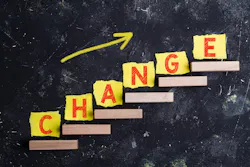
Change.
What comes to mind when you hear that word? Does it excite you or scare you?
In our industry right now, change is everywhere. Private equity firms have entered the space, companies are being bought and sold, and conversations about exits are becoming more common than ever. I recently saw a post asking business owners what they did the first day after selling their company. Some traveled. Some rested. Some cried. Some jumped right into the next thing.
It got me thinking, but not in the way you might expect.
I am not in a season of exiting. I am in a season of building.
I am still running a privately owned company, and what I am dealing with right now isn’t an exit, it’s evolution. And what I’m learning is this:
The hardest part of growth isn’t systems, strategy, or even sales.
It’s letting go.
Growth requires you to change everything that made you successful in the first place.
That’s the part no one really prepares you for.
When you are building a business in the early days, you wear every hat. You answer the phones. You run calls. You solve problems. You jump in wherever needed. And over time, you get really good at it. Not just one thing, but everything.
That becomes your identity.
You become the person your business depends on.
But what happens when that version of you becomes the very thing holding your business back?
Have you gotten comfortable in your current role?
More importantly, have you gotten comfortable being needed in that role? Because if you are serious about growing to the next level, there will come a point where you have to ask yourself a tough question:
What would it look like to replace me? That’s not easy.
It is hard to hand things off to people you don’t know yet.
It is hard to trust someone else to do something you have done for years.
It is hard to step out of the day-to-day tasks that once made you feel valuable.
We say we want to grow, but growth requires letting go of the very things that built us.
And that creates tension. Because if you are not the one doing it anymore, where do you fit?
That is the shift I’m walking through right now. Moving from doing everything, to building the people who do everything. And that’s a completely different skill set.
It requires recruiting differently. Training differently. Leading differently.
It requires patience when someone doesn’t do it exactly like you would.
It requires discipline to not jump back in and “just handle it yourself.”
Because every time you do, you reinforce the very ceiling you are trying to break.
But here is the other side of change that often gets overlooked:
It is not just about you. It is about your team.
As you grow and evolve, your team feels that change too. And if you are not careful, what feels like progress to you can feel like instability to them.
Have you communicated your vision clearly enough that your team is willing to go through change with you? Because people don’t leave companies, they leave uncertainty.
If your team doesn’t understand where the company is going, or why things are changing, they will fill in the gaps themselves. And most of the time, those assumptions lead to fear.
Communication becomes everything in these moments. Not perfection. Not having all the answers. But clarity.
You don’t have to share every detail, but you do need to share direction.
You need to reinforce the vision often enough that your team feels anchored, even when things are shifting around them. Because if you don’t, you will find yourself stuck in a cycle of growth…turnover…rebuilding…and repeat. And that is not growth, that is survival.
So, I will ask you again: What comes to mind when you hear the word “change”?
Because if you’re serious about scaling your business, change isn’t optional. It is required.
The real question is: are you prepared to change everything you know to get to the next level? Are you willing to step out of the role that built your business, to become the leader your business needs next?
I am still learning this in real time. I don’t have it all figured out. But I do know this: Growth will ask more of you than you expect. Not just in effort, but in identity. And if you are willing to embrace that, that is where the next level begins.
About the Author
 Alyssa Rogers
Alyssa Rogers
Vice President
Alyssa Rogers is vice president of Rogers Heating, Cooling, Electrical, with offices in Lynchburg and South Boston, Virginia.