Data Centers Have a PR Problem; HVACR Could Be Part of the Answer
Key Highlights
- Data centers are increasingly scrutinized for their environmental impact, including energy consumption, water use, and local community effects.
- Public opposition, exemplified by petitions and activism, underscores the need for transparency and community involvement in planning processes.
- Industry leaders emphasize integrating thermal management into broader business strategies to support sustainable growth.
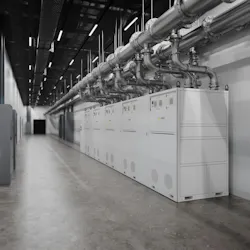
As AI-driven demand accelerates the data center boom, these once-overlooked facilities have become a lightning rod for public scrutiny, with growing concerns over their impact on energy grids, water resources, utility costs, and local communities pushing them squarely into the court of public opinion.
According to the Pew Research Center, the U.S. currently has more than 4,000 operational data centers, with significant growth expected in the coming years. An additional 1,500 data centers are already in various stages of development. Additionally, a recent Gallup poll found seven in 10 Americans oppose constructing data centers for AI in their local area, including nearly half, 48%, who are strongly opposed.
A recent study from Data Center Watch also showed data center opponents blocked or delayed at least 75 projects nationwide worth about $130 billion from January through March, the most in a three-month period since the group began tracking in 2023.
To be honest, when my own city council recently discussed the topic, I, too, was opposed to a data center moving in for the very same reasons as most Americans — impacts to utility bills.
Last month, the Nashville Zoo went viral for drumming up hundreds of thousands of supporters opposing the construction of a data center next door to its location. The zoo fears the 69,000-square-foot project will consume large amounts of electricity and water, strain power grids, deplete natural resources, and damage its watershed. Not to mention the concerns of noise and light pollution, stressing out the zoo’s more than 3,000 animals, including the endangered clouded leopard.
As of July 7, over 543,500 people have signed the zoo's Change.org petition.
Even famed environmental activist Erin Brockovich is getting involved, launching a new website tracking data centers in the U.S. In a May Substack post, she wrote that she started hearing from people about AI data centers appearing in their communities with little to no notice.
“The single most common concern—more than noise, more than water usage, more than rising utility bills—is the one word that keeps appearing in submission after submission: transparency,” she writes in the post. “Residents are using words like silenced, ignored, secretive, and not seen and not heard. They write about back-door deals and NDAs. They describe showing up to planning meetings only to find out the decisions have already been made.”
However, almost every part of our daily lives is supported by data centers — from using a smartphone to online banking and shopping to streaming your favorite TV shows and movies. Even health care in 2026 relies heavily on data center integration. So are they a necessary evil?
The growing debate surrounding data centers extends far beyond public policy and community planning—it represents one of the most significant HVACR business and technology opportunities in decades. As operators face increasing pressure to improve energy efficiency, reduce water consumption, and minimize environmental impacts, cooling systems have become a critical focal point. The unprecedented heat loads generated by AI computing and high-density server environments are driving demand for more advanced cooling solutions, from liquid cooling and hybrid systems to next-generation heat rejection technologies. How the industry responds to these challenges will not only influence the future sustainability of data centers but also shape a rapidly expanding market for HVAC manufacturers, contractors, and service providers.
Becky Wacker, vice president of data center solutions at Trane Technologies, notes that the questions about energy demand and long-term impact being raised are understandable. “At Trane, those conversations reinforce a principle that already guides our business: sustainability should be built into how growth is planned and executed, not treated as a tradeoff against performance or speed. That is why thermal management is increasingly being elevated beyond an equipment discussion and considered more directly within broader planning and business strategy.”
Wacker says that cooling strategies are evolving as data center requirements change. “Higher densities, AI-driven workloads, and speed-to-market pressures are accelerating interest in approaches such as liquid cooling for certain applications. Evolving cooling strategies can play a meaningful role in supporting more sustainable data center development. Improvements in efficiency, resilience, and long-term operability can help digital infrastructure growth align more closely with resource considerations and longer-term sustainability goals.”
Wacker adds that as these projects become more visible and complex, context becomes increasingly important for contractors, engineers, and facility teams. It’s important to understand how thermal decisions connect to efficiency, maintainability, infrastructure demands, and long-term performance.
Communication and transparency about how these mechanical systems work will be equally important in educating local municipalities and residents.
I don’t see a future where we wean ourselves away from our reliance on data centers. You can’t turn back the digital clock.
In an era when public acceptance can be just as important as technological advancement, smarter, more sustainable cooling may prove to be one of the industry's most valuable assets.
About the Author
 Nicole Krawcke
Nicole Krawcke
Nicole Krawcke is the Editor-in-Chief of Contracting Business magazine. With over 10 years of B2B media experience across HVAC, plumbing, and mechanical markets, she has expertise in content creation, digital strategies, and project management. Nicole has more than 15 years of writing and editing experience and holds a bachelor’s degree in Journalism from Michigan State University.