House Bill Would Shift Grid Upgrade Costs to Large Electricity Users
Why It Matters
- New legislation targets major electricity users, including large industrial facilities and data centers, which continue to drive demand for large-scale cooling infrastructure.
- Contractors serving data centers and other high-load facilities should monitor utility policy changes that could affect project costs, timelines, and infrastructure planning.
- Commercial HVAC contractors involved in large developments may see increased emphasis on early coordination with utilities during project planning.
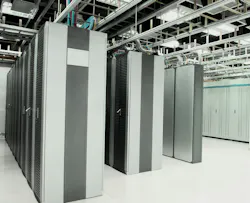
WASHINGTON — On June 24, the House Committee on Energy and Commerce’s Subcommittee on Energy passed H.R. 9340, the Ratepayer Protection Act. The legislation would require state utility regulators to consider establishing standards that state regulators could enforce when considering the integration of new large-load customers with a demand of 100 megawatts or more onto the grid.
Introduced in the U.S. House of Representatives on June 18 by Rep. Gabe Evans (R-Colorado) and Rep. Kathy Castor (D-Florida), the bill would amend the Public Utility Regulatory Policies Act of 1978.
Under the proposal, electric utilities would be required to recover from qualifying large-load customers the full incremental cost of any generation, transmission, or distribution upgrades necessary to provide electric service. The requirement would also apply if a customer later terminates its electric service agreement or otherwise stops purchasing electricity from the utility.
Before undertaking those infrastructure upgrades, utilities would also be required to obtain financial assurances or contributions from the large-load customer to cover the cost of the project.
The legislation defines a large-load customer as a non-residential electric consumer that, on or after enactment, requests or enters into an agreement for electric service to one or more facilities with a combined peak electric demand of 100 megawatts or more at a single site or campus.
For commercial HVAC contractors involved in data centers, advanced manufacturing facilities, and other large-scale developments, the proposal could affect project planning by influencing how utilities recover the cost of expanding electric infrastructure to support high-demand facilities.
The bill also establishes a timeline for implementation. State regulatory authorities and nonregulated electric utilities would be required to begin considering the new federal standard within one year after enactment and complete that review within two years.
States that have already implemented, formally considered, or voted on comparable standards before the legislation is enacted would not be required to repeat that process.
If enacted, the legislation would create a consistent federal framework for allocating the cost of electric infrastructure upgrades serving qualifying large-load customers while preserving existing state actions on similar policies.
The introduction of the Ratepayer Protection Act comes amid growing national scrutiny of data center development and its impact on electric infrastructure. As utilities across the United States receive requests to serve increasingly large electricity loads from data centers and other energy-intensive facilities, policymakers, regulators, utilities, and consumers have raised concerns about who should bear the cost of expanding the electric grid. For commercial HVAC contractors, the legislation is another indication that data center growth is driving policy discussions beyond cooling technology and energy efficiency, extending to utility planning, infrastructure investment, and the economics of serving large-scale facilities.