Skilled Trades Shortage Reaches 1.9 Million Workers Nationwide
Key Facts
- A Bring Back The Trades study estimates a shortage of nearly 1.9 million workers across 21 skilled trades occupations.
- Unfilled positions could cost the economy more than $432 billion in GDP annually through 2030.
- The study projects a shortage of 89,000 HVAC technicians by 2030 if the workforce gap is not addressed.
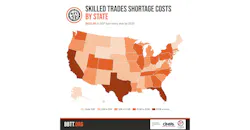
RYE, New Hampshire — The United States faces a shortage of nearly 1.9 million skilled trades workers, costing the economy an estimated $1.2 billion per day, according to new research released by Bring Back the Trades.
The workforce gap represents nearly one in five people currently employed across the 21 occupations included in the study. The research estimates the shortage will cost more than $432 billion in gross domestic product (GDP) annually through 2030.
Sponsored by F.W. Webb Co. and Cintas Corp., the study uses U.S. Bureau of Labor Statistics data analyzed by Parker Strategy Group. The group also calculated the economic impact of unfilled positions.
The expanded research builds on a February study examining seven core trades: carpenters, construction laborers, electricians, HVAC technicians, mechanics, plumbers and welders. That analysis identified a shortage of nearly 1.4 million workers, with an estimated annual economic impact of $325.6 billion.
The latest study adds 14 occupations, bringing the total to 21 trades employing approximately 10.1 million people. The additional occupations include infrastructure and industrial trades, as well as personal care and safety professions.
Together, the 14 newly analyzed occupations face a shortage of more than 493,000 workers. Their combined labor gap adds an estimated $106.9 billion to annual economic losses.
Across all 21 occupations, the shortage is projected to affect 3.7 million jobs and reduce annual tax revenue by $95 billion through 2030.
Truck drivers face the largest shortage among the 14 newly analyzed occupations, with more than 241,000 unfilled positions and an estimated $58.8 billion in annual economic losses. Firefighters and emergency medical technicians face a combined shortage of nearly 42,000 workers.
The study also found that 21.9% of the current HVAC workforce will be missing by 2030 if the gap is not closed, meaning the industry will be 89,000 people short. HVAC technicians ranked sixth in the core trades, behind mechanics, electricians, plumbers, welders and construction laborers.
"People need to know these careers are open to them, and that they pay well," said Steve Turner, founder and CEO of Bring Back the Trades.
The workforce shortage affects nearly every state. Forty-eight states face annual economic losses exceeding $1 billion. California leads with $55.6 billion, followed by Texas at $44.2 billion and Florida at $28.4 billion.
Texas has the largest workforce shortage, with nearly 213,000 unfilled positions. Utah has the deepest trades gap with 34.9% of trades workforce short, representing $10.6 billion in GDP lost each year.
"Every business we serve depends on skilled people, and this research shows the economic impact when those jobs go unfilled," said Sean Davis, vice president of marketing at F.W. Webb Company.
An interactive map, state rankings, and fact sheets for every Census division are available at bringbackthetrades.org/research.