HVAC Labor Shortage: New Pathways Are Bringing More Workers Into the Trade
Why It Matters
- More accessible training and financial assistance could make it easier for contractors to recruit career changers, young workers, and other potential technicians.
-
Contractors can play a larger role in workforce development by partnering with schools, supporting apprenticeships, and providing hands-on training opportunities.
-
Stronger coordination among contractors, manufacturers, schools, and industry organizations could help create more consistent pathways into HVAC careers and reduce workforce development gaps.
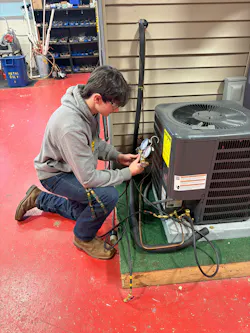
The HVAC labor shortage isn’t news. It has generated significant attention. Has that attention helped? Those on the front lines of HVAC workforce development see glimmers of hope, though challenges remain.
Where Did the Problem Come From?
The HVAC labor shortage has its roots in multiple areas, including educational strategy and the lack of a broad national strategy. The United States deemphasized trades within the education system, steering people into other fields.
“We've seen the educational system define success as synonymous with a four-year university education,” says ACCA Vice President of Government Relations Sean Robertson. “Careers in the trades have been seen as a fallback, and an inferior option for young people.”
This trend began in earnest in the late 1990s. One development at that time was the removal of shop classes from school curricula. As schools emphasized standardized testing, shop classes were among the courses removed from curricula.
“The removal of shop classes did a disservice,” says Explore the Trades Executive Director Kate Cinnamo. “Many teenagers these days don't know what HVAC means, what the career is all about, or that it even exists.”
The lack of a national strategy also creates confusion around HVAC training and pathways.
“HVAC guides should be nationalized. A national strategy was articulated to give states more clarity,” says Plumbing Heating Cooling Contractor (PHCC) National Association Incoming CEO Dan Quinonez. “That would help school districts develop training systems and remove the confusion from those seeking an HVAC apprenticeship program.”
Turning of the Tide
Experts and studies agree that the tide has started to turn, with perceptions of the trades improving and interest in careers such as HVAC growing. What’s driving the change, and how have the organizations above contributed?
Greater access to training and financial assistance, along with efforts to reach potential workers earlier, are among the factors driving the change.
Cinnamo cites increased financial assistance, in the form of Workforce Pell Grants, as an encouraging development. In June 2026, the Federal Government expanded a program to “…allow eligible students to utilize Pell funding for eligible workforce programs—short-term training programs that meet specified criteria related to labor market relevance and outcomes of former students.”
“It gives young adults and career changers an on-ramp to discover the industry and get training to get them started,” Cinnamo says.
PHCC is also working to provide an affordable pathway into the HVAC world. The organization’s Educational Foundation, which offers training programs through the PHCC Academy, has traditionally appealed to people in their mid-20s. Many are college dropouts unsure what to do next. The apprenticeship program costs approximately $2,000, but varies by state.
Students work with a PHCC contractor to earn the hours that they need for training, and contractors often cover the cost of tuition. PHCC and its foundation also offer scholarships for students interested in entering the trade.
“Where we run into difficulty is that every state has different rules,” Quinonez says. “For example, some have apprenticeships, and some don't.”
However, navigating the path into the industry can be challenging.
Other training options can cost up to $18,000, according to Quinonez, with no guarantee of a job afterward. Students are left trying to figure out how to pay their school loan and enter the industry.
ACCA is taking a long-term approach. The organization sponsored a children’s book designed to introduce children to the trades and plant that seed at a young age. It also developed online training resources, lesson plans, workbooks, etc. for use in in-house programs and trade schools.
“Many of our members are engaged in efforts to reach out to high schools, even elementa0ry schools, to better engage students earlier to change that perception,” Robertson says.
Explore the Trades is similarly focused on introducing the trades to students at a young age. The organization has a classroom poster kit program that schools can request for free. “We see them as a great introductory tool, and they’re very much complementary to what schools are already might be teaching for career exploration,” Cinnamo says. The posters are hanging in 3,400 school districts across the U.S.
Next Steps Needed to Grow the Workforce
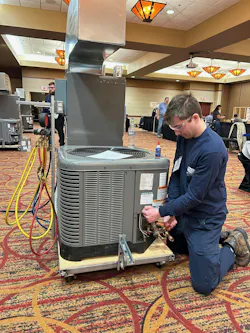
The seeds of growth have been planted, and more are stepping forward to enter HVAC workforce development programs. However, more needs to be done to fill the significant workforce gap.
Robertson would like more flexibility in how training is offered. “We're still based around a paradigm of students traveling to a trade school at specific times and a specific place to get a trades education or apprenticeship program. We'd like to see more options in recognition that people have different needs based on geography and availability at certain times.”
He suggests adding options for online learning.
Affordability, Robertson says, also remains an issue.
“We’re looking to add solutions like the Workforce Apprenticeship Growth and Education Support (WAGES) Act, which would provide tax incentives to support in-house training access,” he said. “We're also really enthusiastic about the Employer Directed Skills Act, which really reframes the whole workforce development system under WIOA around putting employers in the driver's seat, both in setting priorities for training and directly supporting in-house programs.”
Quinonez also cites funding and flexibility as issues that need to be addressed.
“School systems need to become more open to new and better styles of training,” Quinonez says. Among the challenges they face is finding qualified trainers and affording expensive HVAC equipment. He suggests manufacturers could help by donating equipment for training.
A more focused effort from manufacturers and contractors is also needed. Currently, they are pursuing a variety of workforce development strategies. “I think the industry needs to unify under one banner and spend their money wisely,” Quinonez says.
Cinnamo wants to see changes in education.
“I’d like to see schools incorporate age-appropriate hands-on learning in elementary school when students are curious and enjoy being active,” Cinnamo says.
She sees value in stronger partnerships between schools and industry for both. Students would gain greater exposure to the trade, while industry could build its workforce pipeline.
“You have a captive audience who is craving to understand real life, and not just read from a textbook,” she says. “The industry can get someone in front of the students and help them understand the equipment and how AI and technology are involved.”
Overall, the greater focus on HVAC workforce development is beginning to pay off. More training, financial assistance, and earlier exposure to the trades are creating new pathways into the industry.
However, closing the workforce gap requires further steps such as greater coordination among schools and industry and more flexibility in workforce training. These steps could be the linchpin to building a thriving HVAC workforce.
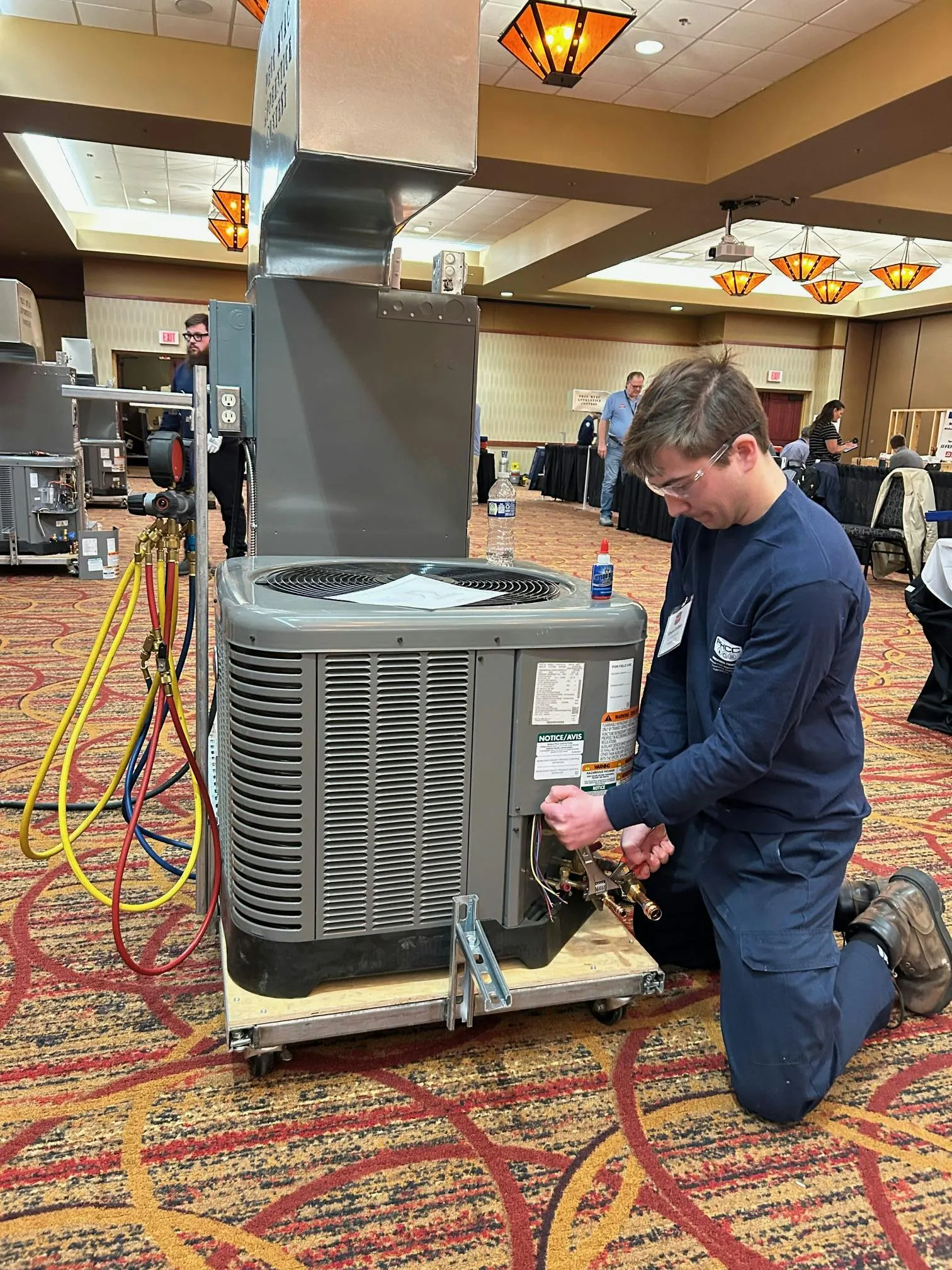
PHCC Sees Explosive Growth in HVAC Training
The PHCC Academy experienced continuous enrollment growth in its HVAC programs from 2022 through 2024.
Total PHCC Academy HVAC enrollments surged by 290.8% between FY2022 (369 students) and FY2024 (1,442 students). Core four-year apprenticeship courses (HVACR 101–401) alone grew 364.5% over the same period, expanding from 121 students in FY2022 to 562 in FY2024.
Enrollment in the Workforce Readiness course hit an all-time peak in FY2024 with 861 students—a 353% jump over FY2023 (190 students). This single course accounted for nearly 60% of all PHCC Academy HVAC enrollments in FY2024.
About the Author
Larry Bernstein
Larry Bernstein is a freelance writer based in northern New Jersey. He specializes in construction technology; education technology; and transportation, logistics, and supply chain.
Related
 dreamstime_xxl_390765554