Winter Heating Costs Expected to Rise 8.7% in 2026
Key Facts
- Average household heating costs are projected to rise $82 to $1,030 this winter, with electricity and heating oil among the main drivers.
- Heating costs have increased 23.9% since winter 2021–2022, including a 35.7% rise for electricity users and a 62.1% rise for heating oil users.
- About one in six U.S. households is behind on utility bills, and residential utility debt is approaching $23 billion.
- NEADA is urging Congress to raise annual LIHEAP funding from $4 billion to $7 billion; six New England governors are seeking an additional $3 billion.
WASHINGTON — U.S. home heating costs are projected to increase 8.7% this winter, according to the National Energy Assistance Directors Association (NEADA).
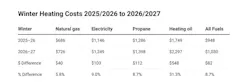
Households are expected to spend an average of $1,030 on heating, an increase of $82 from last year. Heating costs have risen 23.9% since winter 2021-2022.
NEADA's report attributes the projected increase primarily to higher electricity and heating oil costs.
Heating expenses are expected to rise across all major fuel types:
A warmer winter associated with El Niño is expected to moderate heating demand and costs.
The report calls for energy affordability to be considered alongside grid modernization and other energy system investments.
Electricity prices have continued rising over the past decade, according to NEADA. The report cites higher financing costs for power plants and transmission upgrades, rising natural gas prices, and growing electricity demand.
Data center expansion is contributing to increased demand. Aging grid infrastructure and regional capacity constraints are also adding costs.
Heating oil prices remain vulnerable to global oil markets. NEADA said crude oil prices rose from approximately $72 per barrel before the war in Iran toward $100 per barrel amid concerns about supply disruptions and shipping through the Strait of Hormuz.
The report also highlights significant regional differences in heating expenses. The Northeast generally faces the highest costs because of colder winters and greater reliance on heating oil.
Electricity prices in the Northeast averaged approximately 24 cents per kilowatt-hour in the 2025-2026 Energy Information Administration outlook. The Midwest averaged about 16 cents, while the South averaged 15 cents.
Midwest households face substantial heating demand but rely more heavily on natural gas. Propane is also important in rural areas.
NEADA said home heating costs for electricity users increased 35.7% since winter 2021-2022. Heating oil costs rose 62.1% over the same period.
The report also points to growing energy affordability concerns. About one in six U.S. households is behind on utility bills, with residential utility debt approaching $23 billion.
More than 275 electric and natural gas utilities have increased rates, received approval for increases or proposed increases since 2025. Those increases could raise customer bills by more than $101 billion through 2028.
NEADA is urging Congress to increase funding for the Low Income Home Energy Assistance Program (LIHEAP) from $4 billion to $7 billion. The organization says additional assistance would help households manage energy bills and reduce the risk of utility debt and service disconnections.
"This is a warning that too many families are entering winter with no room left in their budgets," said Mark Wolfe, executive director of NEADA. They have already experienced record high summer cooling costs and now they are facing home heating costs that are rising more than twice the rate of inflation. Energy is not a luxury. We can modernize the grid and meet growing demand without pushing families into crisis, but affordability has to be a key element of those decisions."
Six New England governors also urged Congress to increase funding for LIHEAP, calling for an additional $3 billion through either an increased annual appropriation or emergency supplemental funding. In a letter to congressional appropriations leaders, Connecticut Gov. Ned Lamont, Massachusetts Gov. Maura Healey, Rhode Island Gov. Dan McKee, Maine Gov. Janet Mills, New Hampshire Gov. Kelly Ayotte and Vermont Gov. Phil Scott said rising energy costs are putting additional pressure on low-income households. Citing NEADA, the governors said heating oil prices could increase approximately 50% this winter, potentially adding nearly $1.1 billion in heating oil costs for low-income households across the Northeast. They warned that current LIHEAP funding may lose purchasing power, forcing states to reduce benefits or serve fewer eligible households.
Rising heating costs and limited energy assistance could make it harder for some customers to keep their homes safely warm or afford needed heating system repairs. HVAC Contractors can help homeowners by informing eligible customers about LIHEAP and other local energy assistance programs, offering maintenance and repair options that address immediate needs, and recommending practical energy-efficiency improvements that can reduce heating costs. Working with community organizations and utility programs can also help connect vulnerable households with weatherization services and available support. Helping customers manage energy costs not only supports household comfort and safety but also builds trust and strengthens relationships in the communities contractors serve.
About the Author
 Nicole Krawcke
Nicole Krawcke is the Editor-in-Chief of Contracting Business magazine. With over 10 years of B2B media experience across HVAC, plumbing, and mechanical markets, she has expertise in content creation, digital strategies, and project management. Nicole has more than 15 years of writing and editing experience and holds a bachelor’s degree in Journalism from Michigan State University.
Related

 gettyimages1291079866