Starting Up for CO2 System Lifecycle Success
Why It Matters
- Growing adoption of CO2 refrigeration systems creates new service, installation, and maintenance opportunities for HVACR contractors.
- Investing in CO2 training and expertise can help contractors expand their capabilities and serve more supermarket customers.
- Following proper installation and startup procedures helps reduce costly callbacks, troubleshooting time, and potential equipment issues.
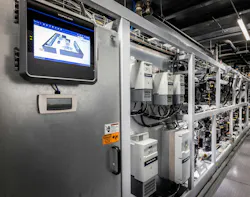
CO2 refrigeration is no longer a novelty in North American food retail. More than 4,000 stores now run CO2 transcritical booster systems, with adoption projected to climb up to 176% through 2028.
For HVACR contractors, this growth represents real business opportunity, as more supermarket operators will be seeking the services of technicians with CO2 skillsets.
The quality of a CO2 booster system design and installation — including startup, commissioning, and the first year of maintenance — lays the foundation for its performance throughout the entire system lifecycle. Done correctly, the system becomes a reliable, high-performing asset that delivers years of dependable service and reinforces confidence in sustainable CO2 technology. Take shortcuts or overlook key steps along the way, and the potential for system challenges, excessive service calls, and product issues could persist.
With proper training and a foundational grounding in best practices, contractors can flatten the learning curve and quickly establish proficiency in CO2 refrigeration.
What Makes CO2 Different Than Legacy HFCs
CO2 (refrigerant name R-744) behaves differently than the hydrofluorocarbon (HFC) systems with which many technicians are familiar. CO2 booster systems operate at significantly higher pressures, react faster to changing ambient conditions, and rely heavily on the use of system-wide electronic controls, such as rack supervision, refrigerant- and oil-level monitoring, case temperatures, electric and motor-driven electronic expansion valves (EEVs) and high-pressure valves (HPVs), variable-frequency drives (VFDs), and sensors.
Hence, effective product integration is essential in enabling a fully connected ecosystem that can help simplify every phase of a CO2 system lifecycle.
R-744 has unique characteristics that shape the installation and startup processes.
- High operating pressures: System pressures can exceed 1,400 psig when medium-temperature (MT) compressors discharge into the gas cooler in high ambient conditions. Piping for this high-pressure section of a CO2 system must be rated for 130 BAR (1885 psig), requiring the use of ferrous alloy copper (e.g., brands like XHP or K65), high-pressure stainless steel, or even properly rated carbon steel. CO2 gauges must be rated for those high pressures.
- Low critical point of 87.8°F: Below roughly 75°F ambient, the system runs in subcritical mode with a predictable pressure-temperature relationship. Above that, R-744 becomes a supercritical fluid, and the system enters transcritical mode, where pressure and temperature move independently.
- High triple point of 60.4 psig: Charging with liquid while pressures sit below the triple point causes R-744 to turn to dry ice, stops refrigerant flow and brings installations to a halt.
Installation Starts With Piping
Experienced CO2 technicians know that a smooth startup almost always traces back to installation quality. Clean, properly installed piping makes startup significantly easier. Dirty pipes can introduce non-condensable materials in a system that has zero tolerance for debris. Piping best practices include:
- Brazing with an inert gas to prevent oxidation and carbon buildup inside the pipe;
- Deburring all pipe cuts and avoiding the use of reciprocating saws, which leave copper shavings inside the line, which could be distributed throughout the system once running;
- Protecting open pipe ends from field contaminants using caps throughout the installation process;
- Conducting pre-installation meetings with all installation personnel to communicate the cleanliness standards required for CO2 refrigeration systems; and
- Following manufacturer piping configurations and end user-provided installation specifications.
Point-to-Point Pre-Startup Verification
Before a CO2 booster system is powered up and charged, a thorough pre-start verification process is essential. This phase is often called a "point-to-point" check, and it involves methodically confirming that every control device, sensor and input/output (I/O) connection is functioning correctly and mapped to the right location in the supervisory control system.
Critical pre-startup checks include:
- Keep facility circuit breakers off until all pre-start checks are complete;
- Confirm that piping is rated for the high-pressure section of the system, using stainless steel, high-pressure copper alloy or properly rated carbon steel per the high-pressure piping chart and local building codes. Take care not to install or intermix piping with lower pressure ratings in system sections that have higher pressure requirements;
- Pressure test with dry nitrogen, then evacuate, per manufacturer's recommendations;
- Charge compressors with oil if the OEM racks are not pre-charged, typically between the second and third vacuum cycles;
- Connect and verify supervisory control wiring throughout the system; check and proof every sensor, transducer, valve, and variable-frequency drive (VFD) signal; and
- Confirm all mechanical pressure relief and check valves are installed and set correctly.
Startup Sequence: From Charging to Compressor Staging
CO2 startup follows a specific sequence that accounts for R-744's triple point. Begin by charging with vapor until the system climbs safely above 60.4 psig. Manufacturers commonly recommend charging with vapor until the system reaches at least 100 psig, and some specify up to 150 psig, before switching to liquid R-744.
- Flash tank fill: Continue charging slowly into the flash tank until the float ball indicates liquid is present in the receiver;
- Liquid line opening: Once adequate liquid level is confirmed in the flash tank, open the main liquid line to the cases; and
- Compressor staging: As refrigerant reaches the MT and LT circuits, suction pressure rises and compressors stage on incrementally, and naturally, in response to load demand.
Commissioning and Fine-Tuning
Achieving system-wide stability is the goal of the commissioning process and is a critical step before handing off the system to the retail end user. In practice, this typically begins around day three or four of a startup week, once the initial hot pull-down has completed and the rack has been running stably for at least 48 hours.
Historically, this fine-tuning has been a particularly challenging phase for contractors, but continuous advancements in controls technology are helping to automate this process.
Commissioning should be evaluated under real-world operating conditions, ideally with product in the cases. Many times, systems that appear to be running well during a no-load startup may reveal tuning issues once full refrigeration loads are introduced. For this reason, best practice is to evaluate system performance for 30 days after the store opens, with product in all cases, before considering commissioning complete.
Fine-tuning during commissioning focuses on:
- Setpoint deviation review: Confirming that all temperature and pressure control variables are operating at or very near their target setpoints;
- Defrost verification: Confirming correct function of electric off-cycle, hot gas defrost or other defrost strategies;
- Heat reclaim optimization: Verifying air heat reclaim, domestic hot water heat reclaim and slab heating functions where applicable;
- Energy management optimization. Establishing energy baselines for the system and the store; implementing demand response programs or grid interactivity; and
- Compressor staging refinement: Reviewing staging behavior under real load conditions.
For contractors, this translates into fewer hours onsite, reduced callbacks from unstable systems, and greater confidence handing the system over to the end user.
Confirm stabilization by verifying that high- and low-side pressures and temperatures fall within specified ranges, that the system reaches saturation in subcritical mode, and that it transitions cleanly between transcritical and subcritical modes.
Consider the commissioning process complete when the system demonstrates smooth pressure and temperature curves across all system variables, no hunting valves, minimal pressure deltas, and consistent setpoint adherence. Validate every setpoint against the retailer's refrigeration schedule.
First-Year Maintenance: Listen to What the System Is Telling You
The first weeks and months of system operation are a diagnostic window of opportunity for contractors. The most practical early indicator of system health is the condition of filters and screens, specifically the high-pressure valve (HPV) line screens, suction filters, and coalescing oil separator elements.
All the refrigerant in a CO2 rack must flow through the HPV. So, if an HPV screen or inlet strainer is dirty, chances are the rest of the system is as well. Hence, checking the HPV screen early gives technicians a rapid, representative view of system cleanliness without having to inspect every circuit individually.
Filter change interval recommendations vary among manufacturers. Some specify 24 hours, others 45 days. Performing this step within the first 48 hours reflects an understanding that contaminants concentrated during startup will deposit on filter media first. Unfortunately, budgeting for the cost of filter changes is often lacking, resulting in greater potential for undetected near- and long-term system health risks.
However, discovering clean filters within the first 24 to 48 hours provides more confidence to set the next maintenance interval at 45 days. The goal is to let the system's actual condition, not a fixed schedule, drive the maintenance cadence in the early months.
Establishing a Baseline for Long-Term Reliability and Control
Beyond the first year, CO2 system management shifts from stabilization to maintaining an as-commissioned operational baseline. By following installation and maintenance best practices in the first months and year, contractors will be rewarded with reliable, ongoing operation throughout the system lifecycle.
For technicians willing to build expertise in a future-proof, safe, and sustainable refrigeration technology, CO2 is one of the fastest-growing service opportunities in commercial refrigeration.