Beyond Boiler Replacement: Why Hydronic Heat Pumps Are Finding a Home in Residential Comfort
Why It Matters
- Hydronic heat pumps create a new revenue opportunity for contractors by expanding the range of electrification solutions they can offer, especially for homeowners who want to move away from fossil fuels without replacing existing hydronic comfort systems.
- Understanding air-to-water heat pump technology can help contractors capture retrofit opportunities in millions of homes that already rely on boilers, radiators, baseboards, or radiant floor heating systems.
- As demand grows for high-efficiency, all-electric homes, contractors who develop expertise in hydronic heat pump design, installation, and commissioning can differentiate themselves in an increasingly competitive market.
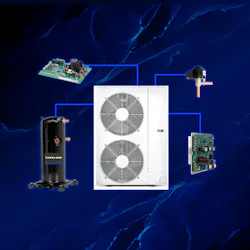
Hydronic heat pumps, also known as air-to-water heat pumps, are emerging as an increasingly attractive option for homeowners seeking efficient, all-electric comfort solutions. While they are often associated with boiler replacement projects, today’s hydronic heat pumps are opening new possibilities for both retrofit and new construction applications.
For years, the residential heat pump conversation has largely focused on moving air. Whether replacing furnaces with ducted systems or bringing comfort to hard-to-condition spaces with ductless mini-splits, most electrification discussions have centered around air-based heating and cooling. But a growing segment of the market is taking a different approach — moving heat through water rather than air.
For contractors, that means a new opportunity to serve homeowners looking to electrify their homes without sacrificing comfort.
An Overlooked Path to Electrification
Although hydronic heating is not a new concept for U.S. homes, its relevance may have been overshadowed by air-to-air heat pumps in recent decades. Much of North America’s housing stock was built around hydronic heating systems. From cast-iron radiators and finned-tube baseboards to radiant floor heating, millions of homes rely on water — not air — to deliver comfort.
Historically, electrifying these homes often required difficult decisions. Homeowners could replace an existing boiler with another combustion-based system, invest in extensive renovations to install ductwork or supplement existing heating systems with ductless equipment.
Hydronic heat pumps offer another option.
By extracting heat from outdoor air and transferring it into a home’s water distribution system, these systems can provide space heating using much of the infrastructure already in place. In many cases, they can also support domestic hot water production and, depending on system design, cooling applications as well.
The result is a pathway to electrification that allows homeowners to preserve many of the comfort characteristics that made hydronic systems desirable in the first place.
Not Just a Retrofit Story
While boiler replacement remains one of the strongest opportunities for hydronic heat pumps, it is no longer the only application driving interest.
Builders and homeowners are increasingly exploring all-electric home designs that prioritize energy efficiency, sustainability, and long-term operating costs. At the same time, modern building envelopes are reducing heating loads, making low-temperature hydronic systems more practical than ever.
These trends are creating opportunities for hydronic heat pumps in:
- Boiler replacement and retrofit projects;
- New all-electric home construction;
- Radiant floor heating applications;
- Integrated space heating and domestic hot water systems; and
- High-performance and net-zero-ready homes.
Rather than viewing hydronic heat pumps solely as an alternative to traditional boilers, many contractors are beginning to see them as part of a broader evolution in residential comfort system design.
What’s Driving Adoption?
Several market trends are helping bring hydronic heat pumps into the spotlight. Homeowner interest in electrification continues to grow, fueled by concerns about energy costs, sustainability goals, and evolving state and utility incentive programs. At the same time, advances in heat pump technology are helping address many of the performance challenges that once limited adoption in colder climates.
For contractors, perhaps the most important driver is homeowner demand for more options. Today’s homeowners increasingly want solutions that balance comfort, efficiency and environmental impact. Many are asking whether they can reduce their reliance on fossil fuels without giving up the comfort they enjoy from radiant floors, radiators, or hydronic baseboard systems.
Hydronic heat pumps provide a compelling answer to that question.
Technology is Expanding What’s Possible
Like many heat pump applications, hydronic systems have benefited from significant advances in compression and controls technology. Variable-speed compressors help systems better match capacity to changing conditions, improving efficiency, and comfort. Enhanced vapor injection (EVI) technology can support higher water temperatures and improved low-ambient performance, helping expand the range of climates and applications where hydronic heat pumps can be deployed successfully.
At the system level, advances in controls, electronic expansion valves, pumps, and integrated system management are helping manufacturers optimize performance across a wider operating envelope. These innovations are particularly important in retrofit applications, where hydronic heat pumps may need to serve existing distribution systems designed around higher-temperature boilers.
As a result, contractors have more flexibility than ever when evaluating whether a hydronic heat pump is a viable solution for a particular home.
A New Opportunity For Contractors
The growing interest in hydronic heat pumps is more than a technology trend; it's a business opportunity. As electrification expands, contractors who understand both heat pump technology and hydronic system design will be increasingly well-positioned to serve a broader range of homeowners. That includes customers who may have previously viewed electrification as impractical because of their existing heating infrastructure.
But supporting this transition will require education and training. Contractors will need to become proficient with hydronic distribution systems, understanding water temperature requirements, control integration and system commissioning. Those who develop this expertise may find themselves serving one of the most promising segments of the residential electrification market.