Beyond the SNL Stereotype: How HVAC Contractors Can Turn a Running Joke Into a Customer Service Opportunity
Why It Matters
- Homeowner trust is essential to closing HVAC replacement sales. Contractors can overcome negative industry stereotypes by communicating clearly, setting realistic expectations, and following through on commitments.
- The customer experience extends beyond the sales pitch. Installation teams often spend the most time in a homeowner’s home, making their communication, professionalism, and customer service skills just as important as their technical expertise.
- Transparency helps prevent misunderstandings and protects a contractor’s reputation. Documenting promises, explaining the process and addressing problems proactively can reduce customer frustration and build long-term confidence.
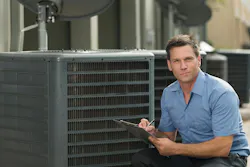
"Saturday Night Live’s" recent sketch about HVAC replacement sales struck a nerve by turning familiar homeowner frustrations into comedy. From high-pressure sales tactics to the disconnect between what a salesperson promises and what an installation crew delivers, the exaggerated portrayal raises a serious question for the HVAC industry: How can contractors build the trust and professionalism that homeowners expect?
For Craig Bennett, business coach manager at Nexstar Network, who brings 30 years of experience in the HVAC industry, the sketch presents both a challenge and an opportunity. While the scenarios are exaggerated, he says they reflect real concerns about transparency, communication, and the customer experience. In this Q&A, Bennett discusses what contractors can learn from the sketch, why installation teams play a critical role in earning homeowner confidence, and how training, accountability, and customer-focused processes can help companies overcome negative stereotypes and build lasting relationships.

CB: Why do you think the HVAC replacement process is an effective target for comedy?
Bennett: It makes a great target because, for many homeowners, replacing an HVAC system is one of the most intimidating experiences they'll face during homeownership. Something has gone wrong, often unexpectedly, and now they're faced with finding a contractor they can trust to enter one of the most personal spaces in their lives—and their home—and guide them through what is perhaps one of the larger investments they'll make.
Add to that the unfortunate reality that there's no shortage of consumer horror stories involving everything from high-pressure sales tactics to the classic bait-and-switch between what was promised and what was delivered. And that's certainly not exclusive to the home services trades; it happens across many business-to-consumer industries.
When you combine financial anxiety, uncertainty, and the vulnerability of trusting a stranger with your home, you have all the ingredients for comedy. Sometimes the funniest situations are the ones that hit a little too close to home.
CB: How much of the portrayal reflects real consumer frustrations with home service contractors, and how much is an exaggerated stereotype?
Bennett: Like all great stories, there's usually a little truth mixed in with an abundance of fiction.
Is it plausible that homeowners have experienced variations of the situations portrayed? Absolutely. Unfortunately, some consumers have encountered poor communication, unmet expectations, questionable sales practices, and/or disappointing workmanship.
But has anyone experienced this worst-case scenario during a single interaction with a contractor? I certainly hope not!
The humor comes from taking frustrations that consumers recognize and exaggerating them to an absurd level. What makes the skit work is that, even through it’s characterized as exaggerated, there's enough familiarity for people to relate.
CB: Do you think sketches like this reinforce existing negative perceptions of the HVAC industry, or can they create an opportunity for contractors to demonstrate how professional companies operate?
Bennett: I think the answer is both.
One of the biggest drivers of consumer anxiety when hiring a contractor is simply not knowing what to expect. And let's not kid ourselves, some of these negative perceptions exist because, historically, our industry has been slower than others to make the customer experience a primary focus.
That reality presents both an obstacle and an incredible opportunity.
When consumers enter a relationship with low expectations, imagine the impact a contractor can make by consistently exceeding them. Showing up when promised, communicating clearly, respecting the home, delivering quality workmanship, and following through on commitments shouldn't be extraordinary, but too often they are. In fact, Jesse Cole covered this very topic at Super Meeting 2026 as he challenged our members to create remarkable experiences for customers. Here at Nexstar the approach our network lives by is to elevate our trades: every customer interaction is an opportunity to strengthen the reputation of our industry and create businesses that customers trust, and employees are proud to be part of.
The opportunity isn't simply to prove the stereotypes wrong. It's to create an experience so exceptional that the homeowner becomes a customer and advocate for life.
The best contractors aren't just changing how people feel about their company; they're helping change how people perceive our entire industry.
CB: Where do contractors most often lose homeowner trust during the replacement process?
Bennett: I would point to one word: transparency.
Are we painting an accurate picture of what our role will be inside the customer's home? Are we clearly communicating what a homeowner should expect from the beginning of the experience through the completion of the installation? And perhaps just as importantly, are we explaining what that relationship will look like long after the installation is complete?
That last piece becomes especially important when something doesn't go according to plan, or an issue arises down the road.
Homeowners don't necessarily expect perfection, but they do expect honesty, accountability, and follow-through.
Trust is built when expectations are clearly established and consistently met. At the end of the day, doing what you say you're going to do is still one of the most powerful ways to earn a customer's confidence.
CB: One of the biggest themes in the sketch is the disconnect between the sales pitch and the people who show up to do the work. How common is that disconnect in home services, and why does it happen?
Bennett: Unfortunately, it's a very real challenge in home services, and I believe much of it stems from placing too much emphasis on securing the sale and not enough on delivering the complete customer experience.
Think about the typical customer journey.
A service technician may spend a couple of hours inside the home diagnosing an issue, educating the homeowner, and establishing the initial level of trust. A comfort advisor may then spend another couple of hours discussing options, building value, and helping the customer make an informed decision.
But the installation team? They're often in that customer's home for an entire day, sometimes longer. They're interacting with the homeowner, navigating the living space, and ultimately delivering on everything the customer was promised.
Yet how much time do we invest in developing their customer service, communication, and relationship-building skills? Are we preparing them to be the face of our company, or are we primarily training them to install equipment?
Technical excellence is essential, but so is the experience surrounding it.
The installation team is responsible for turning the promises made during the sales process into reality. In many ways, they're the people who will leave the most lasting impression on the customer.
CB: What processes should contractors put in place to ensure the installation team delivers on everything the salesperson promised?
Bennett: It begins with clear communication, thorough documentation, and a process designed around the customer's experience rather than just the technical installation.
Every commitment made during the sales process should be documented and communicated to the installation team. Before anyone arrives at the home, there should be a review of the job to ensure the team understands the scope of work, the homeowner's expectations, any unique circumstances, and what success looks like.
From there, the installation process should be intentionally designed to keep the homeowner informed every step of the way. That means setting expectations upon arrival, communicating progress throughout the day, addressing surprises proactively, and finishing with a thorough walkthrough that ensures the customer understands their new investment.
And here's something I would challenge every contractor to do: Take off your contractor hat and put on your customer hat.
If this were your home, your family, and your hard-earned money, what would you want that experience to look and feel like?
Now build your process around delivering exactly that. Outlining the processes is the first important step – then follow through by layering in ongoing coaching, practice and feedback, which in turn will create consistent behaviors that shape a 5-star experience.
CB: What specific sales training or coaching practices help technicians and comfort advisors become better educators rather than high-pressure salespeople?
Bennett: It starts by changing the mindset from selling a product to helping a homeowner make an informed decision.
Our role as professionals should be to educate customers, ask thoughtful questions, understand their needs, and use our expertise to guide them toward solutions that make sense for their home, their comfort, and their financial situation.
Consistent team training and coaching should emphasize active listening, asking great questions, clearly explaining options, and presenting recommendations without creating unnecessary pressure. Role-playing real customer conversations and providing constructive feedback are great ways to develop those skills.
I also encourage contractors to take a close look at their leadership team because their actions set the tone. Beyond training for frontline teams, there’s an opportunity to reinforce how strong leadership, clear expectations, and accountability across departments creates a consistent customer experience.
In the end, the goal shouldn't be to convince a homeowner to buy something. It should be to give them the confidence to make the best decision for themselves.
High-pressure sales tactics may generate a transaction, but they can also create buyer's remorse, erode trust, and ultimately damage a company's reputation through negative word of mouth.
I believe there's a simple standard every technician and comfort advisor should follow: Treat every homeowner the way you would want someone to treat your parents, your spouse, or your children if it were their home and their money on the line.
When you lead with education, integrity, and genuine concern for the customer, the results tend to take care of themselves.
CB: What's the biggest lesson HVAC contractors should take away from the sketch, even if they disagree with its portrayal?
Bennett: Perception is reality, and whether we like it or not, there’s room for improvement when it comes to the public's perception of the home services trades.
That's certainly not a reflection of the countless outstanding contractors who go above and beyond for their customers every day. But the reality is that these stereotypes exist, and overcoming them requires more than simply disagreeing with the portrayal. It requires consistently demonstrating something better.
And what an incredible opportunity that creates.
Instead of racing to the bottom by competing to be the cheapest contractor in the market, why not rise to the top by becoming the contractor who delivers the most remarkable customer experience?
Compete on professionalism. Compete on communication. Compete on trust, quality, and the confidence homeowners feel when they know they've made the right decision.
Price will always matter, but value is what creates lasting relationships.
There's a quote commonly attributed to Benjamin Franklin that I think captures this perfectly: "The bitterness of poor quality remains long after the sweetness of low price is forgotten."
The greatest opportunity for our industry isn't to sell more HVAC systems. It's to elevate the experience of doing business with a contractor to a level that changes a customer’s expectations and experience entirely.
And the companies that figure that out won't just win more customers. They'll earn something far more valuable: their trust.
About the Author
 Nicole Krawcke
Nicole Krawcke is the Editor-in-Chief of Contracting Business magazine. With over 10 years of B2B media experience across HVAC, plumbing, and mechanical markets, she has expertise in content creation, digital strategies, and project management. Nicole has more than 15 years of writing and editing experience and holds a bachelor’s degree in Journalism from Michigan State University.
Related
 5 Star Service