The CODE of Captain CO: Jim Davis
Why It Matters
- Jim Davis' legacy reinforces that combustion testing and carbon monoxide diagnostics should be based on measured data—not assumptions—helping contractors improve safety, accuracy, and customer trust.
- Jim Davis' commitment to mentoring others demonstrates how investing in training and education can elevate technician skills, improve service quality, and strengthen an HVAC company's reputation.
- The lessons of curiosity, objectivity, dedication, and enthusiasm serve as a blueprint for contractors who want to build a culture of technical excellence, professionalism, and customer-focused service.
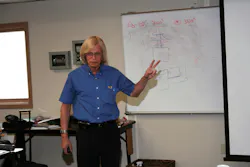
If you’ve ever heard someone talk about how to diagnose combustion safety or carbon monoxide (CO) issues with a combustion analyzer, they have either sat in a Jim Davis class or learned from someone who sat in his class. Jim is indisputably the father of modern-day combustion testing and CO diagnostics. It was his life’s work to make sure no one suffered the harmful, even fatal effects of carbon monoxide poisoning, and he believed the HVAC industry was the best way to achieve this goal. He wrote the first two books on CO and combustion testing in the late 1980s and worked with thousands across the country to spread the word about CO awareness.
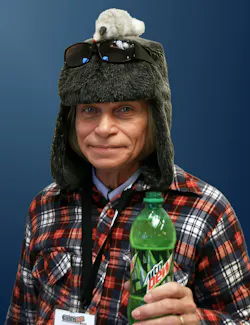
Jim’s students lovingly referred to him as Captain CO. He was my mentor, my friend, and my coworker. On June 20, 2026, Jim passed away peacefully in his sleep at the age of 79. From the time I first met Jim and worked with him through the years, it was obvious he lived by a strict code. Little did I know that his code, a word he often made fun of, would become an acronym for the values he lived. Those values are:
- Curiosity;
- Objectivity;
- Dedication; and
- Enthusiasm
If you knew Jim, you’d instantly remember these traits in him as you read. For those who never had the opportunity, I hope this gives you a glimpse into the character of the man known as Captain CO.
The Captain Was Curious
Curiosity is marked by a desire to investigate and learn. In a 2015 Contracting Business magazine article, the late Rob Falke referred to Jim as The Curious Captain CO. It was this trait that started Jim’s quest to learn about combustion diagnostics back in 1978. He was a counter guy working for an HVAC distributor in Cincinnati, Ohio, who convinced his boss to sell a new test instrument called a combustion analyzer to their commercial and industrial customers.
For Jim to succeed, he had to teach customers how to read and interpret the analyzer readings. So, he looked for resources to learn from but found that there wasn’t much available. Remember, this was long before Google or ChatGPT. Never one to give up, Jim taught himself how to use those analyzers. He sought and began reading books, some over 100 years old, on combustion engineering concepts. From then on, Jim used every opportunity to educate HVAC technicians and company owners as he went out to help them in the field. Jim viewed every new job as a unique opportunity and adventure to learn more.
Some examples of what Jim found because of his curiosity, that today we often take for granted include:
- Why rising CO and falling O2 are so dangerous;
- What causes combustion air reversal and how it is possible;
- The effects of excessive draft on atmospheric appliances;
- How using smoke and mirrors on a drafthood doesn't ensure proper venting;
- Why a single CO test is inconclusive for safe equipment operation; and
- How over-the-counter CO alarms don’t provide protection from prolonged low-level CO exposure.
In a time where it’s easier to ask AI the answer to a question than do the digging in a book, curiosity is becoming a trait of the past. How curious are you about the work you do and the people you encounter? Why not search eBay for an old HVAC book and see how much has changed and what is the same? What about asking a coworker how they got into the business and about their favorite call or job? You never know what you’ll learn by being a little curious.
The Captain Was Objective
For Jim to learn from his curiosity and the situations he encountered, he had to be objective. This trait requires someone to examine and deal with facts or conditions as perceived without distortion by personal feelings, biases, previous experience, or traditions. Unfortunately, there were and still are a lot of these distortions that appear anytime CO is part of a conversation.
Our industry has a bad habit of making assumptions instead of testing. Jim understood he couldn't afford to guess or make assumptions. So he tested and then objectively looked at the readings and asked a simple question… why? That simple, one-word question led to the development of the first field manuals written on modern-day combustion testing and CO diagnostics back in 1985 and 1988. Jim filled his books with the answers uncovered by his curiosity, his study, and objective analysis of field data. If something didn't make sense, Jim wanted to know why and wouldn’t rest until he found the answer.
Some people can take being objective the wrong way and see it as defiance. Instead of accepting the way things had always been, Jim pushed for answers. And when people didn’t have the answers, it could become an uncomfortable discussion. Even to the point that some became combative and attempted to discredit him just to maintain their status quo. It was a battle Jim constantly engaged in because he was relentlessly objective instead of compliant.
By the way, Jim always challenged his students to be objective and not to just trust him. He would say, “Don’t take my word for this stuff. Go out and start testing. Try to prove me wrong or prove me right. It’s too important.”
Our industry is at a point where we need more people to be objective and ask “why” to the uncomfortable questions they have. The key to being objective is having data from test measurements and understanding what it’s telling you. Otherwise, you’re just another person with an opinion. If you test regularly and look hard at the measurements, you can then take those measurements to see what may be overlooked. Don’t rely on someone else or an app to do the analysis. Instead, be objective and mentally chew on the numbers to see what you discover.
The Captain Was Dedicated
CO and combustion were Jim’s life work. He devoted himself to a cause that instilled a sense of purpose in others. His dedication often took him across the country and away from his family for weeks on end so he could educate others and multiply his efforts. I don't know if our industry will ever truly know the extent of his efforts.
Jim’s dedication showed up in a lot of other ways. He always answered his phone. Jim often said that CO never took a break, so he wouldn't either. Many in the industry don't know that Jim’s habit of answering the phone directly influenced the founding of National Comfort Institute (NCI).
In the fall of 1998, future NCI CEO Dominick Guarino and his family had just moved to Cincinnati, Ohio. Within a few weeks, he noticed his family’s health seemed to be declining. The kids were pale and his wife had constant headaches. Then one Sunday, while working in his basement, Dominick became light-headed and nearly fell off a ladder. Luckily, he needed something from the hardware store, and he left to pick it up. While there, a voice in his head said 'buy a CO alarm.' He did, and when he got home and turned it on, the ambient CO levels were 150 ppm.
As the former editor-in-chief at Contracting Business magazine, Dominick had heard of Jim Davis and called him to get his advice. Jim answered the phone and was in Dominick’s basement within 30 minutes. As Jim tested the boiler with his combustion analyzer, he found CO levels over 2,000 ppm! Once they identified the problem, repairs were made, and the boiler tested safe upon completion. If Jim hadn't answered his phone, and if it had been a colder night, there might not be an NCI.
How dedicated are you to your profession? Do you go above and beyond, or do you barely show up? Dedication is a choice. No one can force you to embrace the trait and live it. Jim’s example shows us that the trickle-down effect from our decisions can have untold benefits or consequences. You never know how what you do in a customer’s home will affect them for the rest of their life and yours.
The Captain Was Enthusiastic
Anyone who ever attended a Jim Davis class will tell you it wasn’t boring. Jim’s enthusiasm could be felt from the moment you stepped into the classroom, and he tossed a manual at you. His energy was contagious. The class fed off his passion for making a difference in other’s lives by finding a silent killer.
Jim taught how to predict the invisible using measurements and blended in throwing combustion analyzers and telling corny jokes to keep you focused and engaged. When it was over, you left the class feeling a mixture of excitement, fear, doubt, and regret. He took you on an emotional rollercoaster driven by data. Then it was your turn to accept his challenge or continue doing things the way you had been.
One of the dangers any teacher faces is tiring of their material. They often forget the focus should be on the student and teaching as if it were their first time. Jim looked for those “AHA! moments” from students — that point when he knew he had broken through to them. Often, that moment occurred after he answered a question that no one knew the answer to. That was instant validation. The students realized they weren’t crazy but had just been looking for answers in the wrong places. The result was another student who would go out to make a difference and spread the word of Captain CO. This response was the fuel that kept Jim’s enthusiasm strong.
Even when Jim’s health kept him from traveling and teaching classes, he found new ways to share and maintain his enthusiasm. Whether it was being a podcast guest in his pajamas, writing articles, or mentoring future CO instructors at NCI, Jim kept the bar high. He would jump at the opportunity to help whenever someone called with a problem and thank them for calling him.
Enthusiasm is a trait that will cover a variety of shortcomings. Being enthusiastic doesn't mean bouncing around like a cheerleader. Instead, it’s an internal motivation that keeps you going when times get tough. Others feel your energy even if you don't say a word. If you find your job feels like a drag, I encourage you to look for the fun you can add to it. Just as people can feel your energy, they can also tell if you don't have any. Why not make a game out of your work and see what you can do to liven it up and make it interesting? You might not throw a combustion analyzer or tell corny jokes, but I promise you’ll think of something to try that works for you and causes you to look forward to getting up and going to work. I know Jim did.
The Legacy of Captain CO
The legacy of Captain CO lives on. You’ll find his purpose continuing in every NCI instructor and in every student who attends an NCI CO and Combustion class. His challenge still holds true. Take nothing you read, hear, or see from anyone else about CO and combustion as fact. Instead, go out, start testing, and prove it to yourself.
Be curious. Be objective. Dedicate yourself and be enthusiastic. Start living by your own code to make a difference in the lives of your family, coworkers, and customers. All you have to do is care and have a heart big enough to act. Just like Jim.
I’m thankful I knew you, Captain CO. You changed my life for the better. You changed the world for the better.
About the Author
 David Richardson
David Richardson
Director, technical curriculum
David Richardson is the vice president of training at National Comfort Institute, Inc. (NCI), Avon, Ohio. NCI specializes in training that focuses on improving, measuring, and verifying HVAC and Building Performance.