Troubleshooting A2L, CO₂ and HFC Systems: Diagnose the Cause, Not the Symptom
Why It Matters
- As refrigeration systems become more advanced and data-driven, technicians must know how to interpret controller readings and verify them with independent measurements to avoid misdiagnosis.
- Misdiagnosing control issues or replacing components without confirming the root cause can increase repair costs, extend equipment downtime, and erode customer confidence.
- Reinforcing fundamental troubleshooting skills, including independent pressure and temperature checks and direct system observation, can help technicians work more efficiently and avoid unnecessary parts replacements.
Spend enough time in the field, and the patterns become hard to ignore—not just in the equipment failures, but in how those failures get approached, diagnosed, and sometimes misdiagnosed. Across A2L, CO₂, and traditional HFC systems, several trends are emerging. Some are encouraging. Others are still costing time, money, and unnecessary component replacements.
More Data, New Blind Spots
Modern refrigeration systems generate more information than ever—controllers tracking pressures, temperatures, valve positions, alarm histories, and system behavior in real time. On paper, that should make troubleshooting faster and more accurate.
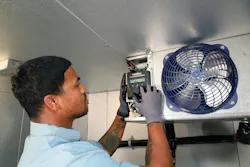
What it has also introduced is an increasing tendency to trust that data without first verifying it. Troubleshooting decisions made entirely on controller readings—without confirming those values against independent measurements—are becoming more common. When the data is accurate, it accelerates diagnosis. When it isn’t, it sends the technician in the wrong direction just as fast.
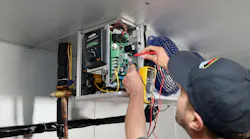
Sensor drift, calibration issues, and communication problems are not rare, and small inaccuracies carry real consequences. A pressure transducer slightly off leads to unnecessary adjustments. A temperature sensor just far enough out of range results in components being replaced for no reason. Data is powerful—but only when it’s verified. The technicians consistently solving problems fastest are the ones who question the data when something doesn’t add up.
Misdiagnosis Moved to the Controls Side
Years ago, most troubleshooting mistakes were mechanical—incorrect charge adjustments, missed airflow issues, and improper valve settings. Today, a growing share of those mistakes are happening on the controls side, and they’re harder to catch because the system appears to be malfunctioning when it’s actually operating exactly as designed.
Controllers limit capacity based on conditions that aren’t always obvious. Safety systems alter operation in ways that can look like failure. In A2L systems, refrigerant detection triggers responses that register as faults even when the system is reacting correctly to a safety condition. In CO₂ systems, high-pressure control strategies produce behavior that looks unstable when evaluated through traditional HFC expectations.
I’ve been on systems where everything looked wrong at first glance, only to find the system was doing exactly what it was supposed to do. That realization usually comes after stepping back and asking what the controller is trying to accomplish rather than assuming something has failed. The system isn’t always broken. In many cases, it’s simply misunderstood.
The Basics Are Getting Skipped
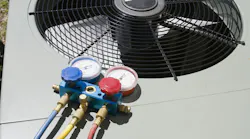
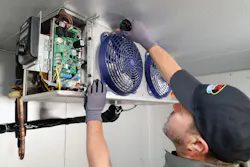
With increased reliance on digital tools and controller interfaces, fundamental troubleshooting habits are quietly eroding. Independent pressure checks, temperature verification, and direct observation—steps that used to be second nature—are sometimes bypassed in favor of screen data.
This isn’t a criticism of newer technicians. It’s a reflection of how the industry has evolved and how training hasn’t always kept pace with the equipment. The problem surfaces when the data is wrong or incomplete and there’s no baseline to fall back on. That’s often where the most time gets lost—not because the system is overly complex, but because wrong information was trusted too early.
The technicians who tend to perform best combine both approaches: they use the available data, but confirm it through real-world measurements and what they can directly observe.
Replacing Parts Instead of Finding Causes
Component replacement without a confirmed root cause is one of the more costly patterns in the field right now. Electronic expansion valves, pressure transducers, controllers, even compressors—replaced based on symptoms rather than verified failure. In some cases, the system comes back online, which reinforces the decision, even though the underlying issue was never resolved.
I’ve seen systems where multiple components were replaced over time only to find the original issue was never properly identified. A system with unstable superheat may point toward a valve, but if the real issue is a sensor or control logic problem, the instability will return. The cost compounds—more parts, more downtime, and more confusion when the same fault comes back. Replacement should follow confirmation, not assumption.
Safety Systems Add a Layer Most Aren’t Reading Yet
With A2L adoption accelerating, safety systems are playing a larger role in how equipment behaves—and they’re generating some of the most misread signals in the field. When a safety system activates, it can close valves, shut down compressors, or restrict controller functions as part of a coordinated response. If that behavior isn’t recognized as intentional, it reads as a fault.
Once a technician understands how these systems are designed to respond, troubleshooting becomes significantly more efficient. Understanding the interaction between safety systems and normal operation is no longer a specialty. It’s a core part of the job.
What’s Working
Not everything is trending the wrong direction. More technicians are becoming genuinely comfortable with controller interfaces and system data, and there’s a growing instinct for recognizing when something doesn’t add up. That instinct matters more than most people realize.
Collaboration is also increasing. Whether through technical support lines or peer conversations, fewer technicians are trying to work through complex problems alone. That shift is measurable in how efficiently problems get resolved.
Where This Is All Headed
Systems will keep getting more advanced, more connected, and more dependent on accurate data and control logic. The technicians positioned to handle that aren’t the ones who abandoned traditional methods or the ones who ignored the new tools—they’re the ones who learned to use both.
Use the data—and verify it. Trust the control—and understand how they operate. Rely on experience—and stay open to how these systems keep evolving.
Troubleshooting was never just about finding what’s broken. It’s about understanding how the system is supposed to operate, recognizing when it isn’t and determining whether the issue is mechanical, electrical or a matter of interpretation. Technicians who develop that mindset will spend less time chasing symptoms and more time solving the actual problem.
About the Author
 Chris Thomas
Chris Thomas is the supervisor of Product Services at Heatcraft Refrigeration Products.